

President of Bolivia
Images

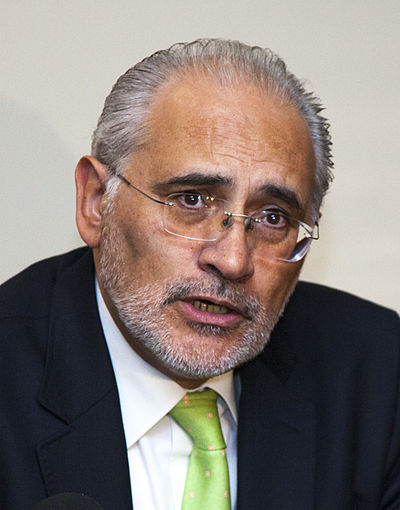
File:Carlos Mesa, ex-President of Bolivia (cropped 2).jpg



Constitutional Authority and Executive Power
The President of Bolivia, officially titled President of the Plurinational State of Bolivia, is the apex of the nation's executive branch, embodying both head of state and head of government functions. This dual role signifies comprehensive authority over national administration and international representation. Furthermore, the President serves as the captain general of the Armed Forces, granting supreme command over the military apparatus.
This concentration of power is constitutionally defined, establishing the presidency as the central pillar of Bolivian governance. The President's mandate extends to ensuring the observance of the constitution, maintaining public order, and directing the nation's policy agenda, making their office the primary driver of the country's political and social direction.
Electoral Mechanics and Democratic Mandate
The pathway to the Bolivian presidency is paved by a rigorous electoral process designed to ensure a strong democratic mandate. Presidents are elected by popular vote to a five-year term, a period intended to allow for sustained policy implementation. Crucially, the Bolivian Constitution enforces a strict and inviolable two-term limit, a safeguard against the concentration of power and a commitment to regular leadership transitions.
The electoral threshold for victory is substantial: a candidate must achieve either an absolute majority (over 50% of the vote) or a plurality of at least 40% coupled with a 10% lead over the second-place candidate. Should no candidate meet these criteria, a run-off election is mandated between the top two contenders, thereby guaranteeing that the eventual winner possesses significant popular backing and legitimacy to govern effectively.
The President's Pivotal Role in National Development
The significance of the President of Bolivia cannot be overstated, as their leadership profoundly shapes the nation's trajectory. The President is instrumental in formulating and executing national policies across diverse sectors, including economic development, social welfare, and foreign relations. Their decisions impact the daily lives of citizens and the country's standing on the global stage.
By setting national priorities and representing Bolivia in international forums, the President plays a critical role in fostering economic growth, addressing social inequalities, and navigating complex geopolitical landscapes. The effectiveness and vision of the President are therefore central to Bolivia's progress and stability, making the office a focal point of national attention and expectation.
Historical Continuity and Current Leadership
Bolivia's presidential history is a rich tapestry of leadership changes, with each president contributing to the nation's evolving narrative. The current occupant of the presidential office is Rodrigo Paz Pereira, who assumed his duties on November 8, 2025. As the 68th president, he inherits a legacy of past leaders and faces the contemporary challenges and opportunities unique to Bolivia in the 21st century.
His presidency represents a continuation of the democratic tradition, albeit with a distinct policy agenda and leadership style. Understanding the historical context of the presidency, including the evolution of its powers and the individuals who have held the office, provides essential insight into Bolivia's present political landscape and its future aspirations.
See also
Based on content from Wikipedia · Licensed under CC BY-SA 4.0