

Eurasian Brown Bear
Images

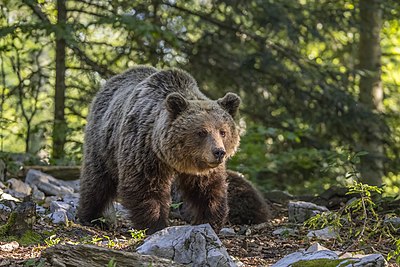
Eurasian brown bear (Ursus arctos arctos) mother and cub




The Ubiquitous Ursid
The Eurasian brown bear, scientifically classified as Ursus arctos arctos, represents one of the most widely distributed subspecies within the global brown bear population. Its range is a testament to its remarkable adaptability, encompassing a vast geographical expanse that stretches from the westernmost reaches of Europe, including the Iberian Peninsula and Scandinavia, across Eastern Europe, and deep into Asia, with populations found in regions as diverse as the Caucasus, the Middle East, and Siberia.
This broad distribution means that Eurasian brown bears inhabit a variety of ecosystems, from dense boreal forests and temperate woodlands to alpine meadows and even steppe environments. Their ability to thrive in such varied landscapes underscores their resilience and their significant role as an apex predator within these ecosystems. The common name 'Eurasian brown bear' highlights its extensive continental presence, distinguishing it from other brown bear subspecies like the North American grizzly bear.
Dietary Flexibility and Foraging Strategies
As an omnivore, the Eurasian brown bear exhibits exceptional dietary flexibility, a key factor in its widespread success. Their foraging behavior is opportunistic and highly seasonal, allowing them to capitalize on available food sources throughout the year. During warmer months, their diet is heavily plant-based, consisting of grasses, sedges, roots, tubers, berries, and fruits.
They are particularly adept at locating and consuming nutrient-rich berries, which are crucial for accumulating fat reserves. However, their diet is significantly supplemented by animal protein. This includes a wide array of invertebrates such as insects, ants, and larvae, as well as honey from wild beehives.
In aquatic environments, they are known to prey on fish, especially during spawning seasons. In some regions, they may also hunt small mammals or scavenge carcasses, demonstrating a capacity to exploit carrion left by other predators. This varied diet allows them to maintain healthy populations across diverse ecological niches.
Physical Characteristics and Adaptations for Survival
Eurasian brown bears possess a robust physical build adapted for their environment. Adult males typically weigh between 135 and 350 kilograms (300-770 pounds), with exceptional individuals exceeding this range, while females are generally smaller, weighing around 80-200 kg (175-440 lb). When standing on their hind legs, they can reach impressive heights of up to 2.8 meters (9 feet), a posture often used for intimidation or to survey their surroundings. Their thick, shaggy fur provides insulation against cold temperatures, with color variations ranging from light brown to almost black.
A defining characteristic is their powerful build, featuring strong limbs, large paws with non-retractable claws ideal for digging and tearing, and a pronounced shoulder hump composed of muscle that aids in digging and provides strength for locomotion. Their olfactory senses are highly developed, estimated to be seven times more sensitive than those of a bloodhound, enabling them to detect food sources, mates, and potential threats from considerable distances.
Life Cycle, Behavior, and Conservation Outlook
Eurasian brown bears are largely solitary creatures, with social interactions primarily occurring during the mating season or between mothers and their cubs. They maintain extensive home ranges, the size of which varies depending on food availability and habitat quality. In regions experiencing cold winters, they enter a state of hibernation, typically from late autumn to early spring, within dens they excavate.
This period of inactivity is crucial for conserving energy when food resources are scarce. The lifespan of a Eurasian brown bear in the wild is estimated to be between 20 to 30 years, though individuals in captivity can live longer. Ecologically, they play a vital role as apex predators, influencing prey populations and seed dispersal through their diet.
While the species as a whole is classified as 'Least Concern' by the IUCN, specific populations face significant threats from habitat fragmentation, human-wildlife conflict, and poaching, necessitating ongoing conservation efforts across their range.
See also
Frequently Asked Questions
What is the Eurasian brown bear?+
Where can you find Eurasian brown bears?+
What do Eurasian brown bears eat?+
How big do Eurasian brown bears get?+
Why are Eurasian brown bears important in their habitats?+
Based on content from Wikipedia · Licensed under CC BY-SA 4.0