

Earth's Secret Space Buddies!
Images

Stop the Trojan treaty – Brussels 04/02/15

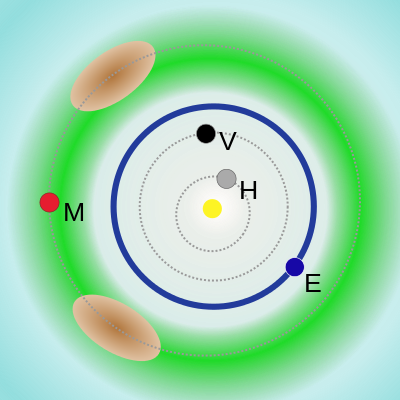


Orbital Stability and Gravitational Niches
Earth trojans are a fascinating class of near-Earth objects (NEOs) defined by their orbital resonance with Earth, specifically occupying the Sun-Earth Lagrange points L4 and L5. These points are regions of gravitational equilibrium where the combined gravitational forces of the Sun and Earth create stable or quasi-stable orbits for smaller bodies. At L4, the trojan leads Earth by 60 degrees in its orbit, while at L5, it trails by the same angle.
This stable configuration means that trojan asteroids can persist in these locations for millions, if not billions, of years, shielded from significant orbital perturbations that might otherwise eject them. The discovery of 2010 TK7 and 2020 XL5 confirmed their existence, though the search continues for more, as theoretical models suggest there could be many more hidden in these regions, potentially masked by their small size or observational challenges. Understanding their orbital dynamics is crucial for comprehending the long-term stability of the inner solar system.
Primordial Remnants and Solar System Evolution
The prevailing hypothesis regarding the origin of Earth trojans is that they are primordial asteroids, captured by Earth's gravity during the chaotic early stages of solar system formation. This period, known as the Late Heavy Bombardment, involved significant planetary migration and asteroid scattering. It is theorized that some asteroids, particularly those originating from the main asteroid belt, were gravitationally nudged into orbits that brought them into proximity with Earth.
Upon encountering Earth's gravitational influence, some were captured into stable resonant orbits at the L4 or L5 points, effectively becoming permanent companions. As such, Earth trojans serve as invaluable relics, offering a direct window into the composition and conditions of the protoplanetary disk from which our solar system evolved, potentially holding clues about the delivery of water and organic molecules to early Earth.
Scientific Significance and Exploration Potential
The scientific importance of Earth trojans extends beyond their role as ancient relics. Their stable, predictable orbits make them ideal targets for detailed astronomical observation and, potentially, robotic exploration. Unlike other NEOs that may have highly eccentric orbits, trojans offer a more consistent platform for study.
Their composition could provide insights into the diversity of asteroid types and their distribution within the early solar system. Furthermore, their relative proximity to Earth positions them as attractive candidates for future space missions, including sample return missions. Such missions could yield unprecedented data on the materials that accreted to form terrestrial planets, contributing to our understanding of planetary habitability and the potential for life beyond Earth.
They also represent a unique resource for in-situ resource utilization (ISRU) studies.
The 'Trojan' Nomenclature
The term 'trojan' for these asteroids has a rich historical and mythological lineage. It was first coined by Austrian astronomer Max Wolf in 1906 to describe asteroids discovered near Jupiter's L4 and L5 points. Wolf named these objects after the heroes of Homer's epic poem, the Iliad, which recounts the Trojan War.
The asteroids ahead of Jupiter were designated 'Greeks,' and those trailing were named 'Trojans,' symbolizing their position relative to the planet. This nomenclature has since been extended to similar asteroids found in resonance with other planets, including Earth. This tradition highlights the enduring influence of classical literature and mythology on scientific naming conventions, creating a narrative thread that connects ancient human stories with modern astronomical discoveries.
Observational Challenges and Future Prospects
Detecting Earth trojans presents significant observational challenges. Their orbits are such that they are often located in the direction of the Sun from Earth's perspective, making them difficult to observe with ground-based telescopes due to solar glare. Space-based infrared telescopes, such as NASA's WISE mission, have proven more effective in identifying these objects.
The limited number of confirmed trojans may reflect not only their actual abundance but also the limitations of current detection methods. Future advancements in telescope technology, including next-generation sky surveys and dedicated NEO detection missions, are expected to improve our ability to find and characterize these elusive celestial bodies, potentially revealing a more populated and dynamic population of Earth's orbital companions.
See also
Frequently Asked Questions
What are Earth trojan asteroids?+
Where do Earth trojans stay around Earth?+
How do Earth trojans stay in the same spot for so long?+
Why are Earth trojans important for science?+
Can we visit Earth trojans with robots?+
Based on content from Wikipedia · Licensed under CC BY-SA 4.0