

Dynasties of China
Images

Territories of Dynasties in China (ru)


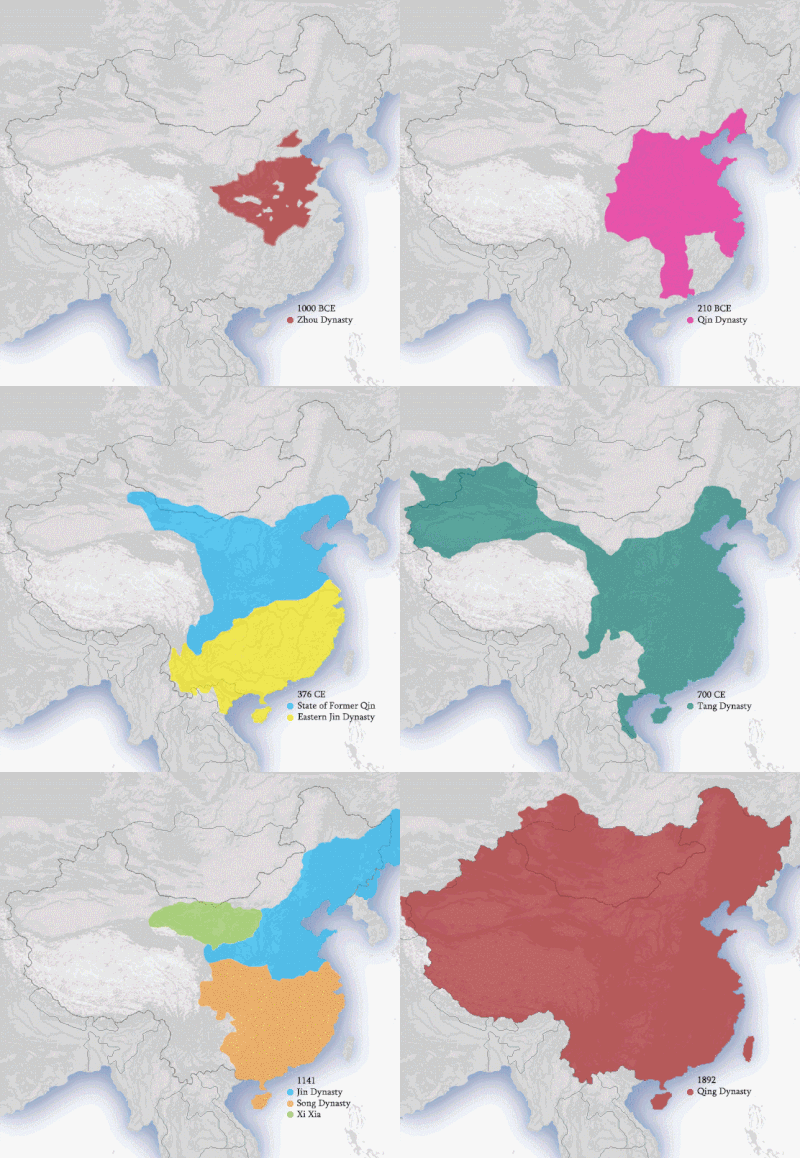


The Geographical Canvas of Imperial China
China's immense geographical expanse, spanning approximately 3.7 million square miles (9.6 million square kilometers), has been a fundamental determinant of its dynastic history. The diverse landscapes, from the arid north to the fertile south, the towering mountain ranges to the vast river systems like the Yangtze and Yellow Rivers, dictated agricultural practices, settlement patterns, and the very feasibility of centralized control. The natural resources available, such as fertile land for agriculture and mineral deposits, fueled economic development and supported large populations.
The strategic importance of certain regions, like the North China Plain, often made them the heartland of successive dynasties. Conversely, the vastness also presented challenges for communication and governance, leading to the development of sophisticated administrative networks and infrastructure projects, such as canals and roads, to bind the empire together. The concept of 'all under heaven' (Tianxia) reflected a worldview where China was the center of civilization, a perspective shaped by its geographical prominence.
Chronicles of Power
The dynastic system, beginning with Yu the Great around 2070 BC and concluding with Yuan Shi Kai in 1916, represents the dominant mode of political organization in Chinese history. This periodization, while conventional, offers a framework for understanding the succession of ruling families and the distinct characteristics of each era. The Zhou Dynasty's remarkable longevity of approximately 790 years, though divided into Western and Eastern periods, highlights a period of significant philosophical development, including the emergence of Confucianism and Taoism.
The territorial scale of dynasties like the Yuan and Qing, often vying for the title of largest in Chinese history, demonstrates periods of immense imperial expansion and influence. Crucially, not all dynasties were founded by the Han ethnic group; the presence of dynasties like the Yuan (Mongol) and Qing (Manchu) underscores the dynamic ethnic and cultural interactions that shaped China's imperial past. The cyclical nature of dynastic change, often attributed to the Mandate of Heaven, reflects a philosophical understanding of governance and legitimacy.
The Fabric of Society
Each dynasty contributed uniquely to the rich tapestry of Chinese culture. The artistic achievements, such as the intricate porcelain of the Ming Dynasty or the landscape painting that flourished during the Song Dynasty, are enduring testaments to the creative spirit of the times. Philosophical and religious thought also evolved significantly, with different dynasties patronizing or suppressing various schools of thought.
The concept of 'Tiāncháo' (Celestial Dynasty) was not merely a self-appellation but reflected a deeply ingrained belief in China's cultural and political superiority. This perception influenced its interactions with neighboring states, which often paid tribute, acknowledging China's paramount status. Daily life was profoundly shaped by social hierarchies, Confucian ethics, and the prevailing customs of the ruling dynasty, creating a complex and multifaceted societal structure.
Engines of Empire
The economic foundations of China's dynasties were critical to their longevity and power. Agriculture, particularly the cultivation of rice in the south and wheat in the north, formed the bedrock of the economy, supporting vast populations. Dynasties actively promoted trade, with the Silk Road being a prime example of how China connected with the wider world, facilitating the exchange of goods like silk, spices, and precious metals, as well as ideas and technologies.
Innovations in areas such as papermaking, printing, gunpowder, and the compass, many of which originated or were significantly developed during specific dynasties, had profound global impacts. The state often played a significant role in managing resources, undertaking large-scale infrastructure projects, and regulating key industries to ensure economic stability and imperial prosperity.
The Mandate and the Meritocracy
The governance structure of Chinese dynasties was primarily monarchical, with the emperor holding supreme authority, often legitimized by the Mandate of Heaven. This hereditary system was supported by a sophisticated bureaucratic apparatus, staffed by officials selected through a rigorous imperial examination system. This meritocratic element, particularly prominent from the Sui and Tang dynasties onwards, allowed for social mobility and ensured that the administration was, in theory, led by the most capable individuals. Education was highly valued, not just for personal enrichment but as a pathway to public service.
The curriculum typically focused on classical texts, history, and governance, aiming to cultivate virtuous and knowledgeable officials who could effectively administer the vast empire. The effectiveness of this system varied across dynasties, but its influence on shaping Chinese governance and intellectual traditions is undeniable.
See also
Frequently Asked Questions
What is a dynasty in China?+
Why did China have such long dynasties?+
How did the Mandate of Heaven affect dynasties?+
Which dynasties were not ruled by the Han people?+
What are some famous art pieces from Chinese dynasties?+
Based on content from Wikipedia · Licensed under CC BY-SA 4.0