

Don (river)
Images

Don (river)


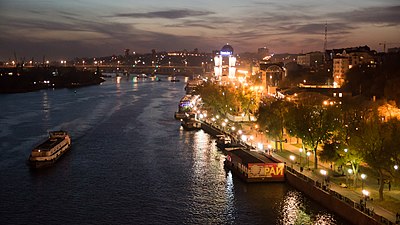
Geomorphological Significance and Hydrological Network
The Don River, with a length of approximately 1,871 kilometers (1,162 miles), is the fourth-longest river in Europe and a principal artery of European Russia. Originating in the Central Russian Upland, its course is characterized by a gradual descent towards the south, eventually emptying into the Sea of Azov. The river's drainage basin is extensive, covering about 422,000 square kilometers (163,000 sq mi), and encompasses a significant portion of the fertile Black Earth region.
This vast network includes numerous tributaries, such as the Seversky Donets, Khopyor, and Medvieditsa, which contribute to its substantial water volume. The Don's hydrological regime is marked by spring floods, low summer flows, and winter ice cover, a pattern typical of rivers in this continental climate zone. Its navigability is enhanced by a system of canals, notably the Volga-Don Canal, which links it to the Volga River and the Caspian Sea, transforming it into a crucial component of Russia's inland waterway system.
A Tapestry of Historical Events and Cultural Identity
The Don River has been a pivotal element in the historical narrative of Russia. For centuries, it served as a natural frontier and a vital transportation route, facilitating trade and migration. It was famously the homeland of the Don Cossacks, a semi-military society that played a significant role in Russian history, from defending the empire's southern borders to participating in expansionist campaigns.
The river's strategic importance was starkly highlighted during World War II, particularly in the Battle of Stalingrad (now Volgograd), where control of the river crossings and its proximity to the front lines were critical. The Don region has also inspired significant cultural works, including Mikhail Sholokhov's Nobel Prize-winning novel, 'And Quiet Flows the Don,' which vividly portrays the lives and struggles of the Cossacks during the tumultuous early 20th century.
The river's presence is deeply interwoven with the cultural identity of the region.
Economic Engine
The economic significance of the Don River is multifaceted. Its floodplains are exceptionally fertile, forming the heart of Russia's agricultural belt, known as the Black Earth region. This area is a major producer of grains, sunflowers, and other essential crops, with the river providing vital irrigation.
Industrially, cities along the Don, such as Volgograd and Rostov-on-Don, are significant manufacturing centers, utilizing the river for water supply and transportation of raw materials and finished goods. The river's role as a transport artery is paramount. The Volga-Don Canal, completed in 1952, created a navigable link between the Caspian Sea and the Sea of Azov, allowing for the efficient movement of bulk cargo like coal, grain, timber, and petroleum products across vast distances.
This connectivity is crucial for both domestic trade and international commerce.
Contemporary Challenges and Sustainable Management
Despite its historical and economic importance, the Don River faces contemporary environmental and management challenges. Pollution from agricultural runoff (fertilizers and pesticides), industrial discharge, and untreated sewage poses a significant threat to water quality and aquatic ecosystems. Eutrophication, the excessive richness of nutrients in a lake or other body of water, is a growing concern. Climate change impacts, such as altered precipitation patterns and increased temperatures, can affect water levels and flow rates, impacting navigation and water availability.
Sustainable management strategies are therefore crucial. These include stricter regulations on industrial and agricultural pollution, investment in wastewater treatment infrastructure, and the promotion of water-saving agricultural practices. Maintaining the ecological health and economic utility of the Don requires a concerted effort to balance human needs with environmental preservation for future generations.
See also
Based on content from Wikipedia · Licensed under CC BY-SA 4.0