

Dominion of Pakistan
Images

File:Flag of the Governor-General of Pakistan (1952–1956).svg


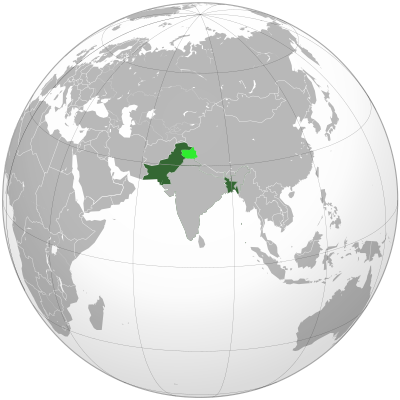


Genesis of a Nation
The Dominion of Pakistan emerged from the monumental legislative act of the British Parliament, the Indian Independence Act of 1947. This act carved out two independent dominions from British India: India and Pakistan. The Dominion of Pakistan was established on August 14, 1947, comprising the Muslim-majority regions of British India.
Its creation was a direct consequence of the Partition of India, a process fraught with immense social and political upheaval. The new dominion inherited territories that had been under direct British rule, now tasked with forging a sovereign identity. Its initial status as a dominion meant it was a self-governing nation within the British Commonwealth, acknowledging the British monarch as its symbolic head, a legacy of its colonial past.
Constitutional Evolution
The period of the Dominion of Pakistan, from 1947 to 1956, was a critical phase of nation-building and constitutional development. The initial dominion status was a temporary arrangement, allowing the new state to function while a permanent constitutional framework was established. The culmination of this effort was the Constitution of Pakistan, adopted on March 23, 1956.
This constitution officially ended Pakistan's status as a dominion and declared it an Islamic Republic. This transition was significant, signifying a complete break from the British Crown and the establishment of a fully sovereign republic with its own head of state. The constitution also introduced administrative divisions that would have long-lasting consequences.
The Two-Winged Enigma
A defining characteristic of the Dominion of Pakistan was its extraordinary geographical configuration. The nation was bifurcated into West Pakistan and East Pakistan, separated by over 1,600 kilometers (approximately 1,000 miles) of Indian territory. This meant that the two wings were not contiguous, presenting immense logistical and political challenges.
Despite this separation, they were administered as a single entity for nearly two decades. This unique geographical arrangement was a constant source of tension and debate regarding national identity, resource allocation, and political representation. The inherent difficulties in bridging this vast distance would ultimately play a crucial role in the events leading to the secession of East Pakistan and the creation of Bangladesh.
Integration of Princely States
Alongside the former British Indian provinces, the Dominion of Pakistan also incorporated numerous princely states. These states, previously under the suzerainty of the British Crown, had the option to accede to either India or Pakistan upon independence. Their rulers signed Instruments of Accession, formalizing their integration into the new dominion.
Initially, these states often retained a degree of internal autonomy, maintaining their unique administrative structures and traditions. However, the long-term policy was one of gradual integration. Over the years, these princely states were progressively merged into the larger administrative provinces, diminishing their distinct status and consolidating Pakistan's territorial sovereignty.
This process continued until the final remnants of their internal self-governance were dissolved by 1974.
Legacy and Historical Significance
The Dominion of Pakistan represents a pivotal, albeit transitional, period in the history of South Asia. Its existence as a dominion was a pragmatic step in the decolonization process, allowing for the establishment of state institutions while navigating the complexities of post-colonial governance. The challenges faced during this era, particularly the geographical division and the process of constitutional reform, laid the groundwork for future political developments.
The eventual transition to a republic and the later separation of East Pakistan underscore the profound impact of historical decisions, geographical realities, and evolving national identities. Understanding the Dominion of Pakistan is key to comprehending the subsequent trajectory of both Pakistan and Bangladesh.
See also
Frequently Asked Questions
When did the Dominion of Pakistan begin and end?+
What does it mean that Pakistan was a "Dominion"?+
Why was Pakistan split into West and East parts?+
What happened to the princely states when Pakistan was formed?+
How did Pakistan become a republic?+
Based on content from Wikipedia · Licensed under CC BY-SA 4.0