

The Mighty Dnieper River
Images
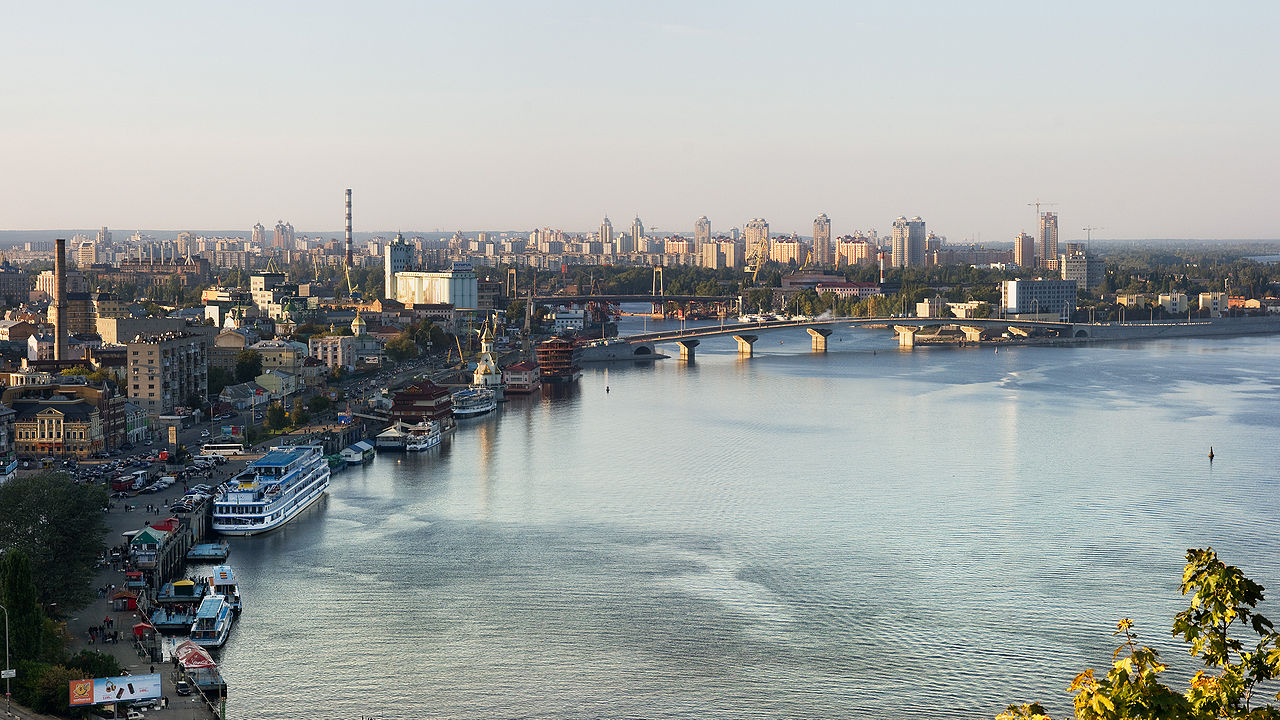
Dnieper


The Dnieper's Hydrological and Geographical Tapestry
The Dnieper River, one of Europe's major river systems, originates in the Valdai Hills of Russia, at an elevation of approximately 725 feet (220 meters). Its drainage basin covers a vast area of about 195,000 square miles (505,000 square kilometers), encompassing significant portions of Russia, Belarus, and Ukraine. The river's course is characterized by a gradual descent, with its gradient becoming less pronounced as it flows south.
Historically, the Dnieper was a more turbulent river, but the construction of a series of dams and reservoirs, beginning in the 20th century, has significantly altered its flow and created navigable channels. These artificial lakes, such as the Kyiv Reservoir and the Kremenchuk Reservoir, have transformed sections of the river into a series of interconnected water bodies, impacting sediment transport and ecological dynamics. The climate varies dramatically along its length, from continental in its upper reaches to more temperate closer to the Black Sea, influencing its hydrological regime and the surrounding ecosystems.
Centuries of Passage
The Dnieper has been a critical artery of civilization and conflict for over a millennium. It formed the backbone of the medieval state of Kyivan Rus', serving as a principal component of the 'route from the Varangians to the Greeks,' which facilitated trade between Scandinavia and the Byzantine Empire. This strategic importance made the river a focal point for power struggles and cultural exchange.
Later, it became a frontier and a vital waterway for the Polish-Lithuanian Commonwealth and the Russian Empire, influencing settlement patterns and military campaigns. The river's banks bear witness to numerous historical events, including Cossack uprisings, industrial development during the Soviet era, and the devastating impacts of World War II. The Dnieper's role as a conduit for both commerce and conquest has indelibly shaped the historical trajectory of Eastern Europe.
The Dnieper's Cultural Resonance and Societal Integration
Beyond its geographical and historical significance, the Dnieper is deeply embedded in the cultural identity of the nations it traverses, particularly Ukraine. It is often referred to as 'Maty Dniepro' (Mother Dnieper) in Ukrainian folklore, symbolizing fertility, strength, and the enduring spirit of the land. The river features prominently in literature, poetry, and music, reflecting its central role in the lives of the people.
Major urban centers like Kyiv, Dnipro, and Zaporizhzhia have developed as vital economic and cultural hubs on its banks, drawing sustenance and identity from its presence. The river's influence extends to religious practices and traditions, with historical monasteries and sites often located along its fertile floodplains. The Dnieper's cultural significance is a testament to its enduring connection with the human populations that have depended on it for millennia.
Economic Engine and Geopolitical Lifeline
In contemporary times, the Dnieper remains a cornerstone of the regional economy and a subject of geopolitical interest. It is a vital transportation corridor, facilitating the movement of bulk commodities such as grain, iron ore, and coal, crucial for the export-oriented economies of Ukraine and Belarus. The river's navigable channels, enhanced by locks and dams, connect inland industrial centers to the Black Sea ports, integrating these nations into global trade networks.
Furthermore, the Dnieper's hydroelectric power generation capacity is substantial, contributing significantly to the energy supply of Ukraine. The management of water resources, including irrigation for agriculture and industrial water use, is a continuous challenge and a source of potential cooperation or contention among riparian states. The river's strategic importance also extends to its role in defense and national security, particularly in the context of regional geopolitical dynamics.
Education and Research
The Dnieper River basin is a rich area for scientific research and educational initiatives. Universities and research institutions in Russia, Belarus, and Ukraine conduct ongoing studies on the river's hydrology, ecology, and environmental health. Key areas of investigation include the impact of industrial pollution, the effects of dam construction on aquatic life and biodiversity, and the management of water resources in the face of climate change.
Educational programs often focus on raising awareness about the importance of the Dnieper as a natural resource and promoting sustainable practices among local communities and students. Understanding the complex interactions within the Dnieper ecosystem is crucial for its long-term preservation and for ensuring its continued benefits to the region's population and economy. The Dnieper serves as a living laboratory for studying riverine environments and their human interactions.
Go deeper
Frequently Asked Questions
What is the Dnieper River and where does it start?+
Why is the Dnieper River important for boats and trade?+
How do dams and reservoirs change the Dnieper?+
Where are some big cities on the Dnieper?+
Why do people call the Dnieper "Mother Dnieper" in Ukraine?+
Based on content from Wikipedia · Licensed under CC BY-SA 4.0