

New York City: A World of Fun!
Images

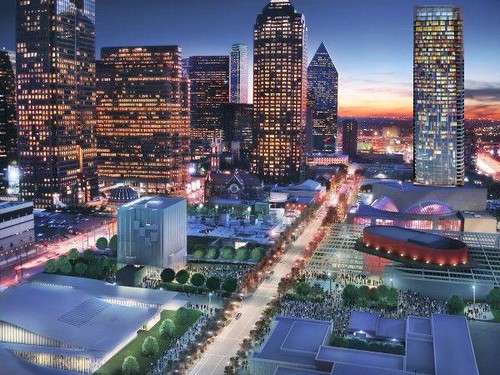
Museum Tower with the Downtown Dallas Financial District to its left and a portion of the explosive growth in highrise construction in Downtown's Uptown District to its right; Woodall Rodgers has become the 21st century 'Main Street' of Downtown Dallas




The Crucible of Global Exchange
New York City's cultural identity is inextricably linked to its profound linguistic and ethnic diversity. Often described as the most linguistically diverse city on Earth, with estimates of up to 800 languages spoken, NYC functions as a living laboratory for global cultural exchange. This phenomenon is the result of centuries of immigration, with significant waves from Europe, Asia, Africa, and Latin America shaping its demographic landscape.
Each community brings not only its language but also its unique traditions, culinary arts, religious practices, and social customs. This constant intermingling and cross-pollination of ideas have fostered an environment where new cultural forms can emerge and thrive. The city's very fabric is a testament to this diversity, evident in its distinct neighborhoods, each a vibrant enclave of a particular heritage, contributing to the city's rich and complex cultural tapestry.
Incubator of American Cultural Revolutions
New York City has historically served as a pivotal incubator for transformative cultural movements that have profoundly influenced American and global society. The early 20th century saw it solidify its position as the nexus of American stand-up comedy, a genre that continues to evolve and entertain. In the mid-20th century, it was the undisputed capital of jazz, a vibrant musical innovation that spread worldwide.
The city was also the fertile ground for the Beat Generation, a literary and cultural rebellion, and later became the birthplace of punk rock and hip hop, genres that have redefined popular music. The Harlem Renaissance, a monumental flourishing of African American literature, music, and art, stands as a testament to the city's role in fostering groundbreaking artistic expression and social commentary. Furthermore, abstract expressionism, known as the New York School, revolutionized the art world from its Manhattan studios.
Broadway's Global Stage and Artistic Ecosystem
Alongside London's West End, New York City reigns as a global capital of musical theater, with 'Broadway' becoming synonymous with theatrical excellence. The dazzling performances, innovative storytelling, and sheer spectacle draw millions of visitors annually, cementing its status as a cultural pilgrimage site. Beyond the Great White Way, NYC is recognized as the world's dance capital, a hub for cutting-edge choreography and performance.
The city's influence extends to the fashion world, with New York Fashion Week being one of the most significant global events, dictating trends and setting the pace for the industry. This vibrant artistic ecosystem is supported by a robust infrastructure, including numerous galleries, performance spaces, and educational institutions, all contributing to New York's enduring appeal as a center for creative production and consumption.
A Center for Art, Media, and Social Change
New York City's cultural dominance is further amplified by its role as a global center for the art market and media. The city attracts artists with unparalleled opportunities, bolstered by significant public funding for the arts, often exceeding national endowments. This concentration of talent and resources makes it a critical node in the international art world.
Moreover, the city's media landscape, encompassing major publishing houses, film studios, and news organizations, amplifies cultural narratives and trends globally. New York has also been a crucial site for social movements, notably the Stonewall Riots in Greenwich Village, which ignited the modern gay rights movement and are recognized as a National Historic Landmark. This confluence of artistic innovation, media power, and social activism underscores New York City's multifaceted and enduring cultural significance.
See also
Frequently Asked Questions
What makes New York City the most linguistically diverse city in the world?+
Why is New York City called a global cultural capital?+
How did New York City help create famous music styles like jazz, punk rock, and hip hop?+
Where can you see Broadway shows in New York City?+
Are there many art schools and galleries in New York City?+
Based on content from Wikipedia · Licensed under CC BY-SA 4.0