

City of Brussels
Images

City of Brussels
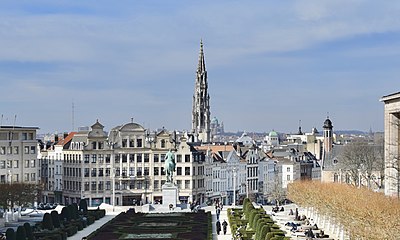


The Administrative and Political Heartbeat of Europe
The City of Brussels, the largest municipality within the Brussels-Capital Region, functions as the historical nucleus and administrative core of Belgium. Its significance extends far beyond national borders, as it is the de facto capital of the European Union. Hosting principal EU institutions, including the European Commission and the Council of the European Union, Brussels serves as the primary venue for European policy-making and intergovernmental cooperation.
This concentration of power makes it a critical global hub for diplomacy, international relations, and political discourse, attracting a diverse population of diplomats, policymakers, and expatriates. The city's role as a nexus for both Belgian and European governance underscores its unique geopolitical standing.
A Tapestry of Territories
The administrative boundaries of the City of Brussels encompass more than just its historic central district, known as the Pentagon due to its shape. It extends north to include the former municipalities of Haren, Laeken, and Neder-Over-Heembeek, areas that contribute to the city's urban sprawl and diverse character. To the southeast, the city's territory includes the prestigious Avenue Louise and the expansive Bois de la Cambre park.
This latter area, a significant green lung for the city, borders Flemish municipalities, highlighting the complex administrative and geographical interconnections within the broader Brussels metropolitan area. This territorial composition creates a varied urban landscape, from dense city centers to expansive natural spaces.
Demographic Dynamics and Linguistic Landscape
As of January 1, 2024, the City of Brussels was home to 196,828 inhabitants. The population density is notably high, reaching 5,949 people per square kilometer, indicating a densely populated urban environment. A significant portion of the residents, 75,998 as of 2023, are non-Belgian nationals, reflecting Brussels' status as a major international center.
Legally, the city is bilingual, with both French and Dutch recognized as official languages. This duality is visible in public signage, administration, and daily life, creating a unique linguistic environment. While French is predominantly spoken in the city center, Dutch plays an equally important role in the region's governance and cultural identity, fostering a dynamic interplay between these two linguistic communities.
Economic Engine and Cultural Richness
Brussels' economy is driven by its role as an administrative and political center, with a strong presence in international organizations, finance, and services. The presence of the EU institutions generates significant economic activity, supporting a large workforce and numerous related industries. Beyond its governmental functions, Brussels boasts a rich cultural heritage.
Its historic Grand Place is a UNESCO World Heritage site, celebrated for its stunning Baroque architecture. The city is also globally renowned for its culinary contributions, particularly its world-class chocolate and waffles. Furthermore, Brussels has a vibrant arts scene, including numerous museums, galleries, and a strong tradition in comic strip art, with many buildings adorned with colorful murals depicting beloved characters.
Historical Evolution and Urban Development
The City of Brussels has a long and complex history, evolving from a medieval settlement into a major European capital. Its strategic location on the Senne River facilitated its growth as a trading center. Over centuries, it has been shaped by various rulers and historical events, including periods of French, Spanish, and Austrian influence, before becoming the capital of independent Belgium in 1830.
The 20th century saw Brussels solidify its position as the administrative heart of the European project, with the establishment of key EU institutions. This historical trajectory has resulted in a city characterized by a blend of architectural styles, from medieval structures to Art Nouveau and modern designs, each layer telling a part of its enduring story.
See also
Frequently Asked Questions
What is the City of Brussels?+
Why is Brussels called the heart of Europe?+
Where can I find the famous Grand Place in Brussels?+
How many people live in the City of Brussels?+
Why do people speak both French and Dutch in Brussels?+
Based on content from Wikipedia · Licensed under CC BY-SA 4.0