

Chrysler Building
Images

Chrysler Building




Competition and Ambition
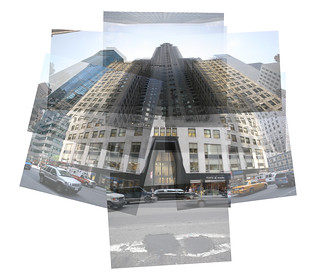
The Chrysler Building, completed in 1930, stands as a monumental achievement in early skyscraper design, reaching a height of 1,046 feet. Its construction was deeply intertwined with a fierce architectural rivalry of the era, a race to erect the world's tallest building. Initially conceived by real estate developer William H.
Reynolds, the project was ultimately commissioned and personally funded by Walter Chrysler, the titan of the automotive industry. Chrysler envisioned the building not just as a corporate statement but as a lasting real estate investment for his heirs, a legacy that would pierce the Manhattan skyline. This personal investment fueled an ambitious design that sought to surpass all existing structures, including the nearby 40 Wall Street, and briefly held the title of the world's tallest building for 11 months before being eclipsed by the Empire State Building.
Art Deco Flourish
The building's enduring fame is largely attributable to its masterful execution of the Art Deco style. Designed by architect William Van Alen, the Chrysler Building is a symphony of geometric forms, luxurious materials, and symbolic ornamentation. The iconic crown, a seven-tiered marvel of stainless steel, evokes images of soaring eagles, sunbursts, and the aerodynamic fins of automobiles, directly referencing the industrial prowess of the Chrysler Corporation.
Decorative elements, such as the gargoyles shaped like eagle heads and the radiator cap-inspired motifs, are not mere embellishments but integral components of the building's narrative. The interior lobby continues this theme with rich marble, exotic woods, and vibrant murals by Edward Trumbull, celebrating the dynamism of the machine age and the spirit of modern America.
Engineering Prowess and Structural Innovation
As one of the world's first supertall skyscrapers, the Chrysler Building represented significant advancements in engineering and construction techniques. Its foundation is anchored deep into Manhattan's bedrock, providing stability for its immense height. The building utilizes a steel skeleton, a crucial innovation that allowed for greater height and more flexible interior layouts compared to earlier masonry structures.
The exterior is clad in bricks, but it is the internal steel framework that bears the primary load. The distinctive terraced setbacks, mandated by New York City's 1916 zoning resolution to allow light and air to reach the streets below, contribute to its unique silhouette and structural integrity, creating a visually dynamic form that tapers towards its crowning glory.
Enduring Legacy
Upon its completion, the Chrysler Building garnered a spectrum of critical reception, from praise for its modernist aesthetic to criticism of its perceived ostentation. However, over time, its architectural merit has been overwhelmingly recognized. In 1976, it was designated a National Historic Landmark, and its facade and interior were declared New York City Landmarks in 1978, safeguarding its unique character.
As of 2019, it remains the 12th-tallest building in New York City, a testament to its lasting impact. The Chrysler Building is more than just a historical monument; it is a vibrant cultural icon, frequently appearing in film, photography, and literature, symbolizing New York's architectural ambition and artistic innovation. Its continuous presence and aesthetic appeal ensure its relevance and admiration in the 21st century.
Go deeper
Frequently Asked Questions
What is the Chrysler Building?+
Why does the Chrysler Building have a crown that looks like a shiny rocket?+
How did the Chrysler Building become the tallest building for a while?+
Where is the Chrysler Building located?+
Why is the Chrysler Building considered a landmark?+
Based on content from Wikipedia · Licensed under CC BY-SA 4.0