

Chachacomani
Images
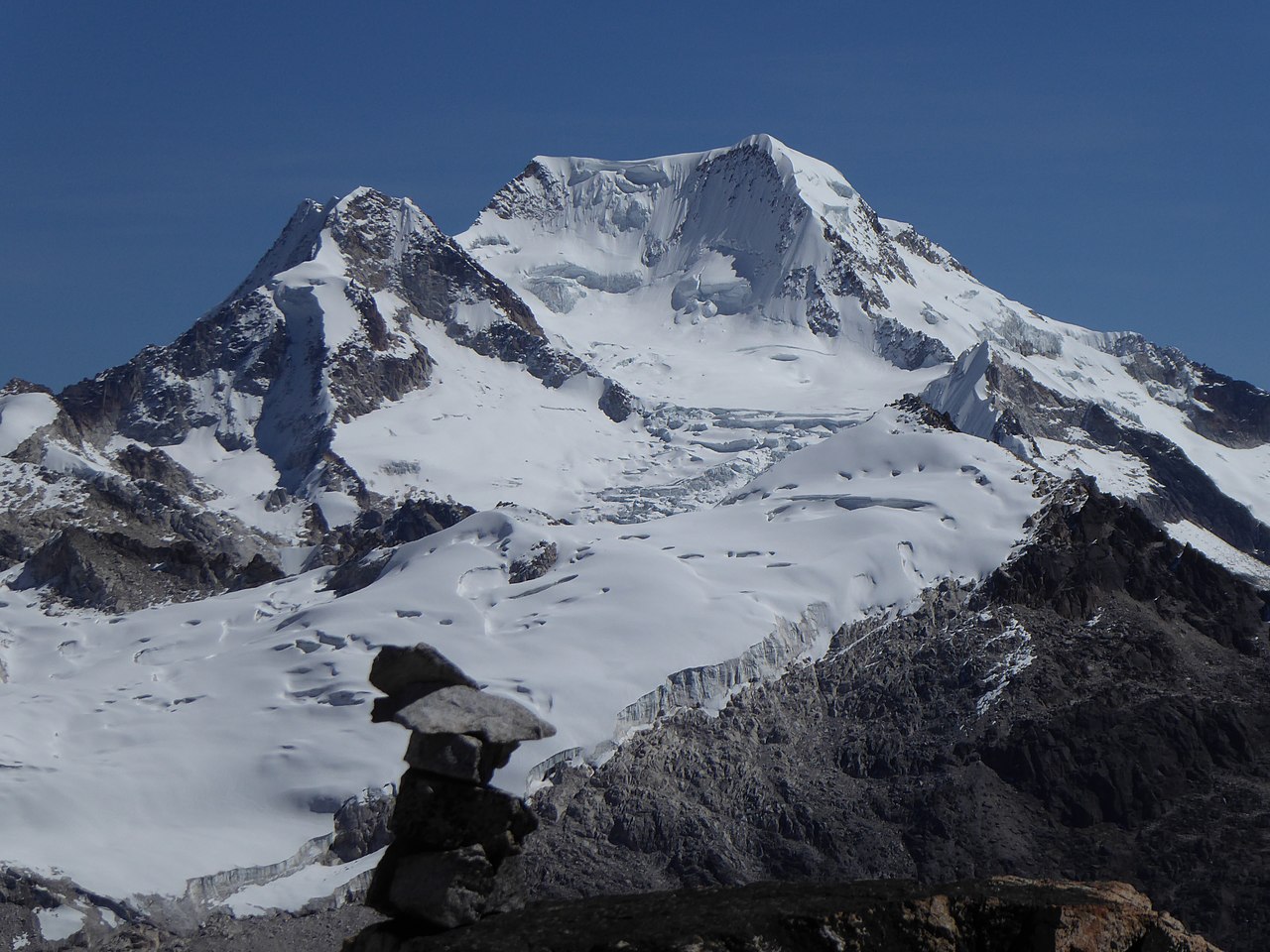
Chachacomani seen from the south


Geological Majesty and Andean Context
Chachacomani, with its imposing elevation of 6,074 meters (19,928 feet), is a prominent feature within the Cordillera Real, a sub-range of the vast Andes Mountains in Bolivia. This region is characterized by its dramatic glacial landscapes and high-altitude peaks, often composed of ancient metamorphic and igneous rocks. The mountain's distinctive snow and ice cap is a testament to its extreme altitude, where temperatures remain well below freezing year-round.
The thin atmosphere at this elevation significantly impacts the environment, limiting vegetation to hardy mosses and lichens at lower slopes, with the higher reaches being predominantly barren rock and permanent snowfields. The geological forces that shaped the Andes continue to influence this area, making it a dynamic and awe-inspiring natural environment.
The Climber's Gauntlet
For seasoned mountaineers, Chachacomani represents a significant technical and physical challenge. Ascending its steep, often icy faces requires advanced climbing techniques, including ice climbing and crevasse rescue. Climbers typically embark on multi-day expeditions, acclimatizing gradually to the severe altitude to mitigate the risks of altitude sickness.
The routes can involve navigating treacherous glaciers, unpredictable weather patterns, and the constant threat of avalanches. Despite these formidable obstacles, the allure of Chachacomani lies in its demanding nature and the unparalleled panoramic views from its summit. Successfully reaching the peak is a testament to a climber's skill, endurance, and determination, offering a profound sense of accomplishment.
Hydrological Significance and Ecological Role
Beyond its appeal to adventurers, Chachacomani plays a crucial role in the regional hydrological cycle. The extensive snow and ice fields act as natural reservoirs, accumulating precipitation during colder months and releasing meltwater throughout the year. This meltwater is a critical source for numerous rivers and streams that descend into the lower valleys, sustaining ecosystems and providing water for agriculture and human consumption in communities downstream.
The health of these glacial systems is increasingly important in the context of climate change, as shifts in temperature and precipitation patterns can significantly affect water availability for both nature and people in Bolivia.
Cultural Resonance and Modern Relevance
Mountains like Chachacomani often hold deep cultural and spiritual significance for the indigenous peoples of the Andes. They are frequently viewed as sacred entities, integral to local cosmologies and traditions. While Chachacomani may not have the same historical prominence as some other Andean peaks, its sheer presence and the challenges it presents contribute to the region's identity.
In contemporary times, Chachacomani is also relevant in discussions about climate change monitoring, as glaciologists study its ice cover to understand broader trends in global warming. Its existence highlights the delicate balance between human endeavor, natural resources, and the environment in high-altitude regions.
Navigating the Peaks
The governance and management of high-altitude areas like Chachacomani involve complex considerations. While Bolivia has national parks and protected areas, the specific regulations for climbing and resource management in remote mountain regions can be intricate. Access is typically managed through permits and guided expeditions, often requiring coordination with local authorities and guiding services.
The economic impact of mountaineering tourism, though perhaps not as significant as in some other global climbing destinations, contributes to local economies through employment for guides, porters, and support staff. Ensuring sustainable tourism practices is vital to preserve the pristine environment of the Cordillera Real for future generations.
See also
Frequently Asked Questions
What is Chachacomani?+
Why do climbers want to climb Chachacomani?+
How does Chachacomani help people and nature?+
Where can you see Chachacomani?+
What happens to Chachacomani when the weather changes?+
Based on content from Wikipedia · Licensed under CC BY-SA 4.0