

Cerium
Images
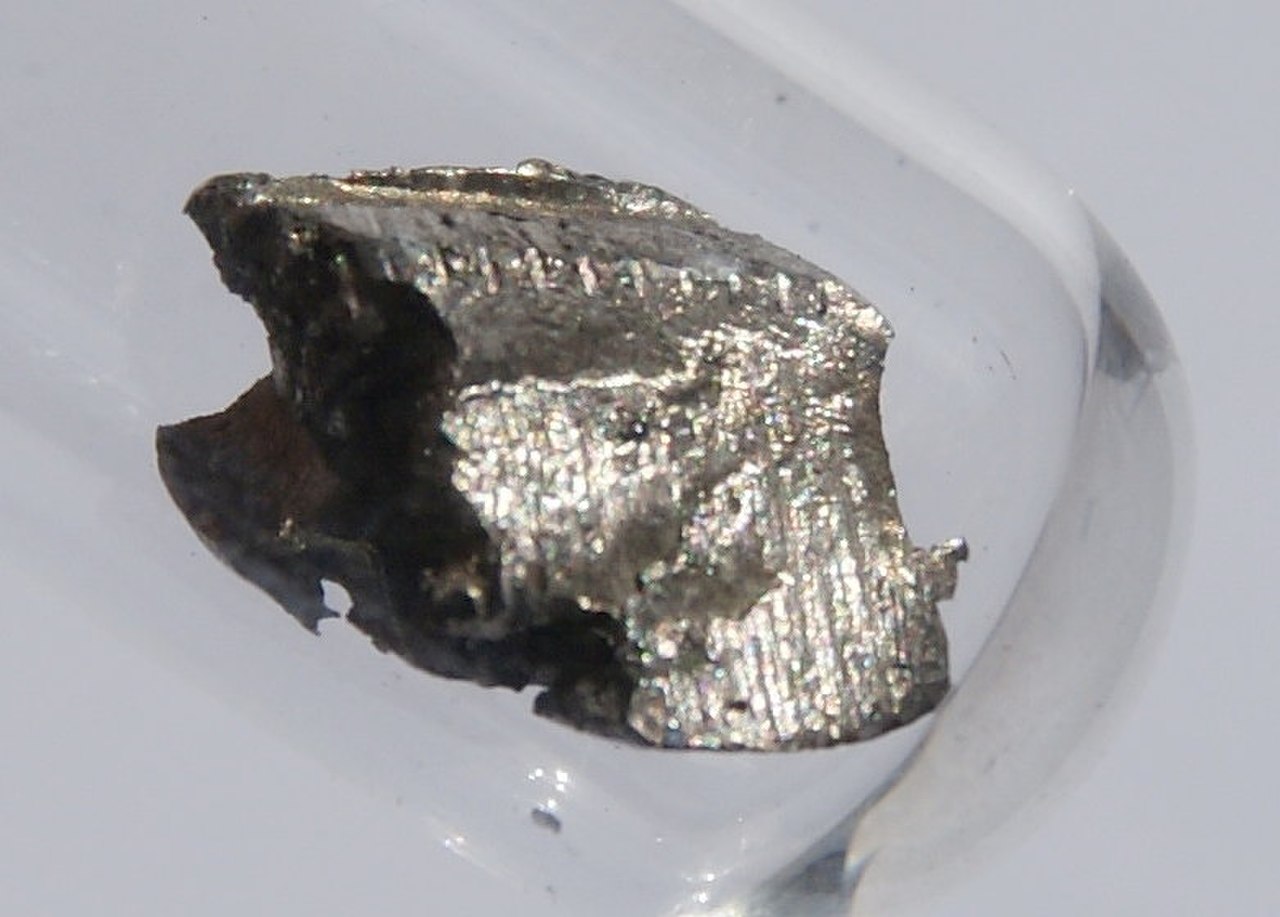
Cerium
A Unique Lanthanide with Distinctive Chemistry
Cerium (Ce), atomic number 58, is a soft, ductile, silvery-white metal that holds a significant position within the lanthanide series. It is notably the most abundant of the rare-earth elements, with an estimated crustal abundance of 68 ppm, surpassing its lanthanide neighbors. While cerium typically exhibits the characteristic +3 oxidation state common to the series, its ability to readily form a stable +4 oxidation state is a defining chemical feature.
This dual oxidation state capability is crucial, as it allows for easier separation from other lanthanides through selective chemical reactions. For instance, cerium can be oxidized to Ce⁴⁺ in aqueous solutions, a property that distinguishes it and facilitates its isolation from mineral ores like monazite and bastnäsite. Unlike many other elements, cerium has no established biological role in humans, and while not acutely toxic, prolonged or intense exposure can pose health risks.
Its chemical reactivity, particularly its propensity to oxidize, underpins many of its industrial applications.
The Genesis of Discovery
The discovery of cerium in 1803 marked a pivotal moment in the understanding of the periodic table, being the first of the lanthanide series to be identified. The discovery was a collaborative effort, with Jöns Jakob Berzelius and Wilhelm Hisinger in Sweden, and Martin Heinrich Klaproth in Germany, independently reporting their findings in the same year. However, the path to isolating pure cerium metal was protracted. Initial progress was made by Carl Gustaf Mosander in 1839, who succeeded in separating cerium(III) oxide from other rare-earth components.
The definitive isolation of the metallic element itself was not achieved until 1875 by William Francis Hillebrand. This historical timeline underscores the challenges faced by early chemists in characterizing and purifying these chemically similar elements, requiring meticulous experimentation and analytical techniques to distinguish and isolate them.
Industrial Significance
Cerium's unique properties translate into a diverse range of critical industrial applications. Its pyrophoric nature, the ability to generate sparks when struck, makes it a key component in ferrocerium alloys used for lighter flints. This application leverages the rapid oxidation of cerium to produce intense heat and light.
Beyond ignition, cerium(IV) oxide (ceria) is indispensable in the glass industry as a highly effective polishing agent, capable of achieving the ultra-smooth finishes required for optical lenses, mirrors, and electronic displays. Ceria also plays a vital role in environmental technology, serving as a crucial component in automotive catalytic converters. Here, it enhances the efficiency of the converter in reducing harmful exhaust emissions by stabilizing the structure of the washcoat and promoting oxygen storage.
In the realm of lighting, cerium-doped yttrium aluminum garnet (YAG) phosphors are used in conjunction with blue LEDs to generate white light, forming the basis of most modern white LED light sources, impacting everything from household bulbs to smartphone screens.
The Chemistry of Application
The utility of cerium is intrinsically linked to its variable oxidation states, particularly the stable +4 state. While the +3 state is energetically favorable for most lanthanides due to their electron configuration, cerium's ability to achieve a stable Ce⁴⁺ state, often facilitated by the formation of strong bonds with oxygen, is key to its applications. In glass polishing, cerium(IV) oxide acts as the abrasive, its hardness and chemical reactivity contributing to the material's effectiveness.
In catalytic converters, the redox cycling between Ce³⁺ and Ce⁴⁺ is fundamental to the catalytic process, enabling the storage and release of oxygen, which is essential for the oxidation of carbon monoxide and hydrocarbons, and the reduction of nitrogen oxides. This dynamic chemical behavior allows cerium-based catalysts to operate efficiently under the demanding conditions within an exhaust system. The development of cerium-doped phosphors also relies on precise control of its electronic structure and interactions with the host lattice to achieve desired light emission properties.
Beyond the Basics
Cerium's classification as a rare-earth element, despite its relative abundance, highlights the historical context of its discovery and the challenges in its extraction and purification. It is typically found in association with other lanthanides, requiring sophisticated metallurgical processes to isolate it in pure form. Its presence in minerals like monazite and bastnäsite means its mining is often linked to the extraction of other valuable rare-earth elements.
Understanding cerium's chemical behavior, especially its oxidation states, is crucial not only for its current applications but also for exploring future uses. Research continues into cerium-based materials for advanced ceramics, solid oxide fuel cells, and novel catalytic systems. Its role in solid-state lighting, for example, has revolutionized energy efficiency in illumination, demonstrating the profound impact of this single element on global technology and sustainability efforts.
Go deeper
Frequently Asked Questions
What is cerium?+
Why does cerium make sparks?+
How is cerium used to polish glass?+
Where does cerium come from?+
Is cerium safe for people?+
Based on content from Wikipedia · Licensed under CC BY-SA 4.0