

Candy
Images
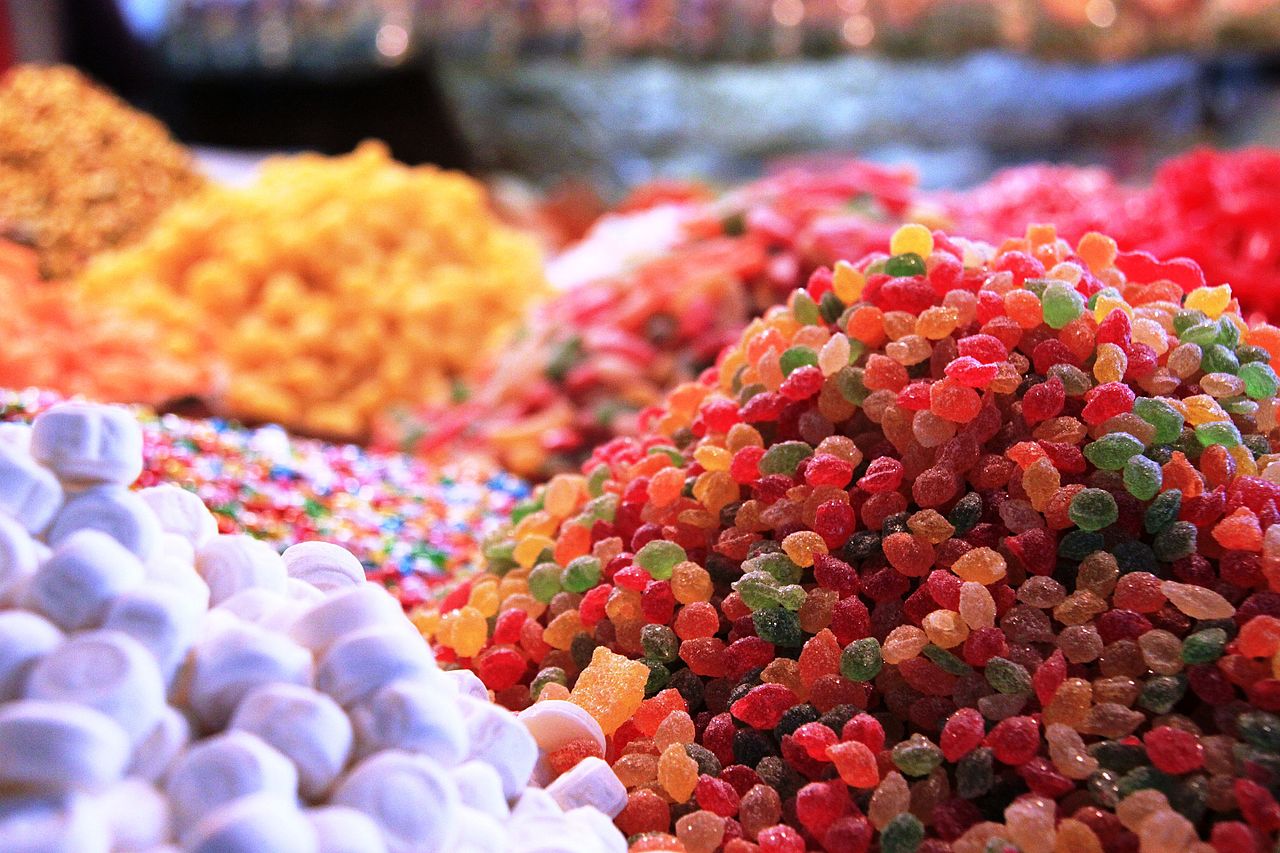
Candy
The Alchemy of Sweetness
The genesis of candy can be traced back to antiquity, where early humans discovered the sweetening properties of honey. Civilizations like the ancient Egyptians and Greeks utilized honey, often mixed with fruits, nuts, and spices, to create rudimentary sweet preparations. These were more akin to preserved fruits or spiced honey than modern confectionery.
The true transformation began with the introduction of refined sugar, initially a luxury commodity derived from sugarcane. The Arab world played a crucial role in developing techniques for sugar refining and distillation, which influenced European candy making after the Crusades. The cultivation of sugarcane in the New World, though often tied to brutal labor practices, dramatically increased sugar availability, making candy more accessible.
The Industrial Revolution further revolutionized candy production with the invention of machinery for grinding, mixing, and molding, leading to mass production and the emergence of iconic brands. This shift democratized candy, transforming it from an elite indulgence to a widespread treat, and also spurred innovations in packaging and distribution, laying the groundwork for the global confectionery industry we see today.
The Chemistry of Candy
The creation of candy is a fascinating exercise in applied chemistry, primarily revolving around the manipulation of sugar solutions. The process hinges on controlling the concentration of sugar and water, and the temperature to which the mixture is heated. When sugar is dissolved in water, it forms a solution.
As this solution is heated, water evaporates, increasing the sugar concentration. The 'sugar stages' – soft ball, firm ball, hard ball, soft crack, and hard crack – represent specific temperature ranges and corresponding sugar concentrations, each yielding a distinct texture. For instance, the soft ball stage (235-245°F or 113-118°C) results in a pliable, chewy candy because the sugar crystals are small and dispersed.
The hard crack stage (300-310°F or 149-154°C) leads to brittle candy as the high sugar concentration prevents significant crystal formation, resulting in a glassy structure. Ingredients like corn syrup or invert sugar are crucial as interfering agents; they inhibit sucrose molecules from crystallizing too readily, preventing graininess and ensuring a smooth mouthfeel. Acids, such as citric or tartaric acid, are used to create sour candies by lowering the pH and providing a tart counterpoint to sweetness, while emulsifiers like lecithin are vital for achieving smooth chocolate textures.
Candy's Cultural Resonance and Economic Powerhouse
Candy occupies a unique and often underestimated position in global culture and economy. Culturally, it is deeply embedded in rituals, celebrations, and social interactions. Holidays like Halloween, where candy distribution is a central activity, and Easter, with its chocolate eggs, highlight candy's role in marking significant events.
It serves as a symbol of reward, comfort, and indulgence, often associated with childhood nostalgia and emotional well-being. Economically, the confectionery industry is a colossal global market, generating billions of dollars annually. It supports vast supply chains, from agriculture (sugarcane, cocoa, fruits) to manufacturing, marketing, and retail.
The industry is characterized by intense competition, brand loyalty, and continuous innovation in product development and marketing strategies. Furthermore, the global trade in sugar and cocoa, key ingredients in many candies, has historically shaped international relations and economic policies, sometimes linked to complex ethical considerations regarding labor and sustainability. Candy's economic impact is thus far-reaching, influencing employment, trade balances, and consumer spending patterns worldwide.
The Diverse Landscape of Confectionery
The spectrum of candy is extraordinarily broad, encompassing a vast array of categories defined by ingredients, texture, and form. Chocolate, derived from the fermented, roasted, and ground seeds of the cacao tree, stands as a dominant force. Its complex flavor profile and luxurious texture, achieved through processes like conching, have made it a global favorite in forms ranging from solid bars to intricate truffles.
Beyond chocolate, the world of sugar candies is immense. Hard candies, like lollipops and boiled sweets, rely on high sugar concentrations for their brittle structure. Chewy candies, such as caramels, taffy, and gummies, utilize lower sugar concentrations and interfering agents to achieve their characteristic pliability; gummies often incorporate gelatin or pectin for their unique bite.
Sour candies employ acids to create a sharp contrast, while nougats and marzipans offer nutty and chewy textures derived from nuts and egg whites. The novelty candy sector thrives on creativity, introducing unusual flavors, interactive elements, or unique shapes to capture consumer interest, constantly pushing the boundaries of what candy can be.
Go deeper
Frequently Asked Questions
What is candy made from?+
How does candy change when it gets hotter?+
Why do some candies taste sour?+
When did candy become popular for everyone?+
Where does the sugar for candy come from?+
Based on content from Wikipedia · Licensed under CC BY-SA 4.0