

The Great Bronze Age Bust!
Images
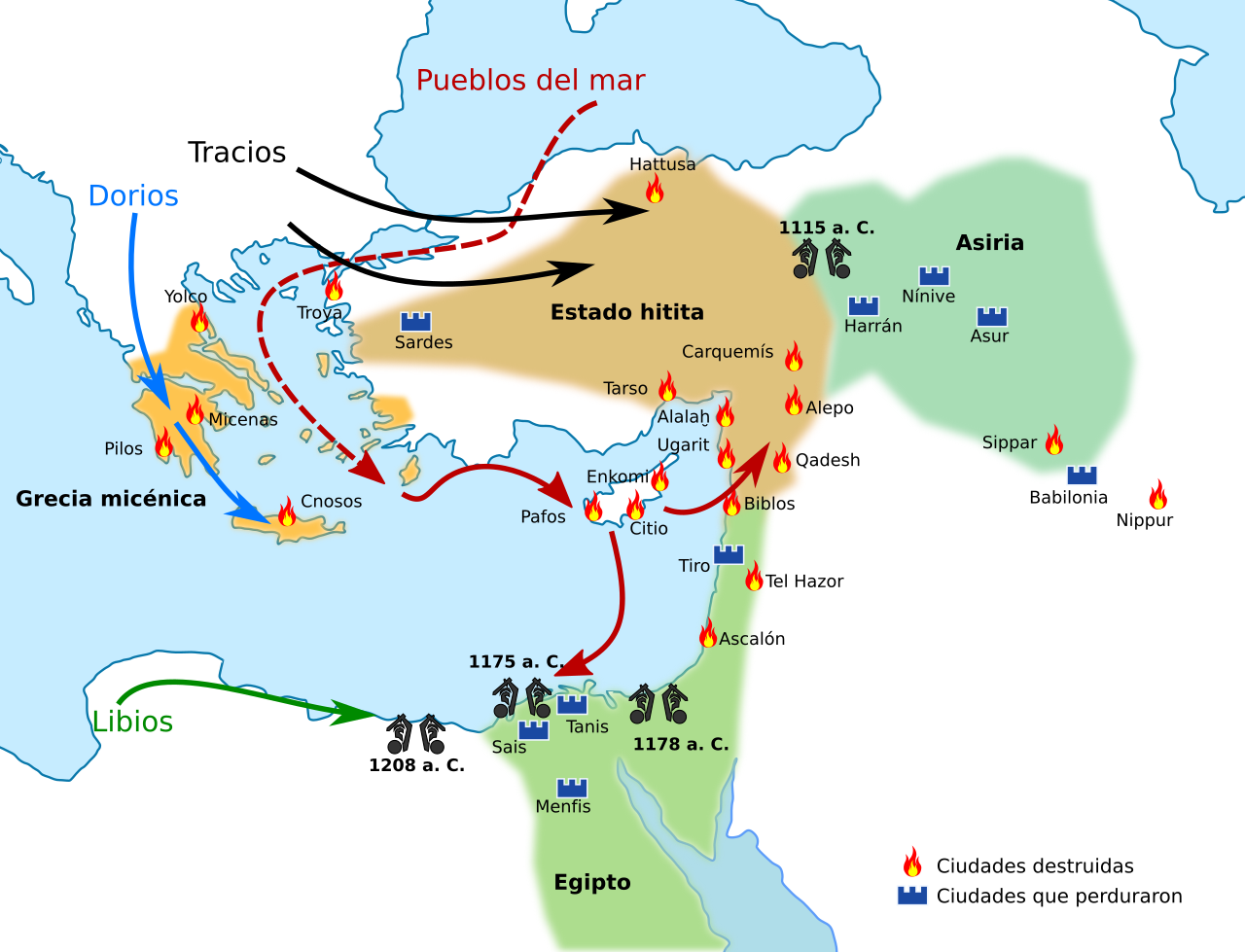
Bronze-age-collapse-es


The Zenith of Bronze Age Interconnectivity and Its Fragility
The Late Bronze Age (roughly 1600-1200 BCE) represented a peak of complex, interconnected civilizations across the Eastern Mediterranean and Near East. Empires like the Hittites, Egyptians, Mycenaeans, and Kassites engaged in sophisticated diplomacy, extensive trade networks, and the exchange of cultural ideas. Major urban centers such as Hattusa, Mycenae, Knossos, and Ugarit were hubs of political power, economic activity, and artistic production.
Bronze metallurgy was widespread, enabling the creation of advanced weaponry and tools. International relations were formalized through treaties and gift exchanges, creating a seemingly stable and prosperous international system. However, this very interconnectedness, while fostering growth, also created a system highly vulnerable to cascading failures.
The reliance on long-distance trade for essential resources like tin, coupled with centralized political structures, meant that disruptions in one area could rapidly destabilize others, revealing an underlying fragility beneath the veneer of power and prosperity.
The Perfect Storm
The collapse around 1200 BCE was not attributable to a single cause but rather a confluence of catastrophic events that overwhelmed the existing societal structures. Paleoclimatic data suggests a period of prolonged and severe drought across the region, which would have crippled agricultural production, leading to widespread famine and social unrest. Simultaneously, seismic activity appears to have increased, with evidence of major earthquakes damaging numerous cities, including some of the most prominent centers.
Adding to this environmental and geological stress were human factors. The 'Sea Peoples,' a diverse group of maritime raiders, are documented in Egyptian inscriptions as having launched devastating attacks on coastal settlements, contributing to widespread destruction and displacement. Internal rebellions, breakdown of trade, and the disruption of established political authority likely exacerbated these crises, leading to a systemic collapse where multiple interconnected systems failed simultaneously.
Archaeological Echoes
Archaeological evidence provides stark testimony to the abrupt end of the Bronze Age. Excavations reveal layers of destruction, often marked by fire and debris, in cities across the affected regions. Sites like Ugarit show evidence of sudden abandonment and destruction, with administrative texts left unfinished, hinting at the rapid onset of the crisis.
Mycenaean palaces, once centers of power, were destroyed and never rebuilt to their former glory, leading to a significant population decline and a shift towards smaller, more fortified settlements. The widespread disruption of trade is evident in the sudden disappearance of luxury goods and the decline in the production of standardized pottery. The analysis of skeletal remains can also offer insights into malnutrition and violence.
By cross-referencing findings from diverse archaeological contexts with textual evidence, scholars attempt to map the spread and impact of the collapse, identifying regional variations and common patterns of destruction and societal transformation.
From Collapse to Transformation
The Late Bronze Age collapse marked a profound turning point in ancient history, ushering in a period of significant societal restructuring and cultural change. The fall of major empires like the Hittites and the weakening of Egypt created a power vacuum, allowing new groups and peoples to emerge and establish their own kingdoms. The intricate international system of the Bronze Age was replaced by a more fragmented landscape.
This period of disruption, often termed a 'Dark Age,' saw a decline in literacy, monumental architecture, and long-distance trade in many areas. However, it also fostered innovation and adaptation. New technologies, such as the widespread adoption of iron metallurgy, began to take hold, offering alternatives to bronze.
The collapse ultimately paved the way for the development of new cultural identities and political structures that would define the subsequent Iron Age, including the rise of the Phoenicians, the early Israelites, and the Greek city-states, demonstrating that periods of collapse can also be fertile ground for future development.
Enduring Lessons
The study of the Bronze Age collapse offers critical insights into the dynamics of complex societies and the potential consequences of environmental and social stressors. It serves as a historical case study for understanding systemic risk, highlighting how interconnectedness can amplify vulnerability. The evidence of climate change contributing to societal instability resonates strongly with contemporary concerns about global warming and its potential impacts on food security, migration, and geopolitical stability.
The collapse also underscores the importance of societal resilience and adaptability in the face of unforeseen challenges. Furthermore, the emergence of new political and cultural forms from the ashes of collapsed civilizations demonstrates the cyclical nature of history and the potential for renewal and innovation following periods of profound disruption. Understanding this ancient cataclysm provides valuable perspective on the challenges and opportunities facing our own interconnected global society.
Go deeper
Frequently Asked Questions
What happened to the cities during the Great Bronze Age Bust?+
Why did the Bronze Age civilizations collapse around 1200 BCE?+
How did drought and earthquakes affect the people of the Bronze Age?+
Who were the Sea Peoples and what did they do?+
What evidence do archaeologists find that shows the collapse?+
Based on content from Wikipedia · Licensed under CC BY-SA 4.0