

Borough: Your Town's Special Name!
Images

File:Location map United Kingdom Borough of Ribble Valley.svg




The Genesis of the Borough
The term 'borough' originates from Old English 'burh,' signifying a fortified place or town. Historically, a borough was far more than just a settlement; it represented a degree of local autonomy and self-governance, often enshrined by royal charter. These entities were typically walled towns, strategically important for defense and economic activity.
Their self-governing status meant they could administer their own justice, collect taxes, and manage local affairs, distinguishing them from less organized settlements. This autonomy was crucial in a period where central authority could be weak or distant. The borough system provided a framework for urban development, fostering trade and civic life.
The concept laid the groundwork for later municipal structures, emphasizing the importance of local administration and community identity within a larger kingdom or territory. The very existence of a borough often implied a special status, granted due to strategic importance or economic contribution.
Evolution of the Borough
As feudal societies transitioned into more centralized states, the nature of boroughs evolved significantly. While the physical walls might have become less critical with increased stability, the administrative and political significance of boroughs persisted and transformed. In England, for instance, boroughs became important units for parliamentary representation, with certain boroughs having the right to send representatives to Parliament.
This shifted the focus from physical defense to political influence. The granting of charters continued, bestowing specific rights and privileges, but the underlying principle of a distinct administrative unit remained. This evolution highlights how governance structures adapt to changing societal needs and political landscapes.
The borough became a key element in the development of representative democracy, even if its origins were rooted in a much earlier form of local control and protection.
Contemporary Boroughs
In modern times, the term 'borough' is most prominently associated with large urban centers, serving as a primary administrative division. The most famous examples are New York City and London. In New York City, the five boroughs (Manhattan, Brooklyn, Queens, The Bronx, and Staten Island) function as counties and have distinct identities, populations, and local governance structures, overseen by borough presidents and community boards.
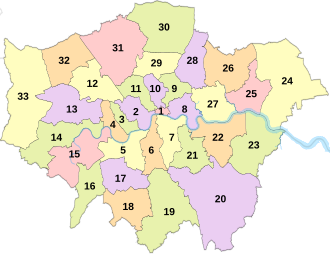
This model allows for the management of a vast and diverse metropolis by breaking it down into more manageable units, each with specific needs and characteristics. London's system of 32 boroughs (plus the City of London) forms the basis of its local government, responsible for delivering a wide range of public services. These contemporary boroughs are critical for urban planning, service delivery, and ensuring local representation within the broader city administration, demonstrating the enduring utility of this historical administrative concept.
The Enduring Relevance of the Borough Concept
The concept of the borough, despite its ancient origins, remains highly relevant in contemporary geography and political science. It exemplifies how historical administrative divisions can persist and adapt to modern challenges. Boroughs provide a framework for understanding the complex organization of large cities, balancing centralized authority with localized governance.
They contribute to the unique cultural and social fabric of urban areas, allowing distinct communities to maintain their identity while participating in a larger civic entity. Furthermore, the historical evolution of boroughs offers insights into the development of local government and representative democracy. Studying boroughs helps us appreciate the layered nature of governance and the ways in which places are structured to serve their populations effectively, reflecting both historical legacies and present-day administrative necessities.
Key Facts and Terms in Borough Studies
Understanding boroughs involves grasping specific terminology and factual contexts. Historically, a borough was a self-governing, often walled, town. Today, it functions as an administrative division, a way to organize parts of a larger city or region.
Key examples include the five boroughs of New York City (Manhattan, Brooklyn, Queens, The Bronx, Staten Island) and the numerous boroughs that constitute Greater London. The population of these divisions can range from hundreds of thousands to millions, and their areas vary significantly. The core idea is a defined territory with a specific administrative or political function, rooted in a history of local autonomy and evolving into modern urban management systems.
The term itself carries historical weight, signifying a place with a recognized status and structure.
Go deeper
Frequently Asked Questions
What does the word "borough" mean?+
Why did towns become boroughs in the past?+
How did boroughs change over time?+
Where can we find boroughs today?+
What do boroughs do for people living there?+
Based on content from Wikipedia · Licensed under CC BY-SA 4.0