

City of London
Images

City of London: 122 Leadenhall Street, 'The Cheesegrater'


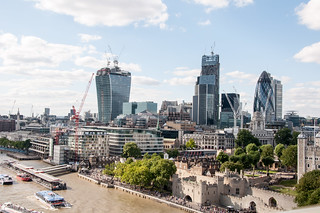




A Microcosm of London's Genesis and Evolution
The City of London, colloquially known as the 'Square Mile,' represents the urbs, the original Roman settlement that laid the foundation for the vast metropolis of London. Established as Londinium around 47 AD, it served as the primary administrative and commercial hub for centuries, encompassing the majority of London's population and activity until the Middle Ages. Its distinct identity persists today as a ceremonial county and local government district, separate from the administrative region of Greater London.
This separation is not merely historical; it is enshrined in its unique governance structure. The City's resilience is evident in its survival through Roman occupation, medieval expansion, the Great Fire of 1666, and the Blitz of World War II, with landmarks like the Monument and the surviving sections of the London Wall bearing witness to its enduring past. Its compact area belies its immense historical weight as the cradle of English urban development.
The Engine Room
Despite its diminutive geographical footprint and modest resident population, the City of London stands as a preeminent global financial center, rivaling New York and Tokyo. It is the heart of the UK's financial services industry, housing the headquarters of the Bank of England and the London Stock Exchange. Beyond banking and investment, the 'Square Mile' is a powerhouse for insurance, with Lloyd's of London being a prime example, and a crucial center for the legal profession, evidenced by the presence of the historic Inns of Court along its western boundary.
The sheer volume of economic activity is staggering: over half a million people commute into the City daily for work, engaging in complex transactions and driving international trade. This concentration of financial and professional expertise makes the City a critical node in the global economic network, influencing markets and economies worldwide.
A Distinctive Governance
The governance of the City of London is a fascinating anomaly within the United Kingdom's administrative landscape. It operates under the jurisdiction of the City of London Corporation, an entity with ancient roots and unique powers, led by the Lord Mayor of London. This Lord Mayor is distinct from the Mayor of London, who governs Greater London.
The Corporation is responsible for local services, policing (through the City of London Police), and preserving the City's distinct character and economic interests. Its dual role as a local authority and a powerful advocate for the financial sector gives it considerable influence. This self-governing status, dating back centuries, allows the City to maintain traditions and adapt its regulatory environment to remain competitive on the global stage, a testament to its enduring historical significance.
Architectural Tapestry
The City of London presents a striking architectural juxtaposition, a physical manifestation of its long and layered history. Amidst the towering glass and steel skyscrapers that define its modern financial skyline, remnants of its past stand proudly. Iconic structures like St.
Paul's Cathedral, designed by Sir Christopher Wren, dominate the skyline, a symbol of resilience and rebirth after the Great Fire. Other significant historical sites include the Royal Exchange, Mansion House (the official residence of the Lord Mayor), Guildhall, and the Old Bailey. Crucially, sections of the original Roman London Wall still exist, offering tangible links to the city's earliest days.
This blend of ancient fortifications, grand Georgian and Victorian buildings, and cutting-edge contemporary architecture creates a unique urban environment, where history is not just preserved but actively integrated into the fabric of daily life and commerce.
Education and Legacy
While the City of London is primarily known for its economic might, its connection to education and the cultivation of future leaders is deeply embedded in its history and present. The Inns of Court, located on the City's western edge, are historic residential and professional chambers for lawyers, serving as centers of legal education and training for centuries. These institutions are not just places of work but also repositories of legal knowledge and tradition, shaping generations of legal professionals.
Furthermore, the City's role as a global hub necessitates a highly educated workforce, driving demand for specialized financial and business education. While the City itself doesn't house large universities, its proximity to renowned institutions in London and its status as a center for professional development mean it plays a vital role in the broader educational ecosystem, attracting talent and fostering continuous learning essential for maintaining its competitive edge.
See also
Based on content from Wikipedia · Licensed under CC BY-SA 4.0