

Bogotá: A City in the Clouds!
Images

Bogotá

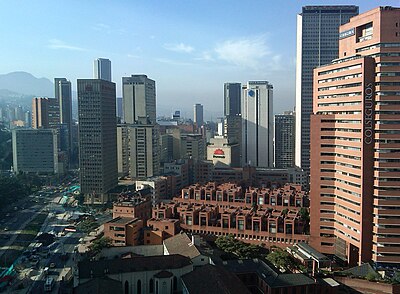


The Andean Metropolis
Bogotá, Colombia's capital, occupies a unique and defining geographical position: the Sabana de Bogotá, a high-altitude plateau within the Eastern Cordillera of the Andes Mountains. Its average elevation of 2,640 meters (8,660 feet) places it among the world's highest capital cities, significantly influencing its climate. The city experiences a temperate highland climate, characterized by cool temperatures year-round, with average daily highs around 19°C (66°F) and lows near 7°C (45°F).
Rainfall is abundant, distributed throughout the year with two distinct wetter seasons, contributing to the region's lush biodiversity and agricultural productivity. This high-altitude setting also means thinner air, impacting human physiology and requiring adaptation for both residents and visitors. The city's vast urban sprawl extends across the plateau, bordered by steep mountain slopes that offer dramatic natural backdrops and recreational opportunities.
Echoes of the Past
Bogotá's historical narrative is deeply intertwined with its indigenous Muisca heritage and its colonial past. Originally known as Bacatá, it was a significant center for the Muisca civilization, renowned for their gold craftsmanship and complex social structures. The arrival of Spanish conquistador Gonzalo Jiménez de Quesada in 1538 marked a pivotal moment, leading to the founding of Santa Fe de Bogotá.
As the capital of the Viceroyalty of New Granada, it became a crucial administrative and cultural hub for the Spanish Empire in the region. The struggle for independence in the early 19th century saw Bogotá play a central role, eventually becoming the capital of Gran Colombia and later, the Republic of Colombia. The 20th century brought rapid industrialization and urbanization, transforming Bogotá into a sprawling metropolis, though not without challenges like political instability and social inequality, which continue to shape its development.
A Tapestry of Expression
Bogotá is a vibrant cultural mosaic, celebrated for its artistic innovation and diverse traditions. The city has gained international recognition for its prolific street art scene, with artists using public walls as canvases to explore social commentary, history, and identity. This urban art movement has revitalized neighborhoods and become a significant tourist attraction.
Culturally, Bogotá embodies the Colombian spirit through its music, dance, and festivals. The culinary landscape is rich, offering everything from traditional Andean dishes like ajiaco to international cuisine. Museums, theaters, and galleries abound, showcasing everything from pre-Hispanic artifacts at the Gold Museum to contemporary art.
The city's population, a blend of indigenous, European, and African ancestries, contributes to its dynamic social fabric and unique cultural expressions.
The Economic Engine
As the economic heart of Colombia, Bogotá exerts significant influence on the nation's financial and industrial landscape. It is the primary center for finance, business, and services, attracting substantial foreign investment and hosting the headquarters of numerous national and multinational corporations. Key sectors include financial services, telecommunications, manufacturing, and a growing technology industry.
The city's strategic location, coupled with its large, educated workforce, makes it a critical hub for trade and distribution. Bogotá also serves as a vital educational center, with prestigious universities fostering research and innovation that contribute to the national economy. Managing the complexities of such a large urban economy involves addressing challenges like infrastructure development, sustainable growth, and equitable distribution of resources.
Navigating Governance
Bogotá functions as a capital district, a special administrative entity within Colombia that grants it a unique level of autonomy. It is governed by a directly elected Mayor and a District Council, mirroring the structure of national government but tailored to urban management. This decentralized system allows for localized decision-making on critical issues such as urban planning, public transportation, social welfare programs, and environmental policies.
The district's governance framework aims to balance the needs of a rapidly growing population with the imperative of sustainable development. Key policy areas often focus on improving mobility, addressing housing shortages, enhancing public safety, and promoting environmental conservation within the unique high-altitude context.
The Pursuit of Knowledge
Bogotá is a leading center for education in Colombia, hosting a wide array of educational institutions from primary schools to world-class universities. The National University of Colombia, one of the country's most prestigious public universities, has its main campus here, alongside other prominent institutions like the Pontifical Xavierian University and the University of the Andes. These universities are crucial for research, innovation, and the development of skilled professionals across various fields.
The city's educational infrastructure aims to provide access to quality learning for its vast population, contributing significantly to Colombia's human capital development and its integration into the global knowledge economy. Educational policies often focus on expanding access, improving quality, and aligning curricula with the demands of the modern workforce.
See also
Frequently Asked Questions
What makes Bogotá a city in the clouds?+
Why is Bogotá called a capital city?+
How does the altitude affect people who live in Bogotá?+
What kinds of art can you see in Bogotá?+
What foods can you try when you visit Bogotá?+
Based on content from Wikipedia · Licensed under CC BY-SA 4.0