

Beguni
Images

Beguni (Bengali fried dish)


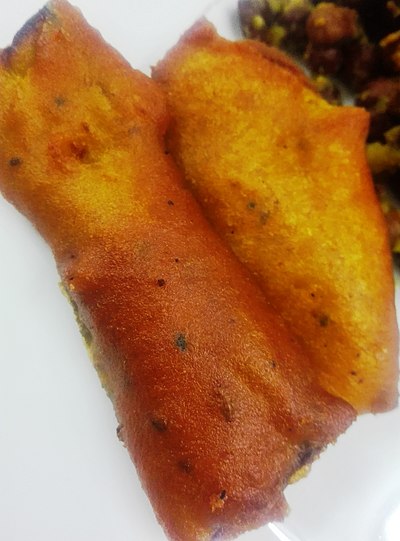

The Culinary Genesis and Cultural Significance of Beguni
Beguni, a ubiquitous fried snack originating from the Bengal region, stands as a testament to the resourcefulness and flavor profiles inherent in Bengali cuisine. The dish's name itself is derived from 'begun,' the Bengali term for eggplant (Solanum melongena), highlighting the central role of this versatile vegetable. Its preparation involves slicing the eggplant, typically longitudinally, and coating it in a batter predominantly made from gram flour (besan).
This flour, derived from ground chickpeas, provides a unique texture and binding quality that becomes exceptionally crisp when fried. Essential seasonings like salt and turmeric are incorporated into the batter, the latter lending Beguni its characteristic golden hue. The frying medium, traditionally mustard oil, contributes a distinctive pungent aroma and flavor that is a hallmark of Bengali cooking.
Beguni is more than just a snack; it is deeply interwoven with the cultural fabric of Bengal, commonly served as an accompaniment to rice-based meals, during festive occasions, and as a popular street food. Its widespread presence in eastern Indian states like West Bengal, Assam, and Tripura, as well as in Bangladesh, underscores its status as a culinary staple that transcends regional boundaries within the Bengali-speaking world.
Deconstructing the Preparation
The preparation of Beguni, while seemingly straightforward, involves a nuanced understanding of ingredient interaction and thermal processing. The choice of eggplant is critical; varieties that are firm and have fewer seeds are often preferred to ensure a pleasant texture after frying. Slicing the eggplant to an appropriate thickness is key – too thin and it may disintegrate, too thick and it might not cook through evenly.
The gram flour batter is the star component, acting as a protective and textural enhancer. Its composition requires a careful balance of flour and water to achieve the right viscosity – thick enough to adhere to the eggplant but not so dense that it becomes heavy or oily. The turmeric not only adds color but also a subtle earthy note.
The deep-frying process in hot oil is crucial for achieving the desired crispness. The Maillard reaction and caramelization occur on the batter's surface, creating complex flavors and the appealing golden-brown crust. The use of mustard oil, with its relatively high smoke point and distinct flavor profile, adds another layer of complexity that differentiates Beguni from similar fritters made with other oils.
This careful orchestration of technique and ingredients results in a dish where the soft, yielding interior of the eggplant is perfectly complemented by its crunchy, savory exterior.
Beguni's Place in the Culinary Landscape and Global Parallels
Beguni occupies a significant niche within the broader context of South Asian and global fried foods. Its importance lies not only in its gustatory appeal but also in its accessibility and cultural resonance. As a dish that utilizes readily available ingredients like eggplant and gram flour, it represents an economical yet flavorful option, contributing to food security and culinary heritage.
The practice of battering and frying vegetables is a global phenomenon, with parallels found in European aubergine fritters, tempura in Japan, and various forms of fried dough and vegetables across different cultures. However, Beguni distinguishes itself through its specific regional context, particularly the use of gram flour and mustard oil, which imbues it with a unique flavor profile. Its role as a versatile accompaniment, whether with a simple dal-rice meal or as part of a more elaborate spread, highlights its adaptability and enduring popularity.
The continued consumption and adaptation of Beguni reflect its success in meeting fundamental human desires for comfort food, texture, and satisfying flavors, solidifying its status as a beloved and culturally significant dish.
Variations, Modern Adaptations, and Culinary Evolution
While the classic preparation of Beguni remains a cherished standard, contemporary culinary practices have introduced subtle variations and adaptations. Modern interpretations might involve experimenting with different types of flour, such as rice flour for extra crispness or a blend of flours. Spice profiles can be enhanced with the addition of finely chopped green chilies, ginger-garlic paste, or various ground spices like cumin, coriander, or even a touch of garam masala in the batter, catering to evolving palates.
Some chefs might opt for lighter frying oils or air-frying techniques to create a healthier rendition, though this can alter the traditional texture and flavor. The presentation can also be modernized, with Beguni being incorporated into more complex dishes or served with innovative dipping sauces beyond traditional chutneys. These adaptations demonstrate the dynamic nature of traditional cuisine, showing how dishes like Beguni can remain relevant and appealing by evolving while still honoring their core identity.
This culinary evolution ensures that Beguni continues to be enjoyed by new generations, both within and beyond its native region.
See also
Frequently Asked Questions
What is Beguni?+
How do you make Beguni?+
Why is gram flour used in Beguni?+
Where is Beguni usually eaten?+
What makes Beguni taste special?+
Based on content from Wikipedia · Licensed under CC BY-SA 4.0