

Sergei Prokofiev
Images
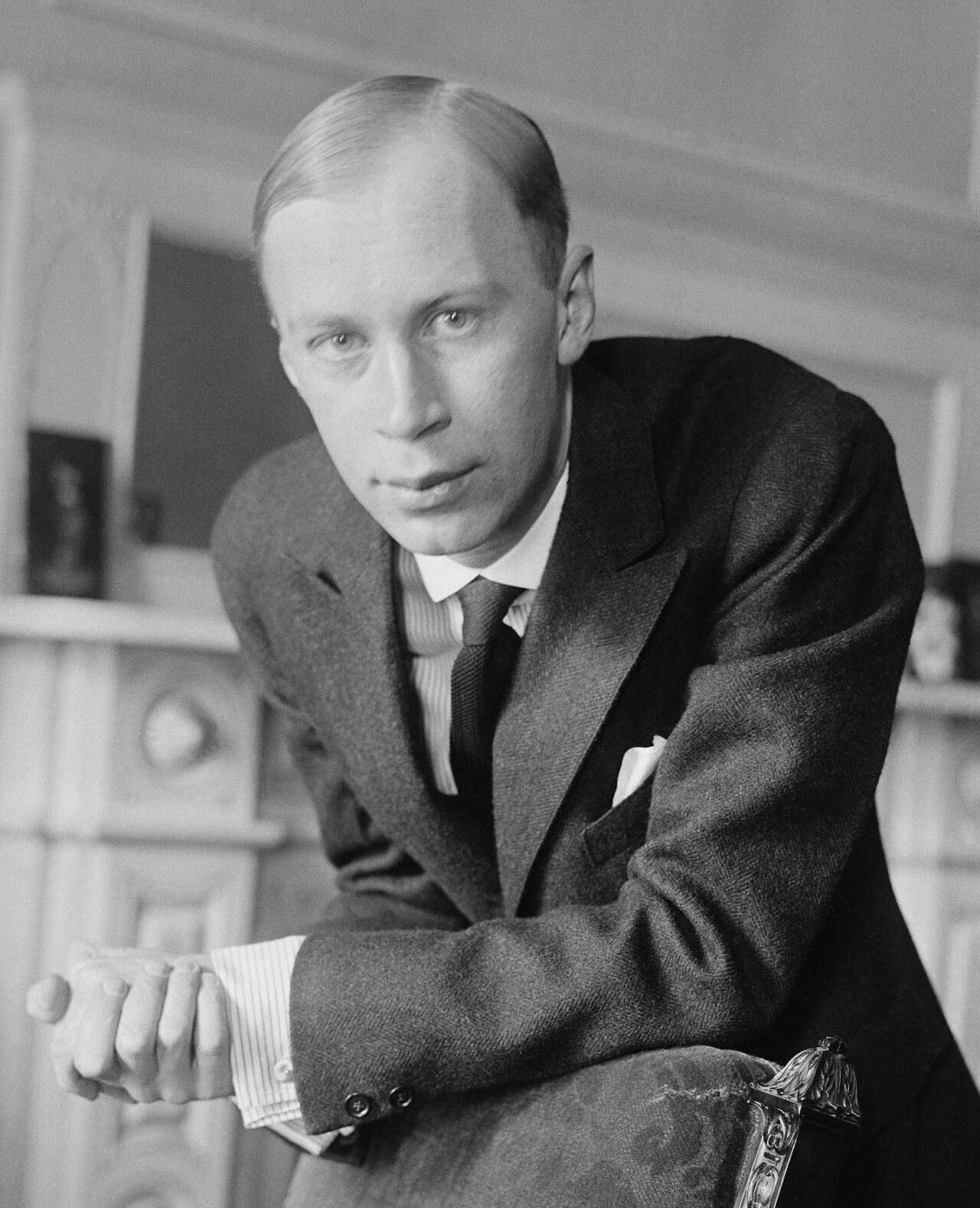
Sergei Prokofiev
The Genesis of a Musical Revolutionary
Sergei Sergeyevich Prokofiev (1891-1953) emerged as one of the most significant and distinctive voices in 20th-century classical music. Born in Sontsovka, Ukraine, he displayed prodigious talent early on, graduating from the Saint Petersburg Conservatory as both a composer and a virtuoso pianist. Prokofiev initially gained notoriety for his iconoclastic style, characterized by its sharp dissonances, motoric rhythms, and audacious harmonies.
His early piano concertos, particularly the first two, were ferociously challenging and signaled a radical departure from Romantic traditions. This bold approach extended to his orchestral works; the 'Scythian Suite,' originally conceived for a ballet commissioned by Sergei Diaghilev, showcased his willingness to push sonic boundaries and create music of primal energy and grandeur. Diaghilev, a pivotal figure in modern ballet, recognized Prokofiev's innovative spirit, commissioning several other ballets that, while controversial, cemented Prokofiev's reputation as a daring composer.
Navigating Artistic and Political Currents
Prokofiev's career trajectory was significantly shaped by the tumultuous political landscape of his time. After the 1917 Russian Revolution, he left his homeland with official approval, embarking on an international career that spanned the United States and Europe. During this period, he composed significant works such as the opera 'The Love for Three Oranges,' which achieved considerable success, and continued to develop his distinctive musical language.
He married Spanish singer Carolina Codina, with whom he had two sons. However, the economic hardships of the Great Depression and a growing desire to compose for his homeland led Prokofiev to return to the Soviet Union in 1936. This decision placed him under the complex patronage system of Soviet arts, where his music, though often popular, was also subject to ideological scrutiny.
His major Soviet successes, including 'Lieutenant Kijé,' 'Peter and the Wolf,' and the ballet 'Romeo and Juliet,' demonstrated his ability to create accessible yet artistically profound works within this environment.
The Enduring Power of Prokofiev's Narratives
Prokofiev's genius is perhaps most vividly illustrated in his narrative works, which continue to captivate audiences worldwide. 'Peter and the Wolf' (1936) remains a cornerstone of children's music education, ingeniously assigning each character to a specific orchestral instrument, thereby demystifying the orchestra's sound. The ballet 'Romeo and Juliet' (1935-36), with its sweeping melodies and dramatic intensity, particularly the iconic 'Dance of the Knights' (Montagues and Capulets), is a staple of the ballet repertoire.
His operas, such as 'The Gambler' and 'The Fiery Angel,' though less frequently performed than his instrumental works, showcase his dramatic flair and psychological insight. Prokofiev's output was remarkably prolific, encompassing seven symphonies, eight ballets, five piano concertos, two violin concertos, and nine completed piano sonatas, each bearing his unmistakable stylistic imprint.
A Legacy of Audacity and Melodic Brilliance
Despite facing criticism for 'anti-democratic formalism' in 1948, Prokofiev's artistic spirit remained undimmed. He continued to compose, often supported by a new generation of performers like pianist Sviatoslav Richter and cellist Mstislav Rostropovich, to whom he dedicated significant works like his Ninth Piano Sonata and the Symphony-Concerto for cello and orchestra. Prokofiev's music is characterized by its blend of biting wit, lyrical beauty, and rhythmic vitality.
He possessed a unique ability to craft memorable melodies that could be both simple and profound, often juxtaposed with moments of jarring dissonance or complex harmonic invention. His impact on 20th-century music is undeniable; he forged a path that was distinctly his own, influencing countless composers and leaving behind a body of work that continues to be celebrated for its originality, emotional depth, and sheer brilliance. His compositions remain vital, challenging, and deeply rewarding for performers and listeners alike.
Go deeper
Frequently Asked Questions
What kinds of music did Sergei Prokofiev write?+
Why is Peter and the Wolf special for children?+
How did Sergei Prokofiev start his music career?+
What happened to Prokofiev after the Russian Revolution?+
What are some of Prokofiev's famous ballets?+
Based on content from Wikipedia · Licensed under CC BY-SA 4.0