

Bactrian Camel
Images
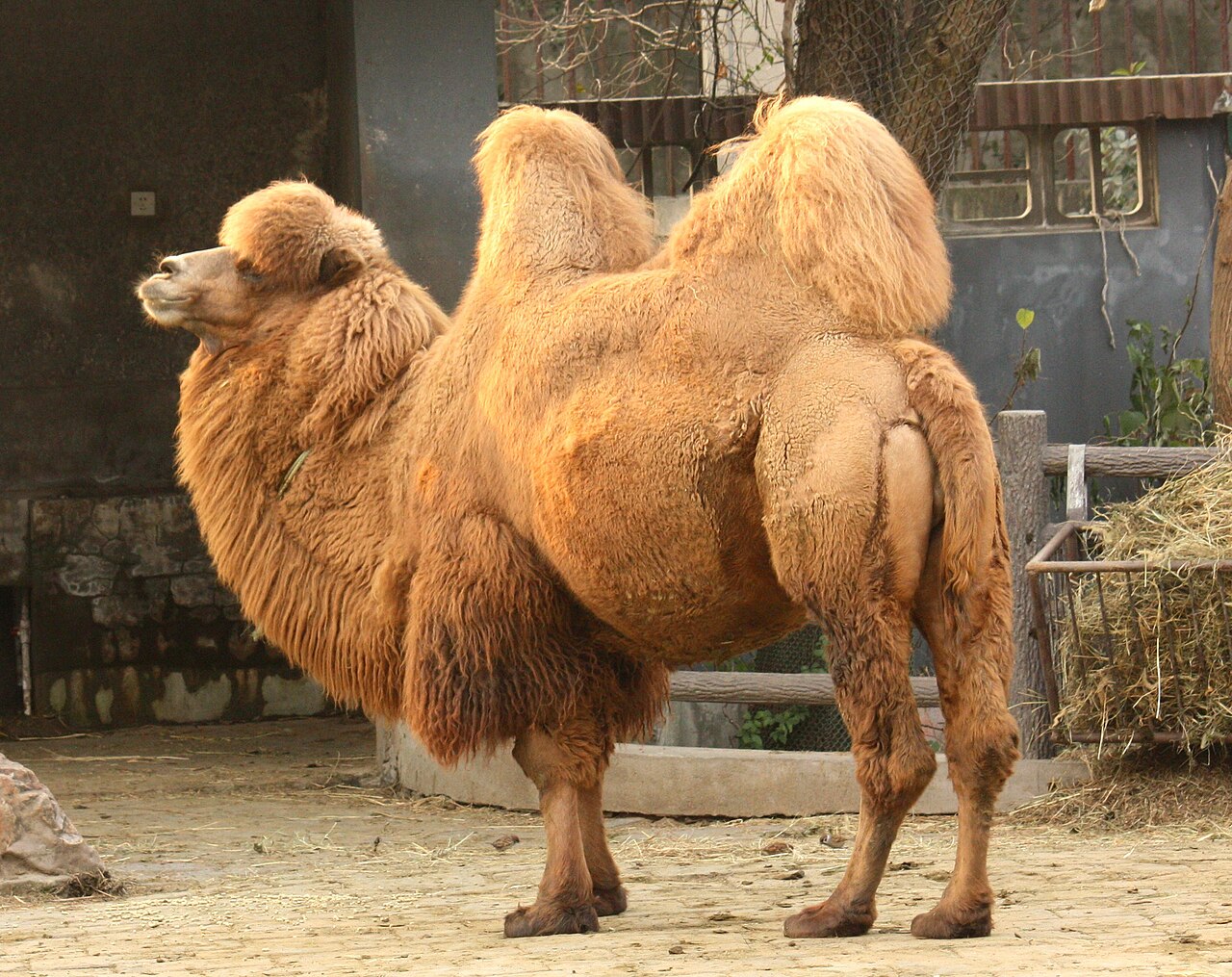
Bactrian camel


Morphological and Physiological Adaptations for Extreme Survival
The Bactrian camel (Camelus bactrianus) is a testament to evolutionary ingenuity, possessing a suite of sophisticated adaptations that enable it to thrive in the harsh, often unpredictable environments of Central Asia's deserts and steppes. Its most iconic feature, the two dorsal humps, are not reservoirs for water but adipose tissue depots. This stored fat can be metabolized to provide energy and metabolic water, crucial during prolonged periods of food scarcity and dehydration.
Physiologically, Bactrian camels exhibit an extraordinary tolerance for water loss, capable of losing up to 25% of their body mass in water without succumbing to hypovolemic shock, a feat unmatched by most mammals. Their renal system is highly efficient, producing concentrated urine to minimize water excretion. Thermoregulation is another area of remarkable adaptation; their thick, woolly coat provides insulation against extreme cold, reaching temperatures as low as -40°C (-40°F), while also offering protection from solar radiation during intense summer heat.
They can tolerate wide fluctuations in body temperature, reducing the need for evaporative cooling and thus conserving precious water. Their circulatory system is also adapted to prevent dehydration-induced blood thickening, with red blood cells that are oval-shaped and can flow even when blood viscosity increases.
Ecological Niche and Dietary Flexibility
The Bactrian camel occupies a unique ecological niche as a large herbivore in arid and semi-arid regions, primarily inhabiting the cold deserts and rocky plains of Mongolia and China, most notably the Gobi Desert. Their diet is characterized by remarkable flexibility, allowing them to consume a wide array of plant species, including tough, thorny shrubs and grasses that are unpalatable to other herbivores.
This dietary breadth is facilitated by a robust digestive system, including a multi-chambered stomach and a tough, leathery mouth lining that protects against abrasive and spiny vegetation. Their ability to digest cellulose efficiently allows them to extract maximum nutrients from fibrous plant matter. In terms of water acquisition, Bactrian camels are opportunistic drinkers, capable of consuming vast quantities of water-up to 30 gallons (110 liters) in a single session-when available.
This allows them to survive for extended periods between water sources, often traveling considerable distances across their vast territories in search of sustenance and hydration. Their social structure, typically small herds, aids in predator detection and efficient foraging.
Physical Characteristics and Behavioral Adaptations
Physically, adult Bactrian camels typically stand around 1.8 meters (6 feet) tall at the shoulder and weigh between 600 to 1,000 kilograms (1,300 to 2,200 pounds). Their long legs elevate their bodies above the hot desert ground, and their broad, splayed feet with leathery pads provide excellent traction and weight distribution on sand and rocky terrain, preventing them from sinking. Behavioral adaptations are equally critical for their survival.
Their long, thick eyelashes and the ability to close their nostrils completely are highly effective defenses against sandstorms, a common hazard in their desert habitat. They are also known for their stoicism and endurance, capable of carrying heavy loads for long distances and enduring harsh conditions. Their lifespan in the wild can extend to 50 years, reflecting their successful evolutionary trajectory.
While domesticated Bactrian camels have been utilized by humans for millennia for transport and resources, the wild population exhibits distinct behaviors and genetic makeup, adapted solely for survival in their natural, challenging environment.
Conservation Imperatives and Future Outlook
The wild Bactrian camel (Camelus bactrianus) is currently classified as Critically Endangered by the IUCN, facing an extremely high risk of extinction in the wild. The global wild population is alarmingly low, estimated to be fewer than 1,000 individuals. The primary drivers of this decline are multifaceted, including habitat degradation and fragmentation due to expanding human settlements, agriculture, and infrastructure development. Poaching for meat, hides, and traditional medicine remains a significant threat, exacerbated by the difficulty of monitoring vast and remote territories. Competition with domestic livestock for scarce grazing resources and water sources further pressures the wild population.
Additionally, genetic swamping through hybridization with the much more numerous domesticated Bactrian camel population poses a threat to the genetic integrity of the wild lineage. Urgent and comprehensive conservation strategies are essential, focusing on habitat protection, anti-poaching measures, community engagement, and rigorous population monitoring. International cooperation is vital to ensure the long-term survival of this iconic and ecologically significant species.
Go deeper
Based on content from Wikipedia · Licensed under CC BY-SA 4.0