

Bactria
Images

Bactria
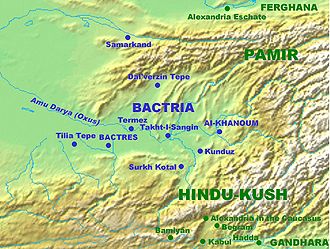


Geopolitical Significance and Environmental Dynamics
Bactria, situated in the northern reaches of modern Afghanistan and extending into Tajikistan and Uzbekistan, occupies a geographically strategic position in Central Asia. Defined by the formidable Hindu Kush mountain range to the south and the vast Kyzylkum Desert to the north, its landscape is characterized by high-altitude plateaus, fertile river valleys fed by the Amu Darya and its tributaries, and arid steppes.
This challenging environment fostered resilient communities adapted to extreme continental climate patterns, with intensely hot summers and frigid winters. Historically, these natural features served as both formidable defenses and crucial arteries for movement, particularly along the river valleys and mountain passes, making Bactria a coveted territory for successive empires seeking control over regional trade and communication routes.
Imperial Ambitions and Dynastic Succession
The history of Bactria is a chronicle of imperial conquest and dynastic evolution. Initially incorporated into the Achaemenid Persian Empire, it later became a critical satrapy, valued for its resources and strategic position. The region's trajectory dramatically shifted with Alexander the Great's conquest in the 4th century BCE.
Following his death, Bactria became the foundation of the Greco-Bactrian Kingdom (c. 250–130 BCE), a remarkable Hellenistic state that maintained Greek language, administration, and culture while interacting with local traditions and neighboring powers like the Seleucid Empire and the Yuezhi. This period saw the flourishing of a unique syncretic culture. Subsequent centuries witnessed Bactria under the rule of the Kushan Empire, a powerful Central Asian dynasty that further facilitated cultural exchange and established Buddhism as a dominant religion, leading to the development of Gandhara art, which blended Greek and Indian styles.
Cultural Synthesis and Religious Diffusion
Bactria served as a profound crucible for cultural and religious synthesis, a testament to its position as a crossroads. The Hellenistic influence from the Greco-Bactrian period introduced Greek philosophical thought, artistic motifs, and scientific inquiry. This coexisted and eventually blended with indigenous Iranian traditions and the burgeoning influence of Buddhism.
Monasteries and Buddhist learning centers, such as those in Balkh, became significant hubs for the dissemination of Buddhist doctrines across Central Asia and into China. Zoroastrianism also maintained a presence, reflecting the region's deep historical roots. This dynamic interplay of diverse belief systems and cultural practices created a rich and complex societal fabric, leaving an indelible mark on the region's identity.
Economic Powerhouse of the Ancient World
The economic vitality of Bactria was intrinsically linked to its role as a linchpin of the Silk Road. Its fertile river valleys supported a robust agricultural sector, producing grains, fruits, and renowned wines, contributing to regional food security and trade. Beyond agriculture, Bactria was a center for skilled craftsmanship, producing high-quality metalwork, ceramics, and textiles that were highly sought after in distant markets.
The true economic engine, however, was its function as a transit point for transcontinental trade. Caravans carrying silk from China, spices from India, precious metals from the West, and other luxury goods traversed Bactria, generating substantial revenue through tolls, taxes, and the provision of services. This facilitated not only economic prosperity but also the flow of technological innovations and ideas across Eurasia.
Intellectual Hub and Educational Legacy
Bactria fostered a vibrant intellectual environment, particularly during the Hellenistic and Kushan periods. The establishment of Greek educational institutions under the Greco-Bactrian rulers promoted the study of philosophy, literature, mathematics, and astronomy, aligning with Hellenistic educational ideals. Concurrently, Buddhist monastic institutions evolved into centers of higher learning, where scholars engaged in rigorous study of Buddhist scriptures, logic, medicine, and cosmology.
The translation of religious texts and the development of commentaries contributed to the intellectual heritage of Buddhism. Archaeological evidence, including inscriptions and administrative documents, points to a sophisticated level of literacy and a structured approach to knowledge preservation and transmission, underscoring Bactria's enduring contribution to the intellectual landscape of Central Asia and beyond.
Go deeper
Based on content from Wikipedia · Licensed under CC BY-SA 4.0