

Spain's Awesome Neighborhoods!
Images
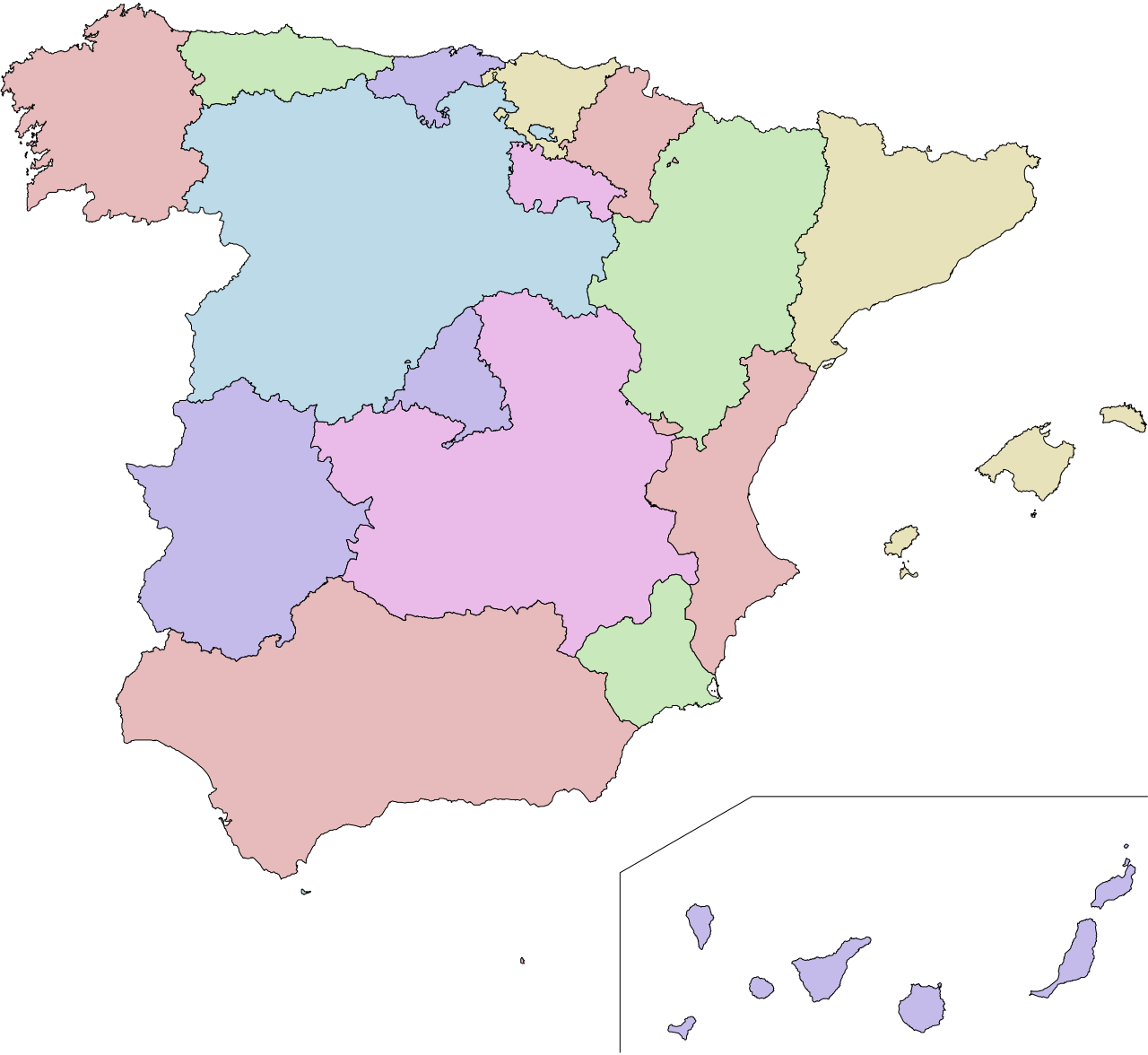
Autonomous Communities Of Spain No Names


Geographical Diversity and Regional Identity
Spain's geography is a fundamental factor in the development and character of its autonomous communities. Situated on the Iberian Peninsula, the country boasts a remarkable range of landscapes, from the arid plains of Andalusia and the volcanic terrain of the Canary Islands to the lush, mountainous regions of the north like Asturias and Cantabria, and the Mediterranean coastlines.
This geographical mosaic has historically fostered distinct regional identities, economies, and cultural practices. The climate varies dramatically, influencing everything from agriculture to tourism and the daily lives of inhabitants. For example, the arid climate of the south necessitates different water management strategies compared to the wetter north.
These environmental differences are not merely backdrop; they are integral to the unique character and challenges faced by each autonomous community, shaping their development and the specific powers they have sought through their Statutes of Autonomy.
Historical Evolution Towards Autonomy
The current system of autonomous communities in Spain is a direct product of the post-Franco era and the Spanish Constitution of 1978. This constitution was a landmark achievement, designed to transition Spain from a dictatorship to a democratic monarchy and to address long-standing regional aspirations for self-governance. The framers recognized Spain not as a monolithic state but as a nation composed of 'nationalities and regions' with distinct historical identities.
The constitution established a framework for 'limited autonomy,' granting significant powers to regions that chose to form autonomous communities. This was a deliberate move away from the centralized, uniform state model of the Franco regime, aiming to prevent future conflicts and foster national cohesion through recognition of diversity. The process involved negotiations and referendums, leading to the establishment of 17 autonomous communities and 2 autonomous cities.
Cultural Pluralism and Linguistic Rights
The autonomous communities are pivotal in safeguarding and promoting Spain's rich cultural pluralism. While Spanish (Castilian) is the sole official language nationwide, the constitution acknowledges and protects other languages spoken in Spain as co-official within their respective autonomous communities. This includes Catalan in Catalonia, the Balearic Islands, and the Valencian Community; Galician in Galicia; Basque in the Basque Country and Navarre; and Aranese in Val d'Aran (Catalonia).
These linguistic rights are enshrined in the Statutes of Autonomy and are crucial for maintaining distinct cultural heritages. Beyond language, each community preserves unique traditions, festivals, artistic expressions, and culinary practices, contributing to Spain's overall cultural dynamism. The existence of these distinct identities within a single state is a testament to the success of the decentralized model in accommodating diversity.
Decentralized Governance and Asymmetrical Devolution
Spain's governance model is characterized by a high degree of decentralization, with autonomous communities exercising substantial legislative and executive powers. Each community has its own parliament and government, responsible for areas such as education, healthcare, culture, and local administration. The extent of devolved powers is defined by each community's Statute of Autonomy, leading to an 'asymmetrical' devolution.
Communities with stronger historical nationalist movements, such as the Basque Country and Catalonia, have generally negotiated for broader competencies. This asymmetry, while sometimes a source of political debate, is seen by many as a pragmatic approach that allows for flexibility and responsiveness to diverse regional needs and demands. The judicial power, however, remains largely unified under the national system, with regional high courts of justice acting as the highest judicial authority within each community.
Education Policy and Regional Autonomy
Education is a cornerstone of the powers devolved to Spain's autonomous communities, reflecting the nation's commitment to regional self-governance and cultural preservation. While the Spanish Constitution and organic laws set the overarching framework for education, each autonomous community is responsible for managing its educational system. This includes developing curricula, setting academic calendars, managing school infrastructure, and appointing teaching staff.
Crucially, in communities with co-official languages, education is often delivered in a bilingual or trilingual model, integrating the regional language into the curriculum from early childhood education through higher levels. This approach not only ensures linguistic rights but also reinforces regional identity and cultural continuity. The decentralized control over education allows for tailored pedagogical approaches and resource allocation that can better serve the specific needs and cultural contexts of each community, fostering a more localized and relevant educational experience for students.
See also
Frequently Asked Questions
What are autonomous communities in Spain?+
Why does Spain have different languages in different areas?+
How did Spain change after Franco?+
What makes the north of Spain different from the south?+
What can children learn in their own community?+
Based on content from Wikipedia · Licensed under CC BY-SA 4.0