

Antalya
Images

Antalya


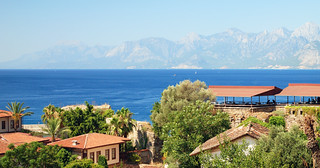


Geopolitical and Environmental Significance of Antalya's Location
Antalya's strategic position on the southwestern coast of Turkey, bordering the Mediterranean Sea, has historically dictated its importance as a nexus of trade and culture between Europe and Asia. The city is situated within the Teke Peninsula, a region characterized by a dramatic topography where the Mediterranean coastal plain meets the imposing Taurus Mountains. This unique geography creates a distinct microclimate, classified as a Mediterranean climate, with long, hot, and dry summers and mild, rainy winters.
This climate is highly conducive to agriculture, particularly the cultivation of citrus fruits, olives, and cotton, which form a significant part of the region's economy. Furthermore, the coastline is a mosaic of stunning natural features, including extensive sandy beaches like Lara and Konyaaltı, picturesque coves, and dramatic karst formations, making it a prime destination for both domestic and international tourism. The proximity to numerous ancient sites further enhances its appeal, creating a rich tapestry of natural beauty and historical depth.
Stratified History
The historical narrative of Antalya is exceptionally rich, reflecting millennia of human settlement and geopolitical shifts. Founded as Attaleia by King Attalus II of Pergamon in the 2nd century BC, the city quickly rose to prominence as a vital Hellenistic port. Its strategic harbor and fertile hinterland attracted various powers, leading to periods of Roman, Byzantine, and Seljuk rule.
Under Roman dominion, it flourished as a significant administrative and commercial center, evidenced by enduring structures like Hadrian's Gate, erected in 130 AD. The Byzantine era saw it as an important ecclesiastical seat, while the arrival of the Seljuks in the 13th century marked another cultural and architectural transformation. Following a period under Ottoman rule, Antalya eventually became part of the Republic of Turkey.
This layered history is palpable today, with archaeological sites such as the ancient cities of Perge, Aspendos (famous for its remarkably preserved Roman theater), and Side offering profound insights into the evolution of urbanism, architecture, and societal structures across different epochs.
Cultural Fusion and Societal Dynamics in Antalya
Antalya's cultural landscape is a vibrant synthesis of its diverse historical influences and its contemporary role as a global tourist destination. The local culture embodies the warmth and hospitality characteristic of Mediterranean societies, with strong communal ties and a deep appreciation for culinary traditions. Turkish cuisine, with its emphasis on fresh, seasonal ingredients, olive oil, and aromatic spices, is a cornerstone of daily life.
The city's bazaars are dynamic hubs where traditional crafts, including textiles, ceramics, and copperware, are showcased alongside modern goods. While preserving its heritage, Antalya also embraces global trends, evident in its cosmopolitan atmosphere, diverse dining options, and active arts scene. The influx of international visitors and expatriates has further enriched its cultural milieu, fostering an environment of cross-cultural exchange.
This dynamic interplay between tradition and modernity defines the unique social fabric of Antalya.
Economic Pillars
The economy of Antalya is overwhelmingly dominated by the tourism sector, which leverages the city's exceptional natural beauty, historical significance, and favorable climate. As one of Turkey's premier holiday destinations, Antalya attracts millions of international and domestic tourists annually, generating substantial revenue through accommodation, hospitality, transportation, and entertainment industries. This reliance on tourism has spurred significant infrastructure development, including a major international airport and extensive hotel complexes.
Complementing tourism, agriculture remains a vital economic contributor. The fertile coastal plains are highly productive, yielding significant quantities of citrus fruits, vegetables, and greenhouse products, many of which are exported. The city also possesses a developing industrial base, with manufacturing and trade activities supported by its strategic port facilities.
Antalya's economic model is a prime example of how a region can successfully monetize its natural and cultural assets while diversifying into other productive sectors.
Governance and Educational Landscape
Antalya functions as a provincial capital within Turkey's unitary state structure, governed by a metropolitan municipality. The metropolitan municipality oversees a wide range of public services, including urban planning, infrastructure development, public transportation, and environmental management, aiming to balance the needs of a rapidly growing population with sustainable development goals. The city is divided into several districts, each with its own local administration.
Educationally, Antalya offers a comprehensive system catering to all levels. It hosts numerous public and private schools, from primary to secondary education, ensuring access to basic schooling for its young population. Higher education is significantly represented by Akdeniz University, a large public institution established in 1982.
Akdeniz University offers a broad spectrum of undergraduate and postgraduate programs across various disciplines, contributing to research, innovation, and the development of a skilled workforce, further solidifying Antalya's role as a regional center for learning and development.
Go deeper
Based on content from Wikipedia · Licensed under CC BY-SA 4.0