

Ancient India
Images

Buddha in ancient India 2023-05-09-1




Geopolitical Landscape
The geographical expanse of Ancient India, primarily the Indian subcontinent, profoundly shaped its history and development. The formidable Himalayan range to the north acted as a significant natural barrier, influencing migration patterns and external invasions, while also being the source of major river systems. The Indus and Ganges river valleys, characterized by their alluvial plains, were the crucibles of early civilization, supporting dense populations and intensive agriculture.
The Indus Valley Civilization, for instance, thrived due to the predictable flooding and fertile soil of the Indus River. Further south, the Deccan Plateau presented a different environment, influencing regional cultures and economies. The monsoon climate, with its distinct wet and dry seasons, was a critical factor dictating agricultural cycles, water management strategies, and even settlement patterns.
Coastal regions facilitated extensive maritime trade, connecting India to the wider ancient world, including Mesopotamia, Egypt, and later, the Roman Empire. This geographical diversity fostered distinct regional identities while also providing the resources and impetus for large-scale political formations and cultural exchange.
Chronicles of Empires and Ideas
Ancient India's history is a rich narrative of evolving societies, powerful empires, and groundbreaking intellectual movements. The earliest evidence of complex civilization comes from the Indus Valley Civilization (circa 3300–1300 BCE), renowned for its sophisticated urban planning, standardized weights and measures, and enigmatic script. Following its decline, the Vedic period (circa 1500–500 BCE) saw the composition of the Vedas, laying the philosophical and ritualistic foundations of Hinduism and the development of the caste system.
The subsequent Mahajanapadas era witnessed the rise of early kingdoms and republics, setting the stage for larger imperial ambitions. The Mauryan Empire (circa 322–185 BCE), under rulers like Chandragupta Maurya and Ashoka the Great, unified a vast portion of the subcontinent. Ashoka's conversion to Buddhism and his subsequent propagation of Dhamma (moral law) had a profound impact on the spread of Buddhism across Asia.
The post-Mauryan period saw fragmentation and the rise of various regional powers, including the Kushan Empire. The Gupta Empire (circa 320–550 CE) is often hailed as a 'Golden Age,' marked by significant advancements in mathematics (including the concept of zero and decimal system), astronomy, literature, art, and architecture. This period solidified many cultural and scientific traditions that would influence subsequent eras.
The Fabric of Society
Ancient Indian culture was characterized by its deep spiritual underpinnings, intricate social structures, and vibrant artistic expressions. Religion permeated daily life, with Hinduism, Buddhism, and Jainism emerging as major philosophical and spiritual traditions, each offering distinct paths to liberation and understanding the cosmos. The concept of dharma (duty or righteousness) and karma (action and consequence) were central tenets influencing individual conduct and societal order.
Social organization was heavily influenced by the varna system (later evolving into the caste system), which prescribed roles and responsibilities based on birth, though its rigidity varied across periods and regions. Daily life for the majority revolved around agriculture, with communities organized around kinship and village structures. Literacy was not widespread, and knowledge was often transmitted orally through epics like the Mahabharata and Ramayana, philosophical dialogues, and religious teachings.
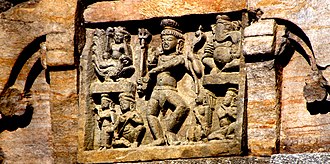
Artistic achievements were remarkable, including intricate temple architecture, exquisite sculpture, vibrant mural paintings, and sophisticated forms of music and dance, all deeply intertwined with religious and philosophical themes.
Economic Foundations
The economy of Ancient India was predominantly agrarian, with the fertile plains of the Indus and Ganges rivers supporting a large population through the cultivation of staples like rice, wheat, barley, and cotton. Advanced irrigation techniques and agricultural tools were developed to maximize yields. Beyond agriculture, a sophisticated network of artisans and craftspeople produced a diverse array of goods. Textile production, particularly of cotton, was a major industry, renowned for its quality and vibrant dyes. Metalworking produced tools, weapons, and intricate jewelry, while pottery and stonework also flourished.
Trade was a crucial component of the ancient Indian economy, both internal and external. Internal trade routes connected various regions, facilitating the exchange of agricultural produce and manufactured goods. Externally, India engaged in extensive maritime trade, exporting high-value commodities such as spices (especially pepper), precious stones, ivory, and fine textiles, and importing items like horses, metals, and luxury goods.
Major trading centers and ports dotted the coastline, and coinage, standardized weights, and measures facilitated these complex economic transactions, demonstrating a highly developed commercial system.
The Pursuit of Knowledge
Education in Ancient India was deeply intertwined with religious and philosophical traditions, aiming not just for intellectual development but also for spiritual growth and moral refinement. The primary mode of instruction was often oral, with students, known as 'shishyas' or 'chelas,' learning from a guru (teacher) in an 'ashram' (hermitage) or residential school. The curriculum was broad, encompassing the Vedas, Upanishads, grammar, logic, philosophy, mathematics, astronomy, medicine (Ayurveda), and statecraft.
The gurukula system fostered a close relationship between teacher and student, emphasizing discipline, respect, and holistic learning. Higher education centers, akin to universities, such as Nalanda, Taxila, and Vikramshila, attracted scholars and students from across Asia, becoming renowned hubs for advanced study in various disciplines. These institutions played a pivotal role in preserving and disseminating knowledge, contributing significantly to India's intellectual legacy, particularly in fields like mathematics, where groundbreaking concepts like the decimal system and the concept of zero were developed, profoundly influencing global scientific progress.
Go deeper
Frequently Asked Questions
What made the Indus Valley Civilization special?+
Why did the Himalayas affect ancient India?+
How did the Mauryan Empire spread Buddhism?+
When was the Gupta Empire’s Golden Age?+
What are dharma and karma?+
Based on content from Wikipedia · Licensed under CC BY-SA 4.0