

Aloe: Nature's Coolest Plant!
Images

Aloe


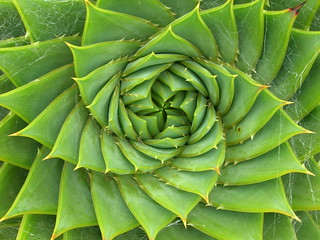


Xerophytic Adaptations and Geographic Distribution
The genus Aloe comprises a diverse group of succulent plants, predominantly native to the arid and semi-arid regions of Africa, the Arabian Peninsula, Madagascar, and some islands in the Indian Ocean. These plants exhibit remarkable xerophytic adaptations, enabling them to thrive in environments characterized by low rainfall and high temperatures. Their thick, fleshy leaves are specialized for water storage, featuring a waxy cuticle to minimize transpiration and specialized tissues like the parenchyma for hydration.
The root systems are often shallow and widespread to efficiently capture infrequent rainfall. While Aloe vera (synonymous with Aloe barbadensis Miller) is the most widely recognized species, its precise native range is debated, though it is strongly associated with the Arabian Peninsula. Today, it is extensively cultivated globally in warm climates, becoming a significant agricultural crop in countries like Mexico, Spain, China, and the United States, demonstrating its adaptability beyond its ancestral habitats.
Phytochemistry and Pharmacological Significance
The therapeutic properties of Aloe vera are attributed to its complex phytochemistry. The mucilaginous gel extracted from the leaf parenchyma contains a rich array of bioactive compounds, including polysaccharides (such as acemannan), anthraquinones, vitamins (A, C, E, and B complex), enzymes, minerals, and amino acids. Acemannan is particularly noted for its immunomodulatory, anti-inflammatory, and antiviral effects.
Anthraquinones, like aloin, possess laxative properties, though their use is sometimes associated with gastrointestinal discomfort. The synergistic action of these compounds contributes to Aloe's efficacy in wound healing, burn treatment, and soothing skin conditions like eczema and psoriasis. Modern research continues to explore its potential in treating conditions ranging from digestive disorders to diabetes, solidifying its status as a valuable medicinal plant.
A Legacy Etched in Time
The human relationship with Aloe spans millennia, deeply embedded in historical records and cultural practices. Ancient Egyptians, as evidenced by papyri and tomb inscriptions dating back over 6,000 years, utilized Aloe for embalming, medicine, and cosmetics. Dioscorides, a Greek physician in the 1st century AD, documented its medicinal uses in his influential work 'De Materia Medica.' The plant was valued across ancient civilizations, including by the Romans, Greeks, and Indians, for its healing and beautifying properties.
Its propagation along trade routes facilitated its spread worldwide, making it a globally recognized remedy. This enduring historical presence underscores Aloe's profound and consistent utility across diverse cultures and eras, from ancient rituals to modern apothecaries.
Economic Impact and Modern Applications
Beyond its traditional medicinal applications, Aloe vera has evolved into a significant global commodity with diverse economic implications. The cultivation and processing of Aloe products represent a substantial industry, generating revenue and employment in numerous countries. Its integration into the cosmetics and personal care market is vast, appearing in moisturizers, cleansers, shampoos, and sunscreens, capitalizing on its perceived skin-enhancing benefits.
The food and beverage industry also utilizes Aloe, primarily for its juice, marketed for digestive health and hydration. Furthermore, ongoing research investigates its potential in pharmaceuticals and nutraceuticals, suggesting continued growth and diversification of its applications. This economic significance highlights Aloe's transition from a local remedy to a key player in international markets.
Botanical Classification and Species Diversity
The genus Aloe belongs to the family Asphodelaceae (formerly often placed in Liliaceae or Aloaceae). It is characterized by perennial, succulent plants, typically with a basal rosette of fleshy leaves. While Aloe vera is the most commercially important species, the genus contains over 500 recognized species, each with unique morphological characteristics and geographical distributions.
These species vary in size, leaf shape, color, and flowering patterns, reflecting adaptation to a wide range of microhabitats within their native arid and semi-arid environments. Understanding this botanical diversity is crucial for appreciating the genus's evolutionary history and its potential for novel applications, as different species may possess unique biochemical profiles and properties worthy of scientific investigation.
See also
Frequently Asked Questions
What is an Aloe plant and where does it grow?+
How does Aloe help people?+
Why do people grow Aloe all over the world?+
What special parts of Aloe keep it alive in deserts?+
Who used Aloe in ancient times?+
Based on content from Wikipedia · Licensed under CC BY-SA 4.0