

Ahmadiyya
Images

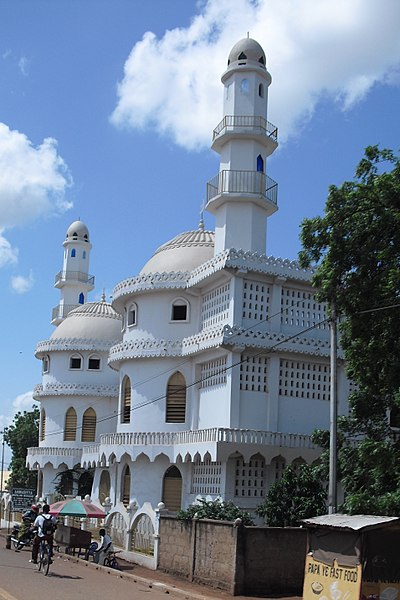
Ahmadiyya Jama Mosque



Theological Foundations and the Role of Mirza Ghulam Ahmad
The Ahmadiyya Muslim Jama'at, officially established on March 23, 1889, represents a distinct branch of Islam, originating in British India. Its genesis is inextricably linked to the teachings and claims of its founder, Mirza Ghulam Ahmad (1835–1908). Ahmad declared himself to be the divinely appointed Promised Messiah and Mahdi, figures central to Islamic eschatology, who are believed to herald the end times and usher in an era of justice and peace.
Crucially, Ahmadis believe he also embodied the eschatological figures expected in other major religious traditions, signifying a universal mission. The movement's core tenet is the belief that Islam, as revealed to Prophet Muhammad, is the final and complete divine dispensation for humanity. However, Ahmadis contend that over centuries, Islam had deviated from its pristine form due to accretions and misinterpretations.
Mirza Ghulam Ahmad's role, therefore, was to restore Islam to its original intent and practice, as exemplified by Prophet Muhammad and the early Sahaba (companions). This restoration is seen not as a new religion, but as the revival and purification of Islam, emphasizing its inherent moral system and peaceful propagation to achieve global harmony.
Global Expansion and Missionary Endeavors
From its inception, the Ahmadiyya movement has been characterized by a robust missionary zeal and a highly organized structure. Following Mirza Ghulam Ahmad's death, the community has been led by a succession of Caliphs, who provide spiritual and administrative leadership, ensuring continuity and cohesion. This organizational strength has facilitated its remarkable global expansion.
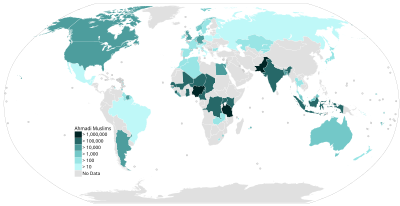
By 2017, the Ahmadiyya community had established a presence in an impressive 210 countries and territories worldwide, with significant concentrations in South Asia, West Africa, East Africa, and Indonesia. A particularly noteworthy aspect of their global outreach is their pioneering role in Islamic missionary work in the West. The Ahmadiyya Muslim Jama'at formed the first Muslim missionary organization to arrive in Britain and subsequently expanded its efforts to other Western nations.
This proactive approach underscores their commitment to disseminating their interpretation of Islam and fostering interfaith understanding on a global scale, making them one of the most widespread Muslim communities internationally.
Core Tenets
The theological framework of Ahmadiyya centers on the concept of Islam as the final and perfect religion, yet it also embraces a form of universalism. Ahmadis interpret Islamic prophecies concerning the Mahdi and Messiah not merely as events within Islam but as manifestations of a divine plan that encompasses other faiths. They believe Mirza Ghulam Ahmad's advent fulfilled these prophecies by revitalizing Islam and demonstrating its capacity to address the spiritual and moral needs of all humanity in the modern era.
A key emphasis is placed on the restoration of Islam's original precepts, advocating for a return to the practices and teachings of Prophet Muhammad and the early Muslim community, purged of later accretions. This involves a rigorous intellectual and spiritual engagement with Islamic texts and history. Ahmadis view themselves as leading a renaissance of Islam, dedicated to its propagation through peaceful means and the establishment of a global moral order predicated on justice, compassion, and mutual respect.
Internal Dynamics and External Persecution
The Ahmadiyya community, while largely unified under its Caliphate, has experienced internal theological debates and external pressures. Early in its history, a significant schism occurred over the interpretation of Mirza Ghulam Ahmad's prophetic status and the succession of leadership, leading to the formation of the Lahore Ahmadiyya Movement. Although this group represents a minuscule fraction of the global Ahmadi population today, it highlights the theological nuances within the movement.
Externally, the Ahmadiyya movement faces considerable challenges, primarily stemming from its unique theological position. Mainstream Sunni and Shia Islam generally hold that Prophet Muhammad was the final prophet (khatam an-nabiyyin), and therefore, any claimant to prophethood after him is considered heretical. This belief leads many orthodox Muslims to reject the Ahmadiyya faith, branding it as outside the fold of Islam.
Consequently, Ahmadis have endured significant persecution, discrimination, and non-recognition in various countries, particularly in Pakistan and some other Muslim-majority nations, impacting their religious freedom and community life.
See also
Frequently Asked Questions
What is the Ahmadiyya Muslim Jama'at?+
Who started the Ahmadiyya movement and when?+
Why do Ahmadis believe Mirza Ghulam Ahmad was special?+
How has the Ahmadiyya community spread around the world?+
What does the Ahmadiyya community want to do with Islam?+
Based on content from Wikipedia · Licensed under CC BY-SA 4.0