

Aceh: Indonesia's Amazing Western Corner!
Images

Lokasi Aceh Kabupaten Aceh Tamiang




Geopolitical and Environmental Crossroads
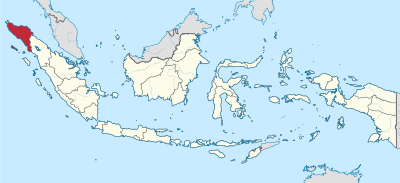
Aceh occupies a strategically vital position at the northwestern tip of Sumatra, serving as Indonesia's westernmost province. Its geography is defined by a diverse landscape, ranging from the Indian Ocean's coastline to the Strait of Malacca's busy maritime routes. This location has historically made it a crucial hub for trade and cultural exchange, but also a point of vulnerability.
Bordering only North Sumatra by land, its maritime connections extend to Malaysia, Thailand, and India's Andaman and Nicobar Islands. The region's climate is tropical, characterized by high humidity and rainfall, supporting rich biodiversity but also posing challenges. Aceh's proximity to the Sunda Trench makes it highly susceptible to seismic activity, a tragic reality underscored by the devastating 2004 Indian Ocean earthquake and tsunami.
A Crucible of Islamic Influence and Cultural Diversity
Aceh is a province of profound religious and cultural significance. It is widely recognized as the gateway for Islam's arrival in Indonesia, with its influence first taking root around 1250 AD in kingdoms like Fansur and Lamuri. This deep Islamic heritage continues to shape the province's identity.
Aceh is home to approximately 5.55 million people, comprising ten distinct indigenous ethnic groups, with the Acehnese people forming the majority. This rich ethnic tapestry has fostered a unique cultural landscape. Uniquely within Indonesia, Aceh officially practices Islamic Sharia law, a testament to its distinct religious and legal framework, which influences its social norms, governance, and daily life.
A Legacy of Resistance and Self-Determination
The history of Aceh is marked by a long and often fierce struggle for political independence and resistance against external control. From the early 17th century, the Sultanate of Aceh was a formidable power, renowned for its wealth and influence in the Malacca Straits region. This era of sovereignty was challenged by colonial powers, notably the Dutch.
Following Indonesia's independence, Aceh continued its fight for greater autonomy, culminating in a protracted separatist movement. The devastating 2004 tsunami, which tragically claimed around 170,000 lives in Aceh, paradoxically became a catalyst for peace. The shared trauma and international aid efforts paved the way for a peace agreement between the Indonesian government and the Free Aceh Movement (GAM), leading to the granting of special autonomous status.
Special Autonomy
Aceh's current status as a special autonomous province is a unique arrangement within Indonesia's unitary state. Based on the 1945 Constitution, this special autonomy grants Aceh significant authority to manage its own governmental affairs and local interests, including the implementation of Sharia law. This framework aims to balance national unity with the preservation of Aceh's distinct cultural and religious identity.
The province is governed by a Governor, who oversees its unique legal and administrative system. This special status reflects a historical compromise, acknowledging Aceh's long-standing desire for self-governance while integrating it within the broader Indonesian republic.
Economic Foundations and Natural Wealth
Aceh's economy is significantly influenced by its abundant natural resources, particularly oil and natural gas. These resources have historically been a major source of wealth for the province and a key factor in its economic development. Beyond extractive industries, Aceh also possesses fertile land suitable for agriculture, with various crops contributing to its economy.
The province's strategic location also supports maritime activities and trade. The legacy of the 2004 tsunami presented immense challenges to its economic infrastructure, but recovery efforts and the ongoing management of its natural wealth remain central to its economic future. The special autonomy status also allows Aceh to have greater control over the revenue generated from its resources.
See also
Frequently Asked Questions
Where is Aceh located in Indonesia?+
Why is Aceh famous for its Islamic heritage?+
How did the 2004 tsunami affect Aceh?+
What makes Aceh's laws different from other parts of Indonesia?+
What are some natural features that make Aceh special?+
Based on content from Wikipedia · Licensed under CC BY-SA 4.0