

Sumatra
Images
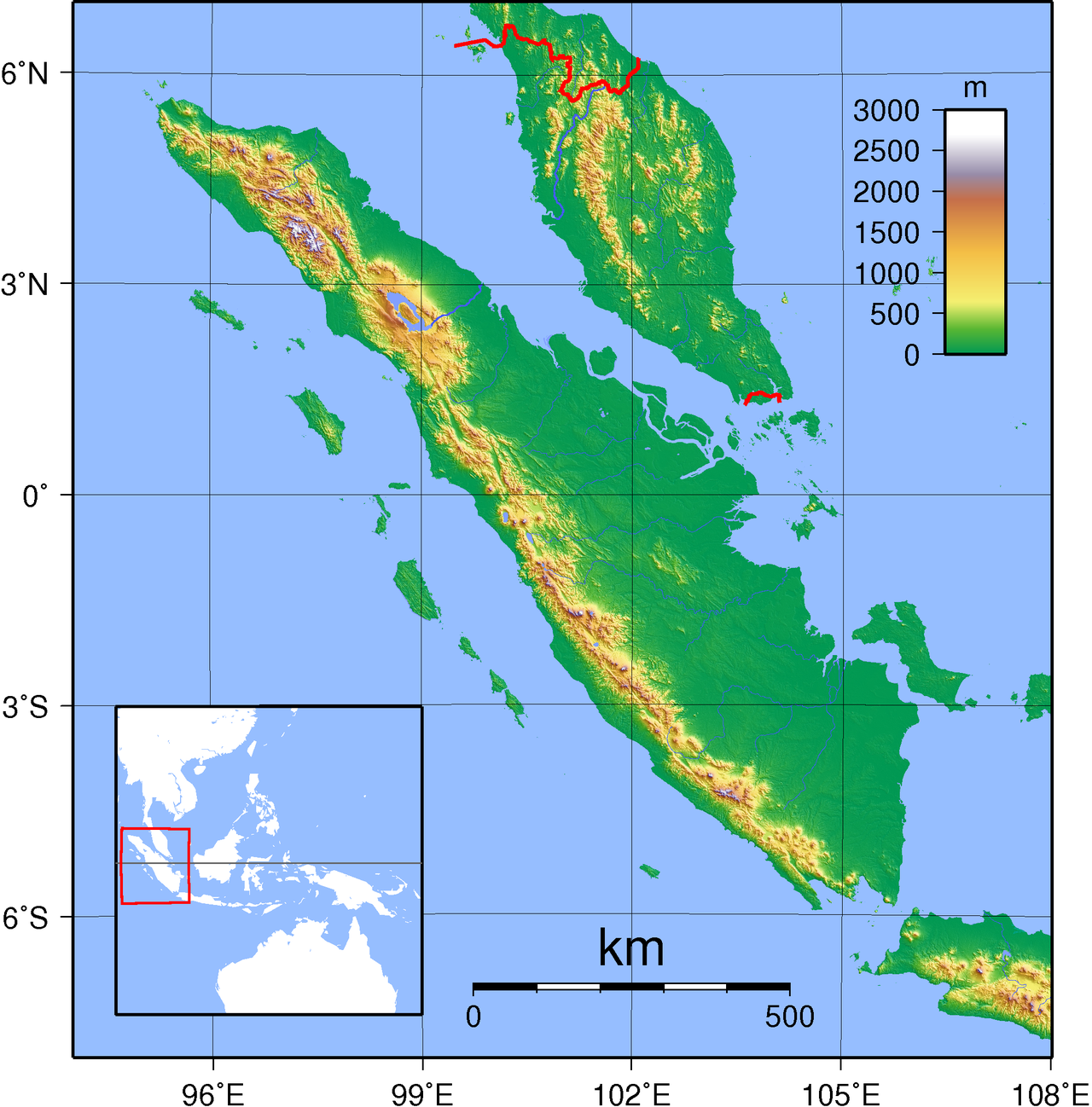
Sumatra
Geomorphological Tapestry
Sumatra presents a striking geographical profile, characterized by its elongated northwest-southeast orientation and its status as the largest island entirely within Indonesian territory, ranking sixth globally in size. Its western coast is dramatically defined by the Indian Ocean, with a series of offshore islands including the Mentawai chain acting as a buffer. The island's geological backbone is the Bukit Barisan mountain range, a volcanic arc that runs the length of the island and is responsible for its rugged western terrain and numerous active volcanoes.
This mountainous spine gives way to extensive plains and lowlands in the northeast, characterized by complex river systems, vast swamps, and mangrove forests. The equator bisects the island centrally, contributing to its consistently hot and humid tropical climate. Historically, Sumatra was covered by dense tropical rainforests, which have been significantly altered by human activity, creating a mosaic of remaining forest, agricultural land, and degraded areas.
The island's strategic location, bordering the Strait of Malacca and the Sunda Strait, has historically made it a vital hub for maritime trade and cultural exchange.
Biodiversity Under Siege
Sumatra is a globally recognized biodiversity hotspot, harboring an extraordinary array of endemic species. Iconic fauna such as the Sumatran tiger (Panthera tigris sumatrae), Sumatran elephant (Elephas maximus sumatranus), Sumatran rhinoceros (Dicerorhinus sumatrensis), and Sumatran orangutan (Pongo abelii) are all critically endangered, facing imminent extinction. These species are not merely charismatic megafauna; they are keystone species whose presence is vital for maintaining the health and balance of their ecosystems.
The primary driver of this crisis is rapid and extensive deforestation, with nearly 50% of the island's tropical rainforest lost in the last three and a half decades. This habitat destruction, largely fueled by the expansion of palm oil plantations, logging, and other agricultural enterprises, fragments populations, disrupts ecological processes, and pushes species towards oblivion. The loss of these species represents an irreplaceable diminishment of global natural heritage.
A Crucible of Cultures
Sumatra's history is a rich narrative of migration, trade, and cultural synthesis. Archaeological evidence suggests human habitation dating back tens of thousands of years. From the early centuries CE, the island became a crucial node in trans-Asian trade routes, attracting merchants and scholars from India, China, and the Middle East.
This interaction led to the early adoption and adaptation of Indian religions, particularly Hinduism and Buddhism, with powerful kingdoms like Srivijaya emerging as dominant maritime forces in the region. Later, Islam spread and became the predominant religion in many areas. The arrival of European colonial powers in the 16th century marked a new era, with various nations vying for control over Sumatra's valuable resources, especially spices and later rubber.
The Dutch eventually consolidated control over most of the island, integrating it into the Dutch East Indies. Post-World War II, Sumatra became a vital component of the newly independent Republic of Indonesia, contributing significantly to its economy and cultural diversity, though also experiencing periods of political unrest and regional autonomy movements.
Ecological Footprint
The environmental challenges on Sumatra have profound regional and global implications. The rampant deforestation, often involving the burning of forests and peatlands, generates massive amounts of smoke and particulate matter. This results in severe seasonal haze that blankets neighboring countries like Malaysia and Singapore, causing significant public health crises, disrupting transportation, and straining diplomatic relations.
The 2013 Southeast Asian haze, for instance, led to widespread respiratory illnesses and economic losses. Academics and environmentalists have increasingly used the term 'ecocide' to describe the scale of environmental destruction occurring not only in Sumatra but across Indonesia. This term signifies the widespread, long-term, and severe damage to ecosystems, highlighting the ethical and legal dimensions of the ongoing environmental crisis and its impact on both human and non-human life.
Sumatra's Contemporary Relevance
In the 21st century, Sumatra stands at a critical juncture, balancing the urgent need for conservation with the demands of economic development. International conservation organizations and the Indonesian government are engaged in complex efforts to protect remaining rainforests, establish wildlife corridors, and combat illegal logging and poaching. Sustainable land-use planning, particularly concerning the palm oil industry, is a major focus, aiming to reduce the pressure on critical habitats.
The island's future hinges on finding a sustainable development model that respects its unique biodiversity and cultural heritage while providing economic opportunities for its growing population. The lessons learned from Sumatra's environmental struggles have global relevance, informing strategies for conservation and sustainable development in other tropical regions facing similar pressures.
Go deeper
Frequently Asked Questions
What is Sumatra and where is it located?+
Why are animals like the Sumatran tiger and orangutan important?+
How does Sumatra's climate feel?+
Where do people from other countries come to trade with Sumatra?+
Why is the Bukit Barisan mountain range important?+
Based on content from Wikipedia · Licensed under CC BY-SA 4.0