

Tsunami
Images
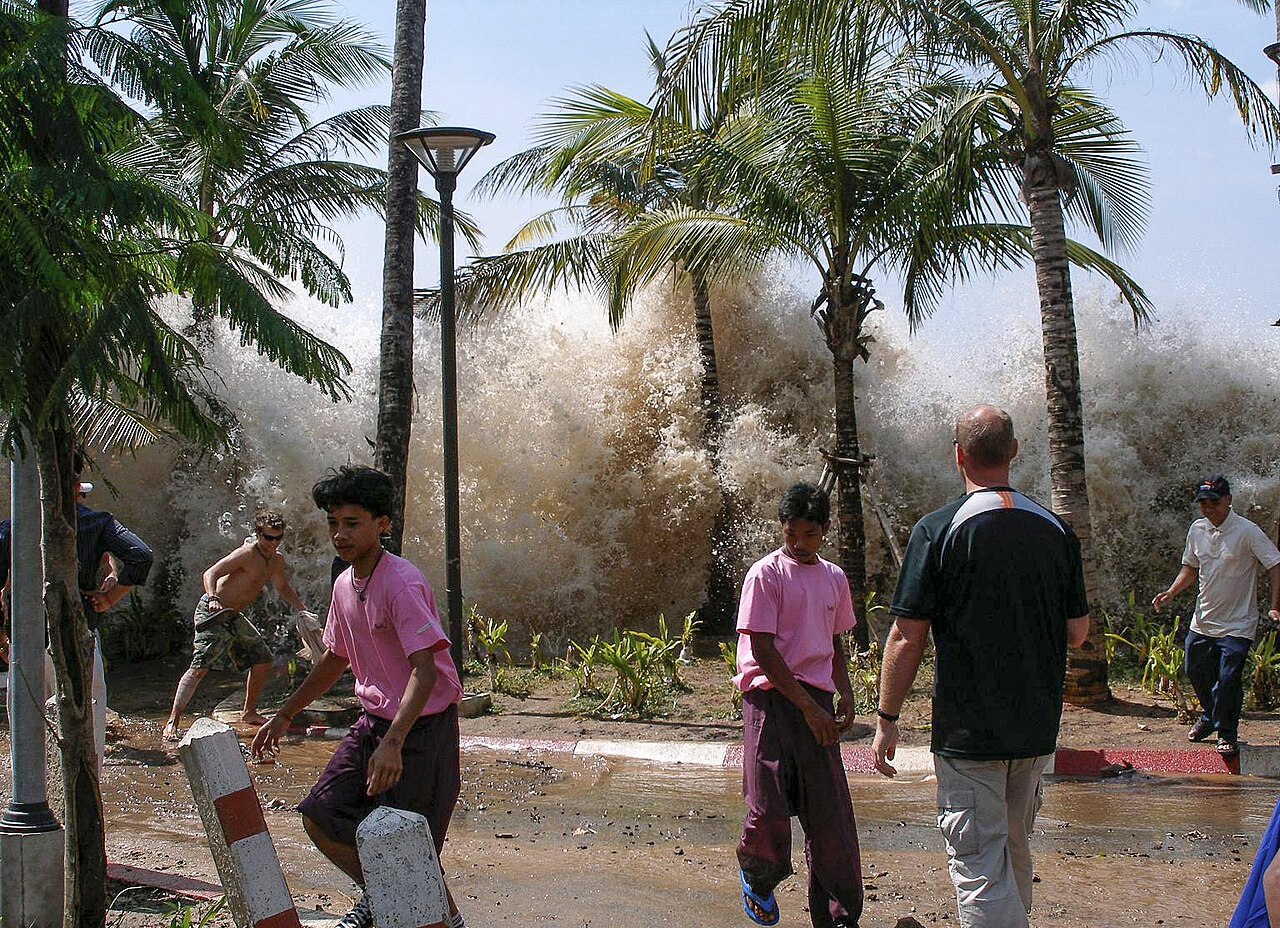
Tsunami


The Genesis of a Tsunami
Tsunamis, often misconstrued as tidal waves, are a class of waves generated by the abrupt displacement of a large volume of water, typically in an ocean or a large lake. The most frequent and destructive cause is a megathrust earthquake occurring at a subduction zone, where one tectonic plate slides beneath another. For a tsunami to be generated, the earthquake must involve significant vertical seafloor deformation.
This vertical movement, whether uplift or subsidence, transfers energy to the overlying water column, initiating a series of waves that propagate outwards. The magnitude of the earthquake and the extent of vertical displacement are critical factors determining the tsunami's potential size. Other significant triggers include submarine volcanic eruptions, which can inject large amounts of material into the water or cause caldera collapse, and large-scale submarine landslides, where the rapid movement of sediment down a slope displaces water.
Even asteroid impacts in the ocean, though exceedingly rare, could generate catastrophic tsunamis.
Wave Dynamics
In the deep ocean, tsunami waves exhibit unique characteristics. They possess extremely long wavelengths, often hundreds of kilometers, and relatively short periods (the time between successive wave crests). This results in a low wave amplitude, typically only a meter or less, making them difficult to detect from ships or aircraft.
Despite their low height, they carry immense energy and travel at very high speeds, governed by the depth of the water, often reaching speeds of 500 to 800 kilometers per hour. As a tsunami approaches the coast and enters shallower water, a process known as shoaling occurs. The wave's speed decreases due to friction with the seafloor, while its energy is conserved.
This leads to a dramatic increase in wave height, transforming the barely perceptible deep-ocean wave into a towering wall of water or a rapidly rising surge. The run-up height, the maximum vertical extent the water reaches inland, is a critical measure of a tsunami's destructive power.
Historical Devastation and the Evolution of Warning Systems
The destructive potential of tsunamis has been evident throughout human history. Notable events include the 1755 Lisbon earthquake and tsunami, which devastated the Portuguese capital, and the 2004 Indian Ocean tsunami, a trans-oceanic event that claimed over 230,000 lives across 14 nations. The 2011 Tohoku tsunami in Japan, triggered by a magnitude 9.0 earthquake, caused immense destruction, leading to over 18,000 fatalities and the Fukushima Daiichi nuclear disaster.
These catastrophic events have underscored the critical need for effective tsunami warning systems. Modern systems combine seismic monitoring networks to detect earthquakes with deep-ocean pressure sensors (like the DART system) that can detect the subtle changes in water pressure indicative of a tsunami. These systems provide vital lead time, allowing for evacuations and mitigation efforts, thereby saving countless lives.
Societal and Environmental Ramifications
The impact of a tsunami extends far beyond immediate destruction. Societally, tsunamis can lead to mass displacement of populations, severe economic disruption through the destruction of infrastructure and livelihoods (fishing, tourism, agriculture), and long-term psychological trauma for survivors. Environmentally, tsunamis can cause significant coastal erosion, saltwater intrusion into freshwater aquifers and agricultural lands, and damage to delicate ecosystems like coral reefs and mangrove forests.
The deposition of debris and sediment can alter landscapes for years. Understanding these multifaceted impacts is crucial for effective disaster preparedness, response, and long-term recovery strategies, emphasizing the importance of coastal zone management and community resilience.
Go deeper
Frequently Asked Questions
What causes a tsunami?+
How do tsunami waves travel in the deep ocean?+
Why do tsunamis become taller near the coast?+
What are some real tsunami events mentioned?+
How do modern warning systems help people?+
Based on content from Wikipedia · Licensed under CC BY-SA 4.0