

2022 United States Elections
Images

2022 United States Senate Elections Results Map


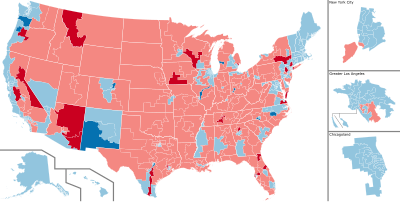


The Contested Landscape of Congressional Power
The 2022 United States midterm elections, held on November 8, 2022, were a pivotal moment in American politics. The primary focus was the composition of the 118th United States Congress. All 435 seats in the House of Representatives were contested, representing a nationwide referendum on the incumbent administration.
Simultaneously, 35 of the 100 seats in the U.S. Senate were up for election. The outcome determined which political party would hold the majority in each chamber, significantly impacting the legislative agenda for the remainder of President Biden's term. This election cycle was also the first to be influenced by redistricting following the 2020 census, which redraws congressional district boundaries based on population shifts, potentially altering the electoral map.
State-Level Power Shifts and Gubernatorial Races
Beyond federal elections, the midterms featured extensive state-level contests. Thirty-nine gubernatorial elections took place, offering voters a chance to choose the chief executive of their state. These races are crucial as governors wield significant power over state policy, budgets, and national political discourse.
Notably, Democrats achieved a net gain of two governorships, flipping seats in Arizona, Maryland, and Massachusetts, while Republicans secured Nevada. State legislative elections also saw dramatic shifts. Democrats gained control of both chambers in Michigan, the Minnesota Senate, and the Pennsylvania House, alongside forming a coalition government in the Alaska Senate.
These victories allowed Democrats to establish or regain 'trifectas' (control of the governorship, state senate, and state house) in Michigan, Massachusetts, Maryland, and Minnesota, marking a substantial expansion of their influence at the state level.
Defying Expectations
A significant narrative surrounding the 2022 midterms was the failure of a widely predicted 'red wave.' Historically, the president's party tends to lose a substantial number of seats in midterm elections. However, Democrats outperformed these historical trends. While Republicans narrowly secured a majority in the House, their gains were less substantial than anticipated.
Democrats even managed to expand their majority in the Senate by one seat. This outcome was attributed to several factors, including voter concerns about perceived extremism among some Republican candidates, the backlash against the Supreme Court's decision overturning Roe v. Wade, and a weariness regarding former President Trump's potential 2024 candidacy.
Candidate quality also played a role, with several Republican nominees facing scandals that hampered their campaigns.
Key Issues and Demographic Trends
Several critical issues shaped voter decisions. The Dobbs decision on abortion access served as a major motivator for Democratic and independent voters, leading to the passage of referendums protecting or expanding abortion rights in states like Kansas and Michigan. Economic concerns, particularly inflation, were a significant advantage for Republicans, who blamed President Biden's policies.
Voter turnout, especially among young voters (18-29), was notably high, second only to 2018 for a midterm election. Demographic trends continued to evolve, with Republicans making gains among the working class and minority groups, while Democrats saw improved performance among college-educated white voters. The elections also saw voters approve measures on issues ranging from minimum wage increases to cannabis legalization and electoral reform, demonstrating a diverse range of public priorities.
Historical Parallels and Future Implications
The 2022 election results offered several historical distinctions. It marked the fifth time in U.S. history that a president's party gained Senate seats while losing House seats in a midterm. Furthermore, it was the first midterm since 1934 where the president's party did not lose any state legislative chambers or incumbent senators.
The results also highlighted the ongoing political polarization and the complex interplay of national issues, candidate performance, and demographic shifts. The divided control of Congress sets the stage for potential legislative gridlock but also allows for focused policy initiatives within each chamber. The performance of various candidate types and the impact of key social issues provide valuable insights for future electoral strategies and political analysis.
See also
Frequently Asked Questions
What happened in the 2022 U.S. midterm elections?+
How many seats were up for election in the House and Senate?+
Why did Democrats win more seats than expected?+
Which states had new Democratic governors in 2022?+
What is a "trifecta" in state politics?+
Based on content from Wikipedia · Licensed under CC BY-SA 4.0