

United States Congress
Images

Problem Solvers Caucus in the 119th United States Congress


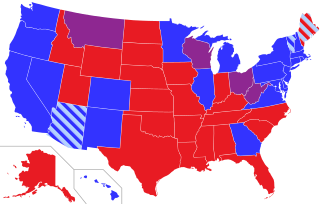


The Dual Pillars of American Legislation
The United States Congress, established by Article One of the U.S. Constitution, serves as the legislative branch of the federal government. It is a bicameral institution, intentionally designed with two distinct chambers to balance representation and power. The U.S. House of Representatives, often referred to as the 'lower house,' is designed to be more directly representative of the populace, with its 435 members elected from single-member congressional districts apportioned among the states based on population.
This ensures that states with larger populations have more representation. Conversely, the U.S. Senate, the 'upper house,' provides equal representation for all states, with each state having two senators, regardless of its population size.
This structure, with 100 senators in total, was a compromise to ensure that less populous states had a voice equal to that of more populous ones. Both chambers convene in the U.S. Capitol building in Washington, D.C., the physical and symbolic center of American lawmaking.
The Electoral Mandate
Members of Congress are chosen through direct popular election, a cornerstone of American democracy. The House of Representatives operates on a two-year term cycle, with all 435 seats up for election every even-numbered year. This frequent election cycle keeps representatives closely tied to the concerns of their constituents.
The Senate, however, employs a six-year term system, with elections staggered so that approximately one-third of the Senate is up for election every two years. This staggered approach provides a degree of continuity and stability, preventing drastic shifts in policy that could occur if all senators were elected simultaneously. While direct election is the norm, vacancies in the Senate can, in some cases, be filled by a governor's appointment until the next election, a practice that has evolved over time and is subject to state laws.
Foundations of Governance
The U.S. Congress traces its origins to the U.S. Constitution, first meeting in 1789 to replace the earlier Congress of the Confederation. The Constitution lays out specific qualifications for its members: for the House, a representative must be at least 25 years old, a U.S. citizen for seven years, and an inhabitant of the state they represent.
Senators must meet slightly higher standards, being at least 30 years old, a U.S. citizen for nine years, and also an inhabitant of their state. These age and citizenship requirements were intended to ensure a certain level of maturity and commitment to the nation. Historically, while not constitutionally mandated, Congress has largely operated under a two-party system, with members predominantly affiliated with the Democratic or Republican parties since the late 19th century, though independent and third-party representation, while rare, does occur.
The Mechanics of Representation
The number of representatives each state has in the House is determined by its population, a process known as apportionment. This is recalculated every ten years following the U.S. census, as mandated by the Reapportionment Act of 1929 and the Uniform Congressional District Act. Each state is guaranteed at least one congressional representative.
Following apportionment, states redraw their congressional district boundaries, a process called redistricting. This can be a politically charged activity, as the way districts are drawn can significantly influence election outcomes. The principle of 'one person, one vote' guides this process, aiming for districts with roughly equal populations, though the implementation and fairness of redistricting are often subjects of debate and legal challenges.
The Vice President's Role and Congressional Power Dynamics
An interesting constitutional role is held by the Vice President of the United States, who also serves as the President of the Senate. In this capacity, the Vice President presides over Senate proceedings and has the power to cast a vote only in the event of a tie. This tie-breaking vote can be crucial in passing legislation or confirming nominations.
Beyond this specific power, Congress wields significant authority, including the power to levy taxes, declare war, regulate commerce, and oversee the executive branch. The dynamic between the House and the Senate, along with the influence of political parties and the executive branch, creates a complex system of checks and balances that shapes the legislative agenda and the direction of national policy.
Go deeper
Based on content from Wikipedia · Licensed under CC BY-SA 4.0