

2021 German federal election
Images
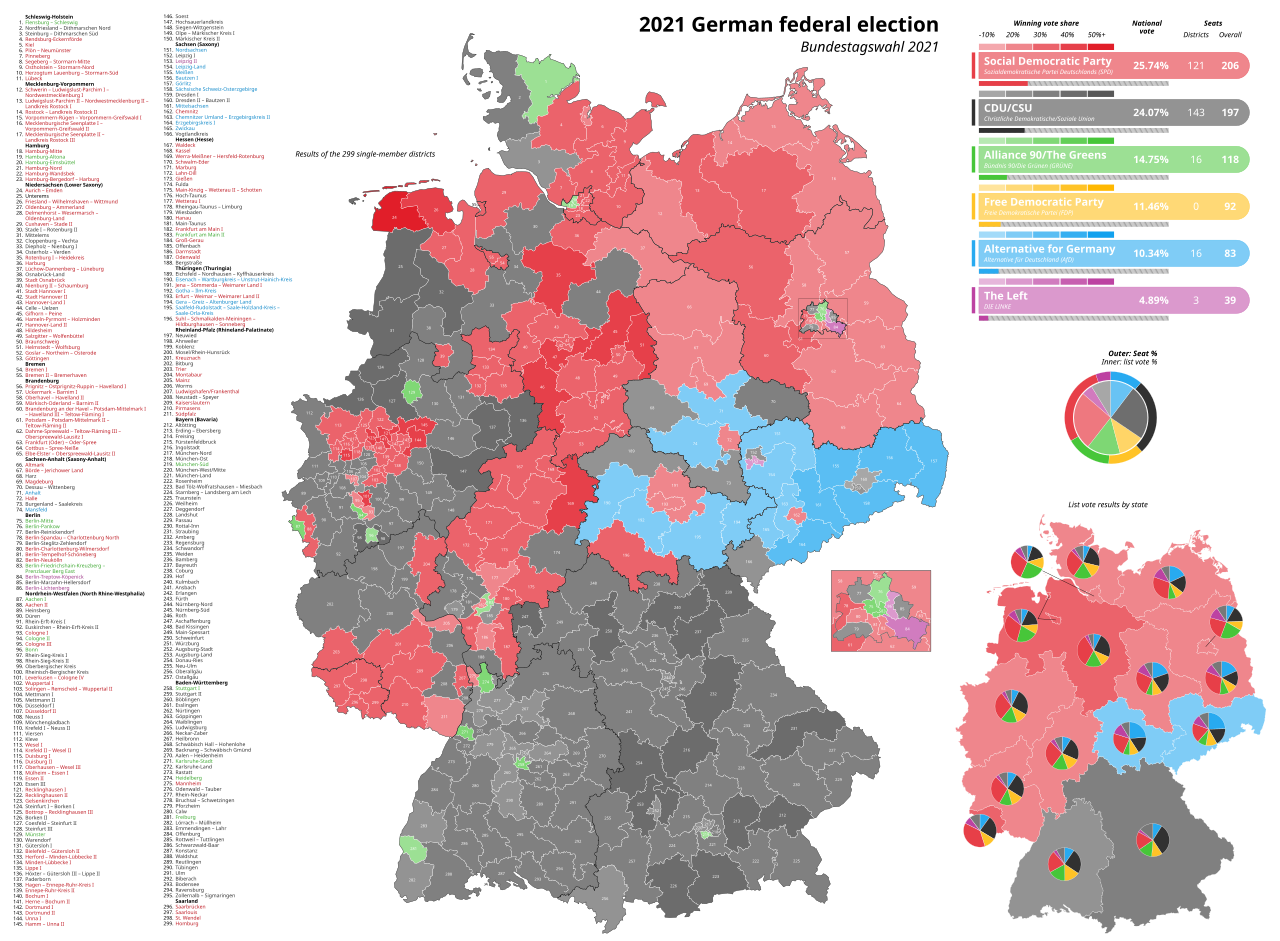
2021 German federal election


The End of the Merkel Era
The 2021 German federal election marked a pivotal moment, signaling the definitive end of Angela Merkel's 16-year chancellorship. Her decision not to seek re-election was unprecedented in the Federal Republic's history, creating a vacuum and a palpable sense of anticipation for the future. Merkel's tenure was characterized by stability and a pragmatic approach, navigating numerous European and global crises.
Her departure meant that voters were not just choosing a new leader but were also tasked with defining Germany's political trajectory without her familiar presence. This absence of an incumbent seeking re-election fundamentally altered the dynamics of the campaign, allowing other parties to present themselves as viable alternatives for leadership and policy direction, moving beyond the established political consensus.
A Reshuffled Bundestag
The electoral results delivered a dramatic shift in the Bundestag's composition. The Social Democratic Party (SPD) achieved its most significant victory since 2005, securing 25.7% of the vote and emerging as the largest party. This resurgence was a testament to their campaign strategy and voter desire for change.
Conversely, the CDU/CSU experienced their worst-ever electoral performance, garnering only 24.1%. This significant decline represented a substantial loss of support from their 2017 results and signaled a deep dissatisfaction among their traditional voter base. Alliance 90/The Greens recorded their strongest showing in history with 14.7%, positioning them as a key player, while the Free Democratic Party (FDP) also made modest gains, reaching 11.4%.
The Alternative for Germany (AfD) saw a decrease in support, falling to 10.4%.
A New Governing Paradigm
With no single party able to form a majority government, the FDP and the Greens found themselves in a crucial 'kingmaker' position. The traditional 'grand coalition' between the CDU/CSU and SPD was explicitly ruled out by both parties, forcing them to explore more complex alliances. After extensive and often challenging coalition negotiations, the SPD, FDP, and Greens successfully formalized an agreement to form a novel 'traffic light coalition.' This tripartite alliance, named after the party colors (red for SPD, yellow for FDP, and green for the Greens), represented a significant departure from previous governing structures.
The formation of this coalition under Olaf Scholz as Chancellor on December 8, 2021, ushered in a new era of German governance, characterized by a broader ideological spectrum and a commitment to progressive policies.
Electoral Irregularities and the Lingering Shadow of Repeat Elections
The integrity of the electoral process is paramount, and the 2021 election was marred by significant irregularities, particularly in Berlin. These issues, ranging from insufficient ballot papers to organizational chaos, led to widespread criticism and ultimately necessitated repeat elections. The state elections in Berlin were rerun in February 2023, and a federal repeat election for the Bundestag seats allocated to Berlin took place in February 2024.
The outcome of this federal rerun had tangible consequences, resulting in the FDP losing a seat and the redistribution of three other seats to different states. These events underscore the fragility of electoral systems and the critical importance of robust administrative oversight to ensure fair and democratic outcomes for all citizens.
See also
Based on content from Wikipedia · Licensed under CC BY-SA 4.0