

Olaf Scholz: The Leader of Germany!
Images

Olaf Scholz head 2023


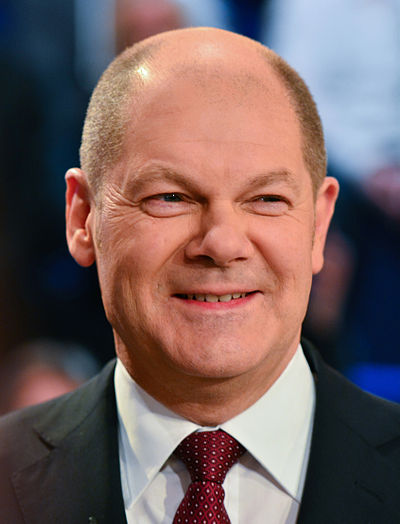


The Architect of German Governance
Olaf Scholz's ascent to the Chancellorship of Germany is a narrative woven from decades of dedicated public service and strategic political maneuvering. Born on June 14, 1958, in Osnabrück, West Germany, Scholz initially pursued a career in law, specializing in labor and employment law. This foundational experience in understanding legal frameworks and advocating for rights likely informed his later political philosophy.
His deep engagement with the Social Democratic Party (SPD) began in the 1970s, marking him as a long-term proponent of social democracy. Scholz's parliamentary career commenced in 1998, serving in the Bundestag, Germany's federal parliament. He held several significant ministerial portfolios, including Federal Minister of Labour and Social Affairs (2007-2009) and later as Vice Chancellor and Federal Minister of Finance (2018-2021) in Angela Merkel's government.
A pivotal period was his tenure as First Mayor of Hamburg (2011-2018), where he gained extensive executive experience managing a major metropolitan area. This diverse background, encompassing legislative, executive, and ministerial roles, provided him with a comprehensive understanding of governance, preparing him for the immense responsibilities of the Chancellorship, a role he assumed on December 8, 2021.
Geopolitical Crossroads
Upon assuming the Chancellorship, Olaf Scholz inherited a complex international landscape, most notably grappling with the repercussions of the Russian invasion of Ukraine. His response, characterized by a significant 'Zeitenwende' or 'turning point' in German defense policy, marked a departure from previous cautious approaches. This shift involved a substantial increase in Germany's defense budget, a commitment to providing advanced weaponry to Ukraine, and a reevaluation of energy security, leading to the suspension of the Nord Stream 2 pipeline.
Scholz's administration also authorized substantial German military and medical aid to Israel during the Gaza war, while unequivocally denouncing the actions of Hamas and other Palestinian militant groups. These foreign policy decisions underscore Germany's evolving role on the global stage, balancing its historical responsibilities with contemporary security imperatives. The destruction of three Nord Stream pipelines in September 2022 further highlighted the volatile geopolitical environment Germany operates within.
Domestic Challenges and Economic Realities
The Scholz government has faced considerable domestic challenges, particularly concerning fiscal policy. In November 2023, the Federal Constitutional Court's ruling mandating budget cuts totaling €60 billion to adhere to constitutional debt limits presented a significant hurdle. This judicial intervention underscored the tension between the government's spending priorities and the constitutional requirement for fiscal discipline.
The ruling contributed to widespread protests across Germany, reflecting public concern over potential austerity measures and the government's ability to manage its finances effectively. The subsequent collapse of his government majority in November 2024, following the dismissal of Christian Lindner from the Finance Ministry and the breakdown of the coalition agreement, led to a vote of no confidence on December 16, 2024. This culminated in a snap election on February 23, 2025, where the SPD experienced its lowest post-war result, placing third behind the CDU and AfD, signaling a profound shift in the German political landscape.
The Evolution of a Political Leader
Olaf Scholz's career trajectory is a compelling study in political evolution. His early years as a lawyer provided him with a robust understanding of legal principles and the importance of due process, skills that are invaluable in the realm of governance. His long-standing membership in the SPD reflects a consistent ideological commitment to social justice and economic fairness.
Throughout his various roles, from general secretary of the SPD to Federal Minister of Labour and Social Affairs, Scholz demonstrated a capacity for leadership and policy development. His time as First Mayor of Hamburg was particularly formative, allowing him to hone his executive decision-making skills in a complex urban environment. As Chancellor, he has been tasked with leading Germany through unprecedented times, navigating both domestic economic pressures and profound international crises.
His leadership style, often described as pragmatic and measured, has been tested by events that have reshaped global politics and Germany's place within it.
See also
Frequently Asked Questions
Who is Olaf Scholz?+
How did Olaf Scholz become the Chancellor of Germany?+
What did Olaf Scholz do when Russia invaded Ukraine?+
Why was the Nord Stream 2 pipeline important and what happened to it?+
Why were there protests in Germany in 2023?+
Based on content from Wikipedia · Licensed under CC BY-SA 4.0