

William Bligh
Images

William Bligh plaque


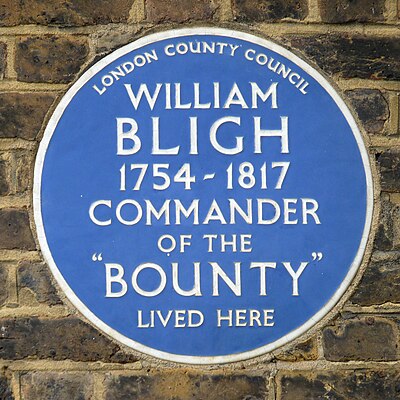

The Bounty Mutiny
William Bligh's name is inextricably linked to the mutiny on HMS Bounty in 1789. A highly competent navigator and officer, Bligh was tasked with a vital mission: transporting breadfruit from Tahiti to the West Indies. However, his command style was notoriously authoritarian and prone to outbursts, creating significant friction with his crew.
The sailors, enjoying the relaxed lifestyle in Tahiti, found Bligh's strict discipline and perceived injustices unbearable. The mutiny, led by Lieutenant Fletcher Christian, was a dramatic rejection of Bligh's authority. The subsequent act of casting Bligh and 18 loyalists adrift in a small launch, with minimal provisions, was an extreme measure born from desperation and resentment.
The reasons behind the mutiny remain a subject of historical debate, with some arguing Bligh's harshness was justified by naval standards, while others contend it was excessive and unnecessarily provocative.
An Unprecedented Voyage of Endurance and Skill
Following his expulsion from the Bounty, Bligh embarked on one of the most remarkable open-boat voyages in maritime history. Despite the dire circumstances, Bligh's exceptional navigational skills and unwavering determination allowed him to lead his small group across thousands of miles of open ocean. They faced treacherous weather, starvation, and the constant threat of hostile encounters.
A brief stop at Tofua for provisions ended tragically with the death of one of his men during an attack by the islanders. Nevertheless, Bligh persevered, eventually reaching Timor after a grueling 47-day journey covering 3,618 nautical miles. This feat not only saved his life but also provided invaluable geographical knowledge of the Pacific, cementing his reputation as a master mariner.
Governing New South Wales
Bligh's career continued after the Bounty incident, and he later accepted the position of Governor of New South Wales in 1806. The colony was plagued by corruption, particularly the pervasive and destabilizing influence of the New South Wales Corps, which effectively controlled the colony's economy through the illicit trade of rum. Bligh was given explicit orders to dismantle this corrupt system.
His attempts to curb the rum trade and assert naval authority over the entrenched military and commercial interests were met with fierce resistance. He implemented policies that challenged the established power structures, leading to widespread discontent among those who profited from the illegal trade.
The Rum Rebellion
The conflict between Governor Bligh and the New South Wales Corps culminated in the Rum Rebellion on January 26, 1808. The Corps, led by Major George Johnston, staged a military coup, arresting Bligh and deposing him from his governorship. This act of rebellion was a direct challenge to the authority of the British Crown.
While the rebellion temporarily removed Bligh from power, the British government later declared the actions of the Corps illegal, highlighting the significance of Bligh's struggle against corruption. Bligh's tenure in New South Wales, though brief and tumultuous, underscored the difficulties of imposing order and reform in a frontier society dominated by powerful vested interests. His life story is a compelling study of leadership, resilience, and the often-turbulent intersection of naval command and colonial administration.
See also
Based on content from Wikipedia · Licensed under CC BY-SA 4.0