

Willem Dafoe
Images

Willem Dafoe 2006


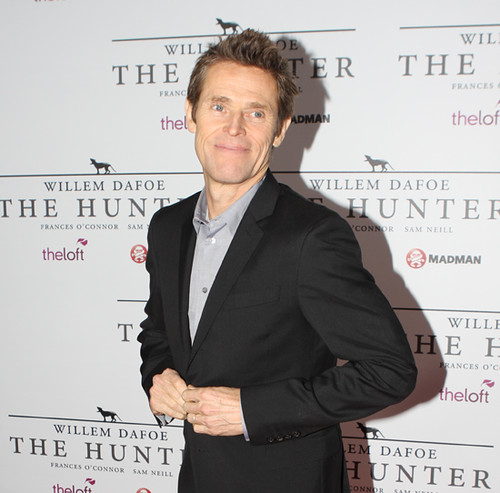


From Experimental Roots to Global Stardom
Willem Dafoe, born William James Dafoe on July 22, 1955, in Appleton, Wisconsin, is an American actor whose career defies easy categorization. His journey began not in the polished halls of Hollywood, but within the vibrant, boundary-pushing world of experimental theater. As a founding member of The Wooster Group, Dafoe honed his craft through rigorous physical and vocal training, developing a unique ability to embody characters with raw intensity and intellectual depth.
This formative period instilled in him a fearless approach to performance, a willingness to explore the unconventional, and a profound understanding of theatricality that would later inform his cinematic work. His film debut in Michael Cimino's 'Heaven's Gate' (1980), though uncredited, marked the initial step into a medium where his distinctive presence would soon become indispensable. Dafoe's early career was characterized by a commitment to challenging roles, setting the stage for a prolific and celebrated trajectory.
The Spectrum of Performance
Dafoe's filmography is a testament to his remarkable versatility, showcasing an extraordinary capacity to inhabit a vast array of characters. He achieved widespread critical acclaim for his Oscar-nominated role as Sergeant Elias in Oliver Stone's 'Platoon' (1986), a performance lauded for its moral complexity and emotional resonance. This success paved the way for iconic portrayals of antagonists, most notably as Norman Osborn, the Green Goblin, in Sam Raimi's 'Spider-Man' trilogy (2002-2007) and its subsequent reprisal in 'Spider-Man: No Way Home' (2021), where he brought a compelling blend of menace and pathos to the villain.
Conversely, Dafoe has excelled in roles demanding profound empathy and quiet dignity, such as the compassionate motel manager Bobby Hicks in Sean Baker's 'The Florida Project' (2017), earning him another Academy Award nomination. His portrayal of Vincent van Gogh in Julian Schnabel's 'At Eternity's Gate' (2018) was a deeply personal and critically lauded performance, securing him a fourth Oscar nomination and cementing his reputation as an actor capable of capturing the essence of historical figures with striking authenticity.
Beyond live-action, his distinctive voice has graced animated features like 'Finding Nemo' (2003) and 'The Boy and the Heron' (2023).
A Muse for Maverick Directors
A defining characteristic of Willem Dafoe's career is his consistent and fruitful collaboration with some of the most distinctive and influential filmmakers of our time. He has cultivated enduring relationships with directors known for their singular artistic visions, often referred to as 'auteurs.' This includes working repeatedly with figures such as Paul Schrader, Abel Ferrara, Sam Raimi, Yorgos Lanthimos, Lars von Trier, Julian Schnabel, Wes Anderson, and Robert Eggers.
These partnerships have yielded some of his most artistically significant and challenging works. For instance, his collaborations with Lars von Trier on 'Antichrist' (2009) and Yorgos Lanthimos on 'Poor Things' (2023) showcase his willingness to engage with provocative themes and avant-garde aesthetics. Similarly, his work with Wes Anderson on 'The Life Aquatic with Steve Zissou' (2004) and 'The Grand Budapest Hotel' (2014) highlights his ability to adapt to distinct stylistic sensibilities.
These ongoing creative dialogues underscore Dafoe's reputation as an actor who thrives in environments that encourage artistic exploration and innovation.
The Art of Transformation and Enduring Impact
Willem Dafoe's enduring appeal lies in his profound ability to transform, to disappear into his characters while simultaneously imbuing them with a palpable sense of humanity, even in the most extreme or grotesque portrayals. His physical presence, coupled with a voice that can shift from a whisper to a roar, allows him to command the screen and stage with an undeniable magnetism. He has a unique talent for exploring the darker, more complex aspects of the human psyche, often finding the vulnerability within characters that might otherwise be perceived as purely monstrous or eccentric.
This has led to a career rich with critical accolades, including a Volpi Cup Award for Best Actor, and numerous nominations for prestigious awards such as the Academy Awards, British Academy Film Awards, and Golden Globe Awards. His consistent output of compelling performances across a wide spectrum of genres ensures his continued relevance and influence in contemporary cinema and theater, making him a true icon of the performing arts.
Go deeper
Frequently Asked Questions
Who is Willem Dafoe?+
Which superhero villain did Willem Dafoe play?+
Did Willem Dafoe voice a character in an animated movie?+
Has Willem Dafoe ever acted as a real historical person?+
What kind of theater did Willem Dafoe start his acting career in?+
Based on content from Wikipedia · Licensed under CC BY-SA 4.0