

Antichrist
Images
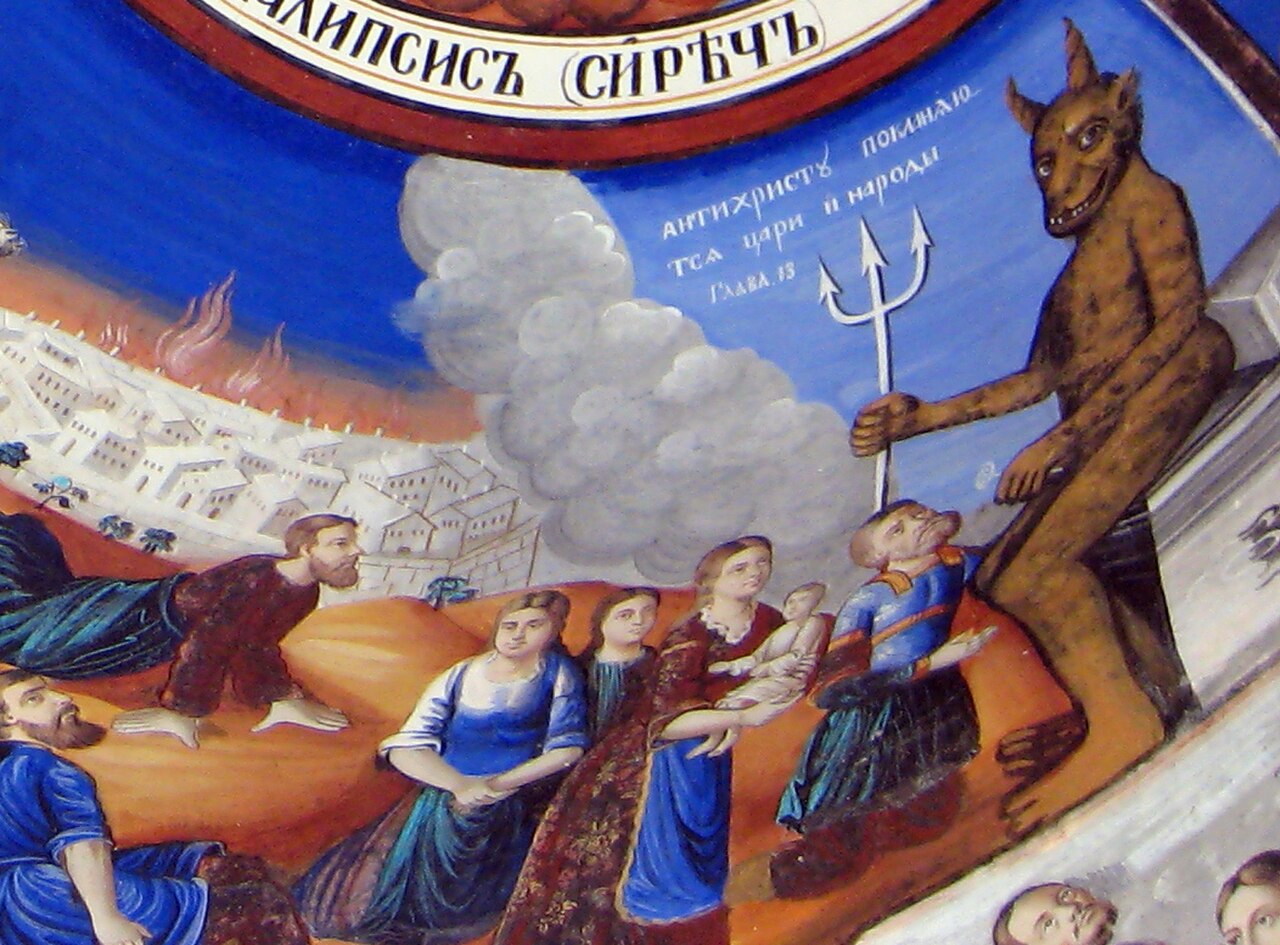
Antichrist-from-Osogovo-Monastery


Biblical Foundations and Early Interpretations
The concept of the Antichrist, central to Christian eschatology, originates from biblical prophecies concerning an ultimate adversary of Christ. The term 'antichristos' appears four times in the New Testament, exclusively in the First and Second Epistles of John, where it denotes individuals or movements denying the divinity of Jesus and the Father. Beyond these direct references, related imagery in other biblical texts is often conflated with the Antichrist.
Jesus himself warns of 'false Christs' and 'false prophets' performing signs and wonders in the Gospels (Matthew 24, Mark 13). Daniel's vision of a 'little horn' and Paul's description of the 'man of lawlessness' (or 'man of sin') in 2 Thessalonians 2 are frequently interpreted as prefiguring or embodying the Antichrist figure. Early Church Fathers like Irenaeus, Tertullian, and Hippolytus engaged deeply with these texts, developing complex theories that sometimes linked the Antichrist to specific political entities, such as the Roman Empire, or to particular lineages, like the tribe of Dan, attempting to decipher the 'mystery of lawlessness' foretold.
Historical Evolution and Diverse Theological Frameworks
The interpretation of the Antichrist has undergone significant evolution, shifting from a potentially pluralistic concept in early Christianity to a more singular, eschatological figure in later traditions. During the Protestant Reformation in the 16th century, a pivotal shift occurred when reformers like Martin Luther, John Calvin, and John Knox identified the Papacy as the Antichrist. This 'historicist' interpretation viewed the institutional authority of the Pope and the Catholic Church as the contemporary manifestation of the 'man of sin,' a direct opposition to Christ's true church.
This perspective contrasted sharply with the prevailing Catholic and Orthodox views, which generally understood the Antichrist as a future, individual deceiver, possibly empowered by Satan, who would arise before the final judgment. This divergence highlights how the Antichrist concept has been employed not only for theological speculation but also as a polemical tool in religious and political conflicts.
The Antichrist as a Symbol of Opposition and Deception
Regardless of whether viewed as a literal individual, a symbolic force, or a historical entity, the Antichrist represents a profound theological challenge. The core of the concept lies in its function as an ultimate counterpoint to Christ – a figure embodying deception, rebellion against divine authority, and the subversion of truth. The prophecies suggest a charismatic leader capable of wielding immense influence, performing 'great signs and wonders' to legitimize their false claims.
This capacity for deception is central; the Antichrist seeks not merely to conquer but to pervert faith, leading adherents away from genuine salvation. The 'Beast of the Sea' from Revelation is often seen as a potent symbol of this deceptive power, representing a political or spiritual entity that demands worship and persecutes true believers, thereby challenging humanity's fundamental allegiance to God.
Cross-Cultural Analogues and Enduring Themes
The archetype of a supreme antagonist opposing divine will and seeking to deceive humanity resonates across various religious and cultural traditions, even if the specific terminology differs. In Jewish eschatology, the figure of Armilus emerges as a powerful opponent who will challenge the Jewish people before the advent of the Messianic Age. Similarly, Islamic eschatology features the Al-Masih ad-Dajjal, often translated as the 'False Messiah' or 'Deceiver,' a malevolent entity prophesied to appear before the Day of Judgment, performing miraculous feats and leading vast numbers astray.
The existence of these parallel figures-the Antichrist, Armilus, the Dajjal-suggests a universal human preoccupation with the nature of ultimate evil, the struggle for spiritual authenticity, and the anticipation of a final cosmic resolution between good and evil. These figures serve as potent symbols in their respective traditions, warning against seduction by false saviors and emphasizing the importance of discernment and steadfast faith.
Contemporary Relevance and Philosophical Implications
In contemporary discourse, the concept of the Antichrist continues to be debated and reinterpreted. While some maintain a literal, future-oriented view, others engage with it more metaphorically, seeing 'antichrist' tendencies in ideologies, political movements, or cultural trends that promote secularism, relativism, or opposition to traditional religious values. Philosophically, the Antichrist figure raises enduring questions about the nature of evil, the problem of suffering, the role of charisma in leadership, and the dynamics of belief and doubt.
It prompts critical examination of power structures, the manipulation of information, and the human susceptibility to deception. The enduring power of the Antichrist narrative lies in its ability to encapsulate anxieties about societal collapse, spiritual apostasy, and the ultimate confrontation between opposing worldviews, making it a persistent element in theological and cultural discussions.
Go deeper
Frequently Asked Questions
What is the Antichrist?+
Why do some people say the Pope is the Antichrist?+
How does the Antichrist try to trick people?+
Where does the idea of the Antichrist come from?+
Are there different ways people think about the Antichrist?+
Based on content from Wikipedia · Licensed under CC BY-SA 4.0