

Well
Images
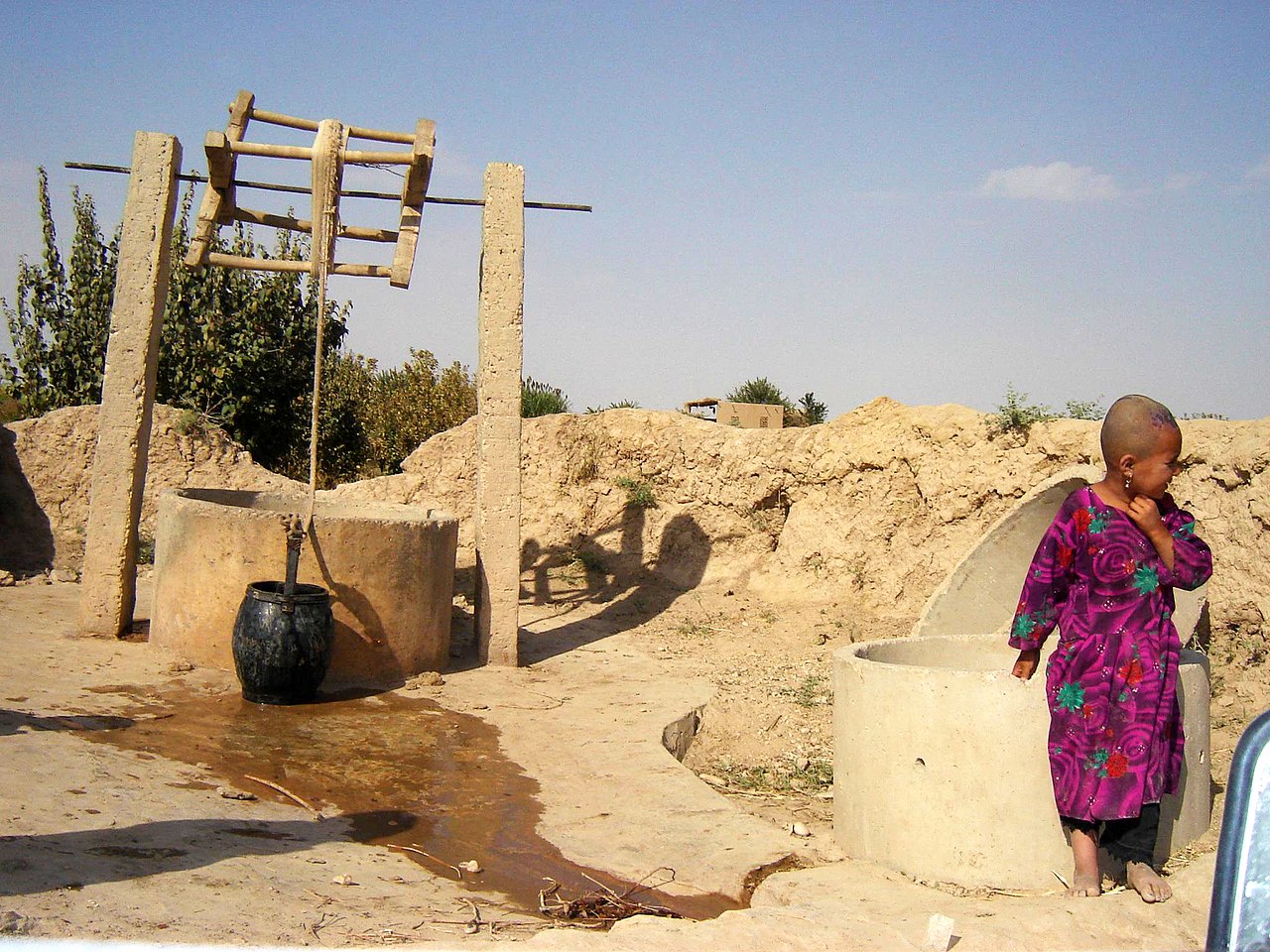
Well
Hydrogeological Principles of Well Function
Wells are engineered structures designed to extract groundwater from subsurface aquifers. The fundamental principle relies on understanding hydrogeology, the study of groundwater flow. Aquifers are geological formations, such as sandstones, limestones, or gravel beds, that possess sufficient porosity and permeability to store and transmit significant quantities of water.
When a well penetrates an aquifer, it creates a direct conduit to this water. The water level in the well, known as the static water level, will rise to equilibrate with the aquifer's potentiometric surface. Pumping water from the well causes a localized depression in this surface, forming a 'cone of depression.' The efficiency of a well is determined by factors like aquifer transmissivity, storativity, well depth, diameter, and the presence of well screens, which are crucial for preventing sediment ingress and maintaining hydraulic efficiency.
Improper well design or over-pumping can lead to aquifer depletion, saltwater intrusion in coastal areas, and land subsidence.
Evolution of Well Construction
The history of well construction spans millennia, reflecting human ingenuity in accessing vital water resources. Early wells were rudimentary, often hand-dug pits reaching shallow water tables, sometimes lined with stones or timber for stability. Ancient civilizations, including those in Mesopotamia, Egypt, and the Indus Valley, developed sophisticated techniques for well construction, often involving brick or stone lining and simple lifting mechanisms.
The development of driven wells, where a pointed pipe is driven into the ground, and later bored wells, using augers, marked significant advancements. The 19th and 20th centuries witnessed the advent of rotary drilling rigs, capable of penetrating deep into the earth's crust. Modern well drilling employs advanced techniques like mud rotary drilling, air rotary drilling, and cable tool drilling, allowing for the construction of deep, high-yield wells for municipal, industrial, and agricultural purposes.
Casing materials have also evolved from wood and stone to steel and PVC, offering greater durability and resistance to corrosion.
Socioeconomic and Environmental Ramifications of Well Usage
Wells are foundational to human settlement and economic development, providing essential water for drinking, sanitation, agriculture, and industry. In many regions, particularly those with limited surface water availability, wells are the sole source of potable water, directly impacting public health and enabling agricultural productivity. The widespread use of wells has facilitated population growth and the expansion of arid and semi-arid lands into productive agricultural areas.
However, the reliance on groundwater also carries significant environmental and socioeconomic consequences. Over-extraction can lead to aquifer depletion, reduced stream flows, and ecological damage. Contamination from agricultural runoff, industrial waste, or faulty well construction poses serious health risks.
Furthermore, the management of groundwater resources, including well permitting and monitoring, is a complex challenge requiring careful planning to ensure sustainability and equitable access for present and future generations.
Modern Well Systems
Contemporary well systems are sophisticated feats of engineering designed for optimal water extraction and quality assurance. Beyond the basic borehole and casing, modern wells often incorporate advanced components. Submersible pumps, housed within the well casing below the water level, are the standard for efficient water lifting, minimizing energy loss compared to surface pumps. Wellheads are sealed to prevent surface contamination, and many systems include pressure tanks to regulate water flow and reduce pump cycling.
Water treatment systems, such as filters, softeners, and UV sterilizers, are frequently integrated to remove impurities and ensure the water meets drinking water standards. Monitoring wells are also crucial for tracking groundwater levels and quality, providing data essential for sustainable resource management. The design and maintenance of these systems require specialized knowledge in hydrogeology, mechanical engineering, and water quality science.
The Future of Wells
As global water demand continues to rise and climate change impacts precipitation patterns, the role of wells remains critical, yet faces new challenges. Sustainable groundwater management is paramount, necessitating accurate hydrogeological assessments, stringent pumping regulations, and the promotion of water conservation. Innovations in well technology are focused on increasing efficiency and reducing environmental impact.
This includes the development of smart well systems with real-time monitoring and automated controls, advanced filtration and purification techniques to treat contaminated groundwater, and the exploration of managed aquifer recharge (MAR) systems, where treated surface water or excess groundwater is intentionally introduced back into aquifers to replenish them. Furthermore, understanding the interconnectedness of surface and groundwater systems is crucial for integrated water resource management, ensuring that well usage does not compromise the health of surface water bodies or the broader ecosystem.
Go deeper
Based on content from Wikipedia · Licensed under CC BY-SA 4.0