

Volcán
Images

Volcán Chaitén-Sam Beebe-Ecotrust



The Mechanics of Magma
Volcanic activity is fundamentally driven by the Earth's internal heat engine. Magma, a complex mixture of molten rock, dissolved gases, and solid crystals, originates in the mantle or lower crust. Its ascent is facilitated by density differences and buoyancy, but also by the forces associated with plate tectonics. At divergent plate boundaries, decompression melting allows magma to form as plates separate.
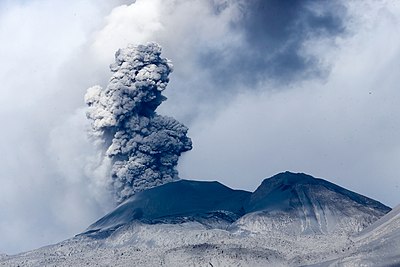
At convergent boundaries, subduction of oceanic plates into the mantle triggers melting through the introduction of water, lowering the melting point of the overlying mantle wedge. The composition of magma, particularly its silica content and dissolved volatile content (like water and carbon dioxide), dictates its viscosity and explosivity. High-silica, high-volatile magmas are typically more viscous and prone to explosive eruptions, generating pyroclastic flows and ash plumes that can reach stratospheric heights.
Conversely, low-silica, low-volatile magmas tend to erupt effusively, producing extensive basaltic lava flows. Understanding these rheological properties is critical for hazard assessment and forecasting.
A Volcanic Past
The geological history of Earth is inextricably linked to volcanism. Large Igneous Provinces (LIPs), vast outpourings of basaltic lava over short geological timescales, have been implicated in mass extinction events, potentially by releasing enormous quantities of greenhouse gases that caused rapid climate change. Volcanic arcs, formed at subduction zones, are responsible for the creation of continental crust and mountain ranges, such as the Andes. Island arcs, like Japan and the Aleutians, are built entirely from volcanic activity.
Over geological time, volcanic outgassing has been a primary source of atmospheric gases, including water vapor, carbon dioxide, and nitrogen, fundamentally shaping the planet's atmosphere and hydrosphere, and thus the conditions necessary for life to evolve. The distribution of volcanoes today largely reflects these ancient tectonic processes.
Volcanoes and Humanity
Volcanoes present a dual nature to human societies. They pose significant natural hazards, including devastating pyroclastic flows, lahars (volcanic mudflows), ashfall that can disrupt air travel and agriculture, and lava flows that destroy infrastructure. However, volcanic regions also offer substantial resources.
Fertile soils derived from weathered volcanic ash support intensive agriculture, particularly in tropical and subtropical regions. Geothermal energy, harnessed from the Earth's internal heat in volcanically active areas, provides a sustainable source of power for many communities. Furthermore, volcanic landscapes often possess unique aesthetic qualities, driving tourism and recreation. The study of volcanology is crucial for hazard mitigation, enabling communities to develop early warning systems, land-use planning, and evacuation strategies to enhance resilience against future eruptions.
Monitoring and Prediction
Predicting volcanic eruptions remains a significant scientific challenge, but advancements in monitoring technologies have greatly improved our ability to detect unrest and forecast potential events. Seismology is paramount, with networks of seismometers recording subtle ground tremors that indicate magma movement. GPS and tiltmeters measure ground deformation, revealing swelling or shrinking of the volcanic edifice. Gas geochemistry analyzes the composition and flux of gases emitted from fumaroles and vents, as changes can signal shifts in magma depth and activity.
Remote sensing, using satellites to monitor thermal anomalies, ash plumes, and ground deformation, provides a broader spatial and temporal perspective. By integrating data from these diverse monitoring techniques, volcanologists can develop more accurate hazard assessments and issue timely warnings, saving lives and minimizing damage.
Beyond Earth
Volcanism is not unique to Earth; it is a fundamental geological process observed throughout the solar system. Io, one of Jupiter's moons, is the most volcanically active body known, with hundreds of active volcanoes spewing sulfurous compounds. Mars exhibits colossal shield volcanoes, such as Olympus Mons, which is nearly three times the height of Mount Everest, formed in a different tectonic environment than Earth's. Venus is covered in vast plains of solidified lava and numerous volcanic features, suggesting a geologically active past, though its current state is debated.
Even some icy moons, like Enceladus (Saturn) and Triton (Neptune), exhibit cryovolcanism, where instead of molten rock, they erupt icy materials and volatile compounds. Studying extraterrestrial volcanism provides invaluable insights into planetary formation, evolution, and the diverse geological processes that shape worlds.
See also
Frequently Asked Questions
What is a volcano?+
Why do volcanoes erupt?+
How do volcanoes make new land?+
What can volcanoes do that is dangerous?+
How can volcanoes help people?+
Based on content from Wikipedia · Licensed under CC BY-SA 4.0