

UEFA European Championship
Images

Antenne Düsseldorf am Rheinufer zur UEFA European Championship 2024




The Genesis and Evolution of Europe's Premier Football Contest
The UEFA European Championship, commonly referred to as the Euros, represents the zenith of men's international football competition within Europe, meticulously organized by UEFA. Established in 1960 as the European Nations' Cup, its inception marked a pivotal moment in continental sports, providing a dedicated platform to identify Europe's preeminent national footballing power. Held consistently every four years, its quadrennial cycle is strategically positioned between FIFA World Cup tournaments, ensuring a regular cadence of elite international football.
The tournament's name was officially changed to the European Championship in 1968, and since 1996, individual editions have been branded with the 'UEFA Euro [year]' format, enhancing its distinct identity. A singular deviation from its schedule occurred in 2020, when the global COVID-19 pandemic necessitated a postponement to 2021, though the 'Euro 2020' moniker was retained, underscoring the event's enduring significance even amidst unprecedented global challenges. Its status as the second most-watched football tournament globally, with the 2016 final drawing an estimated 600 million viewers, attests to its profound cultural and sporting impact.
The Strategic Importance and Cultural Resonance of the Euros
The UEFA European Championship transcends mere athletic competition; it functions as a powerful conduit for national identity, pride, and unity across Europe. Winning the Euros is arguably the highest honor a European national football team can achieve, carrying immense prestige and historical weight. The tournament's significance is amplified by its global viewership, making it a focal point for sports enthusiasts worldwide and a significant cultural event within participating nations.
It fosters a unique sense of collective belonging, galvanizing populations behind their national colors and creating an electrifying atmosphere that permeates stadiums and communities alike. The legacy of legendary matches, iconic players, and dramatic upsets contributes to a rich historical narrative that continues to inspire future generations. Furthermore, the competition's economic impact, through broadcasting rights, sponsorships, and tourism, is substantial, solidifying its role as a major international sporting and cultural phenomenon.
Navigating the Rigorous Path to Continental Championship
The journey to becoming European champions is an arduous one, characterized by a highly competitive qualifying process designed to identify the continent's strongest contenders. With the exception of the host nations, who automatically secure a place in the final tournament, all other UEFA member nations must navigate a demanding qualification phase. This involves a series of intense matches played over an extended period, where teams vie for limited spots in the main event.
Only those demonstrating consistent excellence and resilience throughout the qualifiers earn the right to compete. Upon reaching the final tournament, teams engage in a structured format, typically involving group stages followed by a high-stakes knockout phase. The ultimate victor, crowned champion of Europe, is a team that has proven its mettle through a gauntlet of elite competition, embodying strategic prowess, individual brilliance, and collective determination.
A Chronicle of Dominance
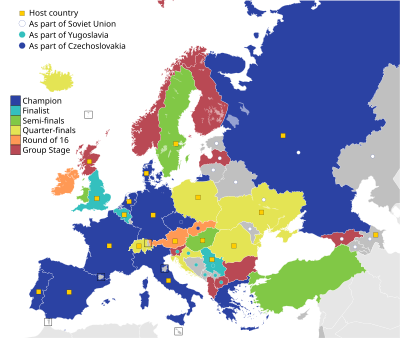
The annals of the UEFA European Championship are adorned with the triumphs of ten distinct national teams, each etching their legacy into football history. Spain emerges as the most decorated nation, holding a record four titles, notably achieving a remarkable consecutive victory in 2008 and 2012. Germany stands as another powerhouse, having secured three championship titles. Italy and France have each claimed the coveted trophy twice, underscoring their sustained periods of excellence.
The roll call of champions also includes single victories for the Soviet Union, Czechoslovakia, the Netherlands, Denmark, Greece, and Portugal, each achievement a celebrated moment for their respective nations. The most recent edition, held in 2024, saw Spain clinch their fourth European title, triumphing over England in a closely contested final at Berlin's Olympiastadion, further solidifying their status as a dominant force in European football.
The Evolving Landscape
The UEFA European Championship continues to evolve, adapting to the modern sporting landscape while retaining its core traditions. Its status as the second most-watched football tournament globally ensures its continued relevance and commercial appeal, attracting significant investment and media attention. The tournament's format and scope have expanded over time, with increased participation in the final stages, reflecting the growing depth of talent across Europe.
Beyond the immediate sporting spectacle, the Euros play a crucial role in fostering international relations and cultural exchange, albeit within a competitive framework. The recent inclusion of the CONMEBOL–UEFA Cup of Champions for the winner signifies a growing intercontinental collaboration in football. As the tournament progresses, its influence on player development, tactical innovation, and national sporting policy remains profound, making it a dynamic and enduring fixture in the global sporting calendar.
See also
Frequently Asked Questions
What is the UEFA European Championship?+
How often does the Euros take place?+
When did the tournament start?+
Why was Euro 2020 played in 2021?+
How do teams qualify for the Euros?+
Based on content from Wikipedia · Licensed under CC BY-SA 4.0