

UEFA Euro 2020: The Big Soccer Party!
Images

UEFA Euro 2020 knockout phase - Belgium vs. Italy




A Pan-European Celebration
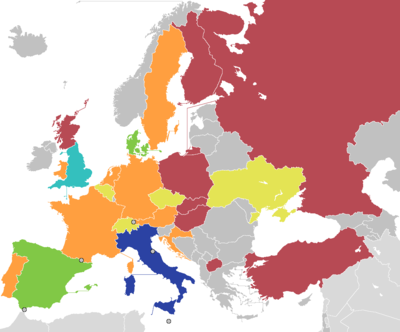
UEFA Euro 2020, officially the 16th UEFA European Championship, was conceived as a singular, celebratory event marking the 60th anniversary of the competition. UEFA President Michel Platini envisioned a 'romantic', one-off tournament spread across 11 cities in 11 UEFA nations. This ambitious hosting model, unprecedented for a European Championship, aimed to bring the tournament closer to more fans and celebrate football's unifying power across the continent.
It was a bold departure from the traditional single-host nation format, making it the second senior international tournament in history, after the 2007 AFC Asian Cup, to be co-hosted by such a large number of countries. This decentralized approach presented unique logistical challenges but also offered a novel way to engage diverse fan bases and showcase multiple iconic European venues, from Rome's Stadio Olimpico to London's Wembley Stadium.
The Dramatic Final and Italy's Triumph
The tournament culminated in a dramatic final at Wembley Stadium, London, between Italy and England. The match ended 1-1 after extra time, necessitating a penalty shootout to determine the champion. Italy emerged victorious, securing their second European Championship title.
This win held significant historical resonance, occurring precisely 39 years after Italy's triumph in the 1982 FIFA World Cup final. The defending champions, Portugal, were eliminated in the Round of 16 by Belgium, highlighting the unpredictable nature of knockout football. The tournament's progression saw several compelling narratives, with Italy's journey marked by resilience and tactical prowess, ultimately overcoming a strong English side in a high-stakes penalty decider.
Navigating Unprecedented Challenges
Originally slated for June and July 2020, Euro 2020 faced an unprecedented global health crisis: the COVID-19 pandemic. UEFA made the decision to postpone the tournament by a year, rescheduling it for June and July 2021, while retaining the 'Euro 2020' name. This postponement necessitated significant adjustments.
Special COVID-19 restrictions were implemented across all host venues to ensure player and spectator safety. UEFA also introduced temporary rule changes, including allowing teams two additional substitutions during matches to manage player fatigue and potential impacts of the virus. Furthermore, the Video Assistant Referee (VAR) system was utilized for the first time in the tournament's history, aiming to enhance officiating accuracy.
The multi-city format also faced disruptions; Brussels was removed as a host city due to stadium construction issues, and Dublin was later dropped because of uncertainties regarding spectator attendance. Spain also switched its venue from Bilbao to Seville to guarantee spectator capacity.
A Spectator-Friendly Tournament
Despite the challenges, Euro 2020 was widely praised for its exciting brand of football and efficient organization. The tournament recorded the highest goals-per-game ratio since the introduction of the group stage format, with only two goalless draws across all matches. This high-scoring nature contributed to a captivating spectacle for fans.
The officiating also received commendation, particularly the conservative and effective use of VAR, which aided referees in making timely and accurate decisions on the pitch. This blend of attacking flair and fair, decisive officiating made Euro 2020 a memorable and well-received event, demonstrating football's ability to thrive even amidst significant global disruption.
Legacy and Future Implications
Euro 2020's legacy extends beyond its on-field drama. Its innovative multi-city hosting model, while complex, offered a blueprint for future large-scale events seeking broader fan engagement. The successful navigation of the COVID-19 pandemic demonstrated remarkable adaptability within international sports governance.
The tournament underscored the importance of football as a cultural unifier, capable of providing moments of shared joy and national pride even in challenging times. The high level of play and the introduction of VAR set a precedent for future tournaments, influencing tactical approaches and officiating standards. The event served as a testament to resilience, innovation, and the enduring appeal of the beautiful game on a global stage.
See also
Frequently Asked Questions
What was special about how UEFA Euro 2020 was hosted?+
Who won UEFA Euro 2020 and why was it a big deal?+
Why did the tournament happen in 2021 instead of 2020?+
What new rules helped players during the tournament?+
Where was the final match played?+
Based on content from Wikipedia · Licensed under CC BY-SA 4.0