

Planting a Forest!
Images
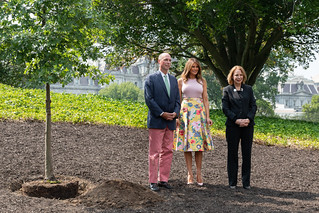
White House Historical Association Tree Planting


The Science and Practice of Transplanting Young Trees
Tree planting, fundamentally the transplantation of tree seedlings, is a cornerstone of modern ecological management and land use. It diverges from direct seed dispersal, offering greater control and reliability in establishing new tree populations. The primary motivations span economic forestry, where planted forests provide timber resources, to environmental restoration, aiming to reclaim degraded lands scarred by industrial activity, erosion, or natural disasters.
Landscaping applications focus on urban greening and aesthetic improvements. This practice is grounded in silviculture, the science of forest cultivation, and requires careful consideration of species selection, site conditions, and planting techniques to ensure successful regeneration and long-term forest health. While effective, planted forests often exhibit lower biodiversity and structural complexity compared to naturally evolved ecosystems.
Ecological Services Provided by Planted Forests
The ecological contributions of trees extend far beyond their immediate aesthetic value. During photosynthesis, trees act as vital carbon sinks, sequestering atmospheric carbon dioxide-a primary greenhouse gas-and releasing life-sustaining oxygen. This function is critical in ameliorating climate change impacts.
Furthermore, tree canopies intercept rainfall, reducing runoff and erosion, while their root systems stabilize soil, preventing landslides and desertification. Forests also play a crucial role in the water cycle, influencing local and regional precipitation patterns and maintaining water quality. The presence of trees creates habitats, supports food webs, and enhances biodiversity, providing essential ecosystem services that underpin planetary health and human well-being.
Afforestation and Reforestation
The terms 'reforestation' and 'afforestation' delineate distinct approaches to re-establishing tree cover. Reforestation is the process of planting trees in areas that were recently forested but have been cleared due to logging, fire, disease, or human development. Afforestation, conversely, involves planting trees in areas that have not been forested for a significant period, or perhaps never before.
Strategies for both vary immensely across geographical regions, national policies, and individual project goals, reflecting diverse ecological contexts and objectives. While these efforts are crucial for ecological recovery and carbon sequestration, it's important to acknowledge that the resulting planted forests may not fully replicate the intricate biodiversity and complex ecological interactions found in mature, natural forests.
Tree Planting as a Climate Change Mitigation and Development Tool
Tree planting has emerged as a significant strategy in the global effort to combat climate change. By actively removing CO2 from the atmosphere, reforestation and afforestation projects contribute directly to reducing greenhouse gas concentrations. Beyond climate mitigation, tree planting initiatives are integral to 'greening' initiatives in arid and semi-arid regions.
These projects aim not only to combat desertification and restore natural water systems but also to foster economic and social development. The expansion of forestry and related agricultural activities creates employment opportunities, improving livelihoods and contributing to sustainable development goals. Thus, tree planting serves a dual purpose: environmental restoration and socio-economic advancement.
See also
Frequently Asked Questions
What is tree planting and why do we do it?+
How do trees help the Earth?+
What's the difference between reforestation and afforestation?+
Why do planted forests sometimes have less wildlife?+
Can planting trees help stop climate change?+
Based on content from Wikipedia · Licensed under CC BY-SA 4.0