

Tiger
Images

Tiger



The Tiger's Realm
The tiger, Panthera tigris, is the largest extant cat species and a keystone species within its ecosystems. Historically, its range spanned vast swathes of Asia, from the Caucasus Mountains to the eastern coast of Russia and the Indonesian island of Java. Today, its distribution is fragmented, with populations found in India, Nepal, Bhutan, Bangladesh, Myanmar, Thailand, Malaysia, Indonesia (Sumatra), China, Laos, Cambodia, Vietnam, and the Russian Far East.
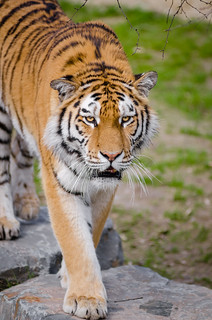
Tigers exhibit remarkable habitat plasticity, thriving in environments as diverse as tropical rainforests, temperate forests, mangrove swamps, and even the snowy taiga of Siberia. This adaptability is reflected in their physical characteristics; Siberian tigers possess thicker fur and a layer of subcutaneous fat for insulation against extreme cold, while Sumatran tigers are smaller and more arboreal. Their iconic striped coat serves as highly effective camouflage, breaking up their outline in the complex visual environments of forests and grasslands, crucial for their ambush hunting strategy.
Their powerful build, capable of generating immense force, allows them to take down prey significantly larger than themselves.
Predatory Prowess
As obligate carnivores, tigers are at the apex of their food chain. Their diet primarily consists of medium to large ungulates, including various species of deer (sambar, chital, hog deer), wild boar, and gaur. In some regions, they may also prey on smaller animals like monkeys, birds, or even fish, and occasionally scavenge.
Tigers are primarily solitary hunters, relying on stealth, power, and surprise. They employ an ambush strategy, stalking prey to within striking distance before exploding into a short, intense chase. Their hunting success rate is relatively low, estimated at around 1 in 10 to 1 in 20 attempts, necessitating large hunting territories to sustain themselves.
A successful kill can provide enough sustenance for several days, with tigers consuming up to 18-25 kg of meat in a single feeding. Socially, tigers are largely solitary, with males and females coming together only for mating. Home ranges vary greatly depending on prey availability and habitat quality, with males typically maintaining larger territories that may overlap with those of several females. Communication occurs through scent marking (urine, feces, scratch marks) and vocalizations like roars, chuffs, and growls.
The Tiger's Life Cycle
Tigers reach sexual maturity between the ages of three and five years. Mating can occur at any time of year, though it may be more frequent during specific seasons in certain regions. After a gestation period of approximately 100-110 days, the female gives birth to a litter of usually two to four cubs in a secluded den, often in dense vegetation or a cave.
Newborn cubs are blind and helpless, weighing only about 1 kilogram (2.2 lb). The mother is solely responsible for their care, nursing them and protecting them fiercely. Cubs begin to venture out of the den at around two weeks old and start accompanying their mother on hunts at about six months.
They learn essential survival skills, including stalking and killing prey, from their mother. Cubs typically remain with their mother for two to three years before dispersing to establish their own territories. The lifespan of a tiger in the wild is generally 10 to 15 years, though they can live up to 20 years in captivity under optimal conditions.
A Crisis in the Wild
The tiger is classified as Endangered by the IUCN, with its global population having plummeted by an estimated 95% over the last century. The primary threats are habitat loss and fragmentation due to deforestation, agricultural expansion, and infrastructure development, which reduce prey availability and isolate tiger populations. Poaching remains a significant threat, driven by the demand for tiger skins, bones, and other body parts used in traditional medicine and as status symbols. Human-wildlife conflict, often stemming from tigers preying on livestock, leads to retaliatory killings.
Despite these challenges, conservation efforts have shown promise. Initiatives include establishing and expanding protected areas, anti-poaching patrols, community-based conservation programs that involve local people in tiger protection and provide alternative livelihoods, and transboundary conservation efforts to connect fragmented populations. The recovery of tiger populations in some areas, such as India, demonstrates that with dedicated effort and political will, these magnificent animals can be saved from the brink.
See also
Frequently Asked Questions
What does a tiger's striped coat help it do?+
Where can tigers live?+
How many cubs does a tiger usually have?+
How do tigers hunt their food?+
Why are tigers important in their habitats?+
Based on content from Wikipedia · Licensed under CC BY-SA 4.0