

Tallit: The Prayer Shawl with Special Fringes!
Images

Tallit B&W

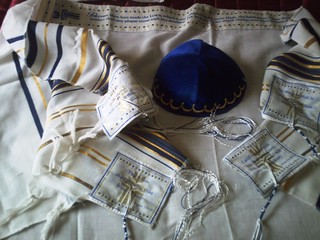


Biblical Mandate and Halakhic Development of the Tallit
The commandment to wear fringes, or tzitzit, is explicitly stated in the Torah (Numbers 15:38-41), where God instructs Moses to tell the Israelites to make fringes on the corners of their garments. This directive forms the foundational basis for the tallit. The interpretation and application of this commandment have evolved through centuries of Jewish legal discourse, known as Halakha.
The tallit, as a garment specifically designed to incorporate these tzitzit, became a primary means of fulfilling this mitzvah. The 'beged,' the main body of the tallit, is typically made from wool or cotton, materials often associated with humility and practicality in Jewish tradition. The specific method of twining and knotting the tzitzit has been subject to various interpretations and traditions, with different communities adhering to distinct patterns, each carrying its own symbolic weight, often referencing divine attributes or key moments in Jewish history.
The distinction between the tallit katan and tallit gadol reflects differing views on the scope and application of the commandment, with the katan often seen as a more universally applied personal observance and the gadol as a more formal prayer garment.
Cultural Diversity and Customary Practices Surrounding the Tallit
The way the tallit is used and worn exhibits significant cultural diversity across different Jewish communities. While the core commandment remains the same, the customs surrounding its adoption and display vary widely. In many Orthodox Ashkenazi communities, the tallit gadol is traditionally worn only by married men, symbolizing marital status and responsibility.
It is often a significant part of wedding traditions, sometimes given as a gift or even included in a dowry, underscoring its value within the marital union. Conversely, in some Sephardic Orthodox communities, boys may begin wearing a tallit katan from a very young age, even before reaching Bar Mitzvah age, emphasizing early religious education and observance. The age of Bar Mitzvah (typically 13) is a common milestone for boys to begin wearing the tallit gadol in many traditions, marking their transition into full religious accountability.
These varied customs are not arbitrary but are deeply rooted in historical interpretations, community traditions, and the specific theological emphasis of each group, demonstrating the tallit's adaptability within the broader Jewish cultural landscape.
The Multifaceted Symbolism and Spiritual Resonance of the Tallit
Beyond its halakhic requirements, the tallit is imbued with rich symbolism that enhances its spiritual significance. The tzitzit, with their specific number of twists and lengths of untwisted threads, are often interpreted as representing divine names or concepts, such as the Ten Commandments or the 613 mitzvot (commandments) of the Torah. The act of looking at the tzitzit during prayer is intended to serve as a visual cue, drawing the wearer's attention back to God and the divine commandments, acting as a constant, tangible reminder of one's covenantal relationship with God.
The tallit effectively creates a personal sanctuary during prayer, enveloping the wearer and fostering a sense of separation from the mundane world, allowing for greater concentration and devotion. It is a symbol of humility, acknowledging one's place before the Almighty, and also a symbol of pride and belonging within the Jewish people. The very act of donning the tallit can be a transformative ritual, shifting the wearer's mindset towards spiritual engagement.
The Tallit as a Vehicle for Intergenerational Connection and Identity
The tallit plays a crucial role in fostering intergenerational connection and reinforcing Jewish identity. Many tallitot are passed down from father to son, carrying with them the legacy and spiritual journey of previous generations. This transmission is more than symbolic; it represents the continuity of tradition, the passing of religious heritage, and the enduring strength of Jewish continuity.
A tallit that has been worn by a father or grandfather becomes a cherished heirloom, connecting the wearer to their ancestors and their shared history. This practice underscores the communal and familial dimensions of Jewish observance. Furthermore, the tallit serves as a visible marker of Jewish identity in the wider world.
While the tallit katan is often worn discreetly, the tallit gadol is a public declaration of faith during prayer. In contemporary society, the tallit continues to be a powerful emblem of Jewish belonging, a tangible link to ancient traditions, and a personal expression of faith that transcends time and place, connecting individuals to a collective narrative that spans millennia.
See also
Frequently Asked Questions
What is a tallit and why does it have fringes?+
How do people wear a tallit during prayers?+
Why do some tallits have different names like tallit katan and tallit gadol?+
When do boys start wearing a tallit in different Jewish communities?+
What do the fringes (tzitzit) on a tallit remind people of?+
Based on content from Wikipedia · Licensed under CC BY-SA 4.0