

Suvorexant
Images
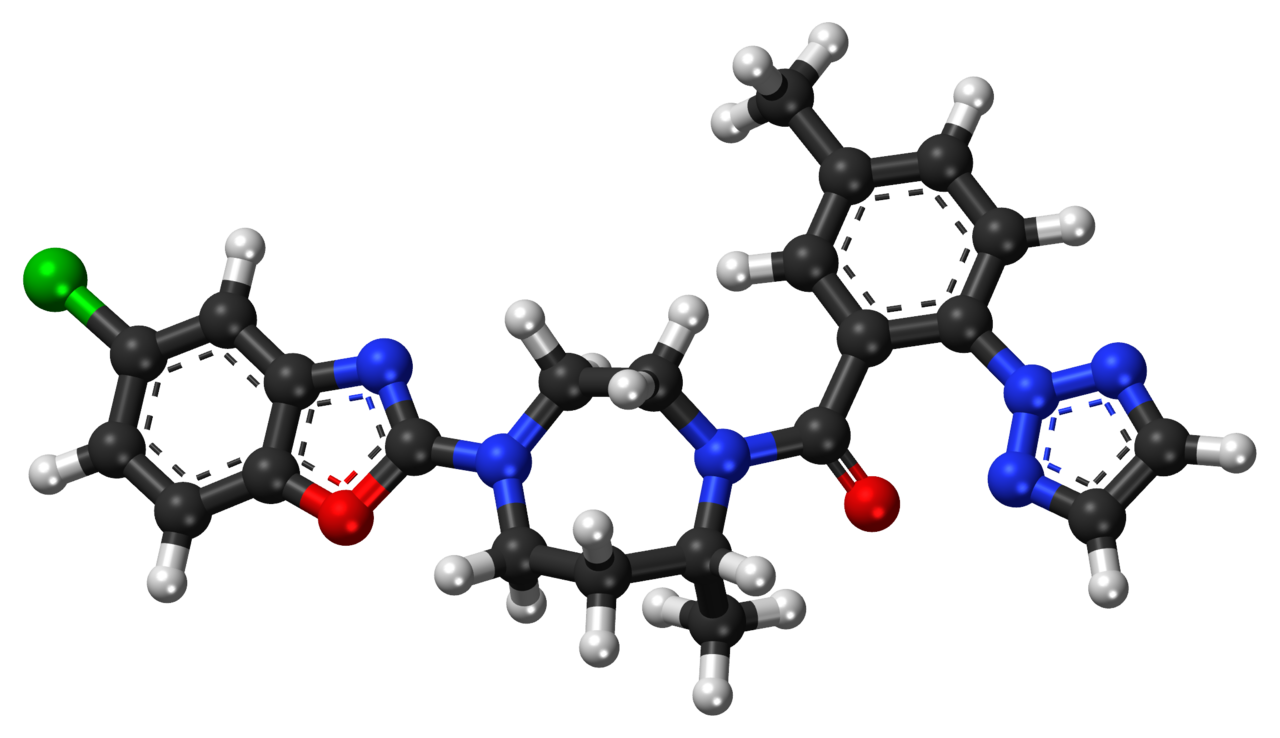
Suvorexant ball-and-stick model


The Orexin System
The discovery of orexin (also known as hypocretin) in the late 1990s revolutionized our understanding of sleep-wake regulation. Orexins are neuropeptides produced in the hypothalamus that play a critical role in promoting wakefulness, arousal, and appetite. They exert their effects by binding to two distinct G protein-coupled receptors: OX1R and OX2R.
The orexin system is crucial for maintaining stable wakefulness and preventing inappropriate transitions into sleep. Dysregulation of this system has been implicated in sleep disorders like narcolepsy, where the brain's ability to regulate sleep-wake cycles is impaired. Suvorexant represents a significant advancement in pharmacotherapy for insomnia by directly targeting this system.
By acting as a dual orexin receptor antagonist (DORA), it competitively inhibits the binding of orexin peptides to both OX1R and OX2R. This blockade reduces the excitatory signals that promote wakefulness, thereby facilitating sleep onset and maintenance. This targeted mechanism offers a distinct therapeutic strategy compared to older hypnotics that often act on the GABAergic system, potentially leading to a different side effect profile and a reduced risk of dependence.
From Preclinical Promise to Clinical Reality
The clinical development of Suvorexant commenced in 2006, marking a concerted effort by Merck & Co. to translate the scientific understanding of orexin into a viable therapeutic agent. This extensive research and development phase involved rigorous preclinical studies to assess efficacy and safety, followed by multiple phases of human clinical trials. These trials were designed to evaluate Suvorexant's effectiveness in treating various types of insomnia, including sleep onset and sleep maintenance difficulties, as well as its impact on overall sleep quality.
The introduction of Suvorexant for medical use in 2014 was a landmark event, offering a novel pharmacological approach to insomnia. Its development signifies a shift towards more precise targeting of neurobiological pathways involved in sleep regulation. The subsequent introduction of other orexin receptor antagonists, such as lemborexant and daridorexant, further validates this therapeutic class and highlights the ongoing innovation in the field of sleep medicine.
The Broader Implications of Effective Insomnia Management
Insomnia is a prevalent and often debilitating condition that significantly impacts an individual's quality of life, cognitive function, emotional well-being, and overall health. Chronic sleep deprivation can lead to impaired concentration, reduced productivity, increased risk of accidents, and a higher susceptibility to various medical conditions, including cardiovascular disease, diabetes, and mental health disorders. Suvorexant's role in treating insomnia is therefore of considerable importance.
By providing an effective option for adults struggling with sleep onset and/or middle-of-the-night awakenings, it can help restore normal sleep patterns. This, in turn, can lead to improvements in daytime functioning, mood regulation, and a reduced risk of associated health complications. The availability of a medication with a distinct mechanism of action also provides valuable therapeutic options for patients who may not respond adequately to or tolerate other insomnia treatments, underscoring its significance in the pharmacopeia for sleep disorders.
Pharmacological Profile and Clinical Considerations
Suvorexant is administered orally and is characterized by an intermediate elimination half-life of approximately 12 hours, with peak plasma concentrations typically reached within 2 to 3 hours post-dose. This pharmacokinetic profile allows for its use in managing both sleep onset and sleep maintenance insomnia. As a dual orexin receptor antagonist, its mechanism of action is distinct from benzodiazepines and Z-drugs, which primarily modulate GABAergic neurotransmission.
This difference is crucial as it suggests a potentially lower risk of tolerance, dependence, and withdrawal symptoms, although these effects are not entirely absent. Common side effects include somnolence, headache, and dizziness. More serious, though rare, adverse events can include sleep paralysis, hallucinations, and complex sleep behaviors.
In the United States, Suvorexant is classified as a Schedule IV controlled substance, reflecting a modest potential for misuse, a consideration that necessitates careful prescribing and patient monitoring. Its availability as a prescription-only medicine in other regions, like Australia, further highlights the global regulatory landscape surrounding its use.
See also
Frequently Asked Questions
What is Suvorexant?+
How does Suvorexant help people sleep?+
Why is Suvorexant different from other sleep medicines?+
When was Suvorexant first made?+
What are orexins and why are they important?+
Based on content from Wikipedia · Licensed under CC BY-SA 4.0