

Stethoscope
Images
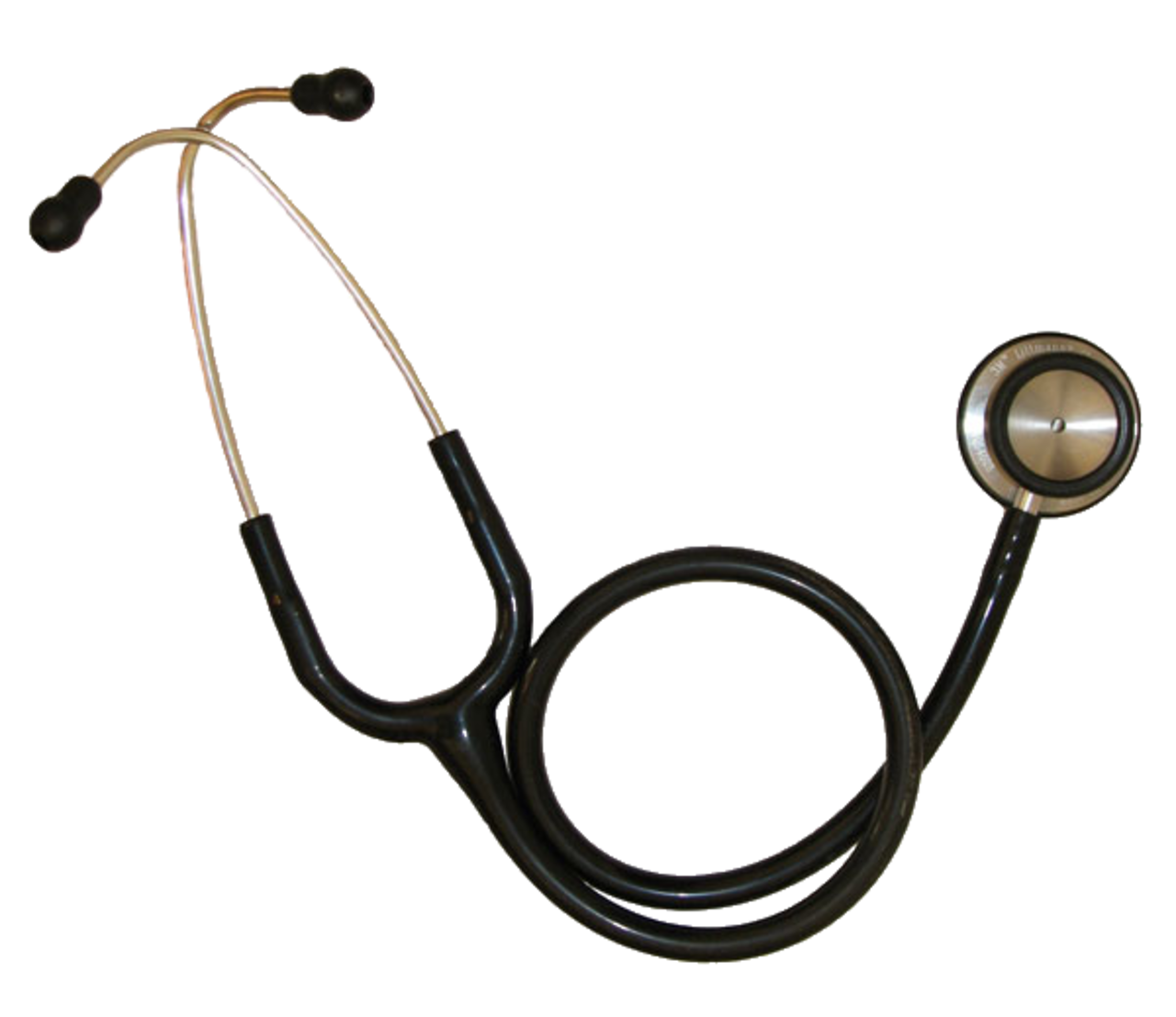
Stethoscope


The Genesis of Auscultation
The stethoscope's invention in 1816 by René Laennec marked a pivotal moment in the history of medicine, fundamentally altering the practice of physical examination. Prior to this, physicians relied on direct auscultation, placing their ear directly onto the patient's chest. This method was fraught with limitations: it was often uncomfortable and embarrassing for both parties, and it proved ineffective for discerning subtle internal sounds, particularly in patients with significant body mass or thick clothing.
Laennec, inspired by the principle of sound amplification through solid materials (observed in children playing with a long piece of wood), designed a hollow wooden cylinder. This monaural stethoscope, while basic, allowed for the transmission of sounds from the chest wall to the physician's ear with significantly improved clarity and volume. This innovation not only enhanced diagnostic capabilities but also introduced a degree of professionalism and detachment to the examination, paving the way for more objective medical assessments and the development of a specialized medical vocabulary to describe the sounds heard.
Acoustic Principles and Stethoscope Design
The efficacy of a stethoscope, particularly acoustic models, is rooted in fundamental principles of physics and acoustics. The chestpiece, the component placed on the patient, is engineered to capture and transmit sound waves. Modern acoustic stethoscopes typically feature a dual-head design: a diaphragm and a bell.
The diaphragm, a flat, taut membrane, is designed to resonate with higher-frequency sounds, such as normal lung sounds and the S1 and S2 heart sounds. When pressed firmly against the skin, it effectively transmits these vibrations. The bell, a smaller, cup-shaped component, is used for lower-frequency sounds, like certain heart murmurs and the S3 and S4 heart sounds.
It functions by creating a seal with the skin, allowing it to pick up these subtler, slower vibrations. The sound waves generated by these vibrations travel through the hollow, non-collapsible tubing, which is constructed from materials that minimize sound loss and external noise interference. The earpieces are designed to fit snugly in the ear canal, creating a seal that further isolates the transmitted sounds from ambient noise, thereby maximizing the clarity of the auscultated sounds.
Diagnostic Significance
The stethoscope's enduring significance in clinical medicine lies in its unparalleled ability to provide immediate, non-invasive insights into the functioning of vital organs. Through auscultation, clinicians can assess a wide spectrum of physiological processes. For the cardiovascular system, it allows for the evaluation of heart rate, rhythm, and the presence of abnormal sounds such as murmurs, clicks, or rubs, which can indicate valvular disease, congenital defects, or pericarditis.
In the respiratory system, the stethoscope is crucial for detecting abnormalities in breath sounds, including crackles (rales), wheezes, rhonchi, and diminished or absent breath sounds, pointing towards conditions like pneumonia, bronchitis, asthma, or pleural effusions. Furthermore, it is used to listen to bowel sounds, assessing gastrointestinal motility and identifying potential obstructions or ileus. The ability to detect bruits (abnormal sounds in blood vessels) also aids in diagnosing conditions like arterial stenosis.
This wealth of information, gathered through simple listening, remains indispensable for initial patient assessment, differential diagnosis, and monitoring treatment efficacy.
Technological Evolution
While the fundamental acoustic stethoscope remains a cornerstone of medical practice, technological advancements have led to the development of sophisticated electronic stethoscopes. These devices incorporate microphones and amplification circuitry to significantly enhance the volume of internal body sounds, proving invaluable for clinicians with hearing impairments or when examining patients in noisy environments. Many electronic stethoscopes offer adjustable frequency filters, allowing users to selectively amplify high or low-frequency sounds, thereby improving the detection of specific abnormalities.
Beyond mere amplification, modern electronic stethoscopes are increasingly integrated with digital technologies. They can often record auscultatory sounds, which can be reviewed later, shared with colleagues for consultation, or used for educational purposes. Some advanced models can even display sound as a visual waveform on a connected device, offering a complementary method of analysis.
This integration of digital capabilities is transforming auscultation from a purely auditory skill into a multimodal diagnostic process, enhancing precision and accessibility in healthcare.
Beyond the Clinic
The stethoscope's utility extends far beyond the traditional clinical setting. In veterinary medicine, it is an essential tool for assessing the health of animals, from domestic pets to livestock. Paramedics and emergency medical technicians rely heavily on stethoscopes in pre-hospital care to quickly evaluate a patient's condition and make critical decisions. Public health initiatives and remote healthcare programs also utilize stethoscopes, enabling basic diagnostic assessments in areas with limited access to advanced medical facilities.
Furthermore, the stethoscope plays a role in occupational health, where workers may be monitored for conditions exacerbated by their work environment. Even in research, stethoscopes are employed to study physiological responses during experiments. The simplicity, portability, and effectiveness of the stethoscope ensure its continued relevance across a broad spectrum of medical and scientific disciplines, underscoring its status as a foundational medical instrument.
See also
Frequently Asked Questions
What is a stethoscope and why do doctors use it?+
How does a stethoscope help doctors hear inside the body?+
Why was the stethoscope invented in 1816?+
What parts make up a modern stethoscope?+
What kinds of sounds can doctors listen for with a stethoscope?+
Based on content from Wikipedia · Licensed under CC BY-SA 4.0