

Super Ball
Images
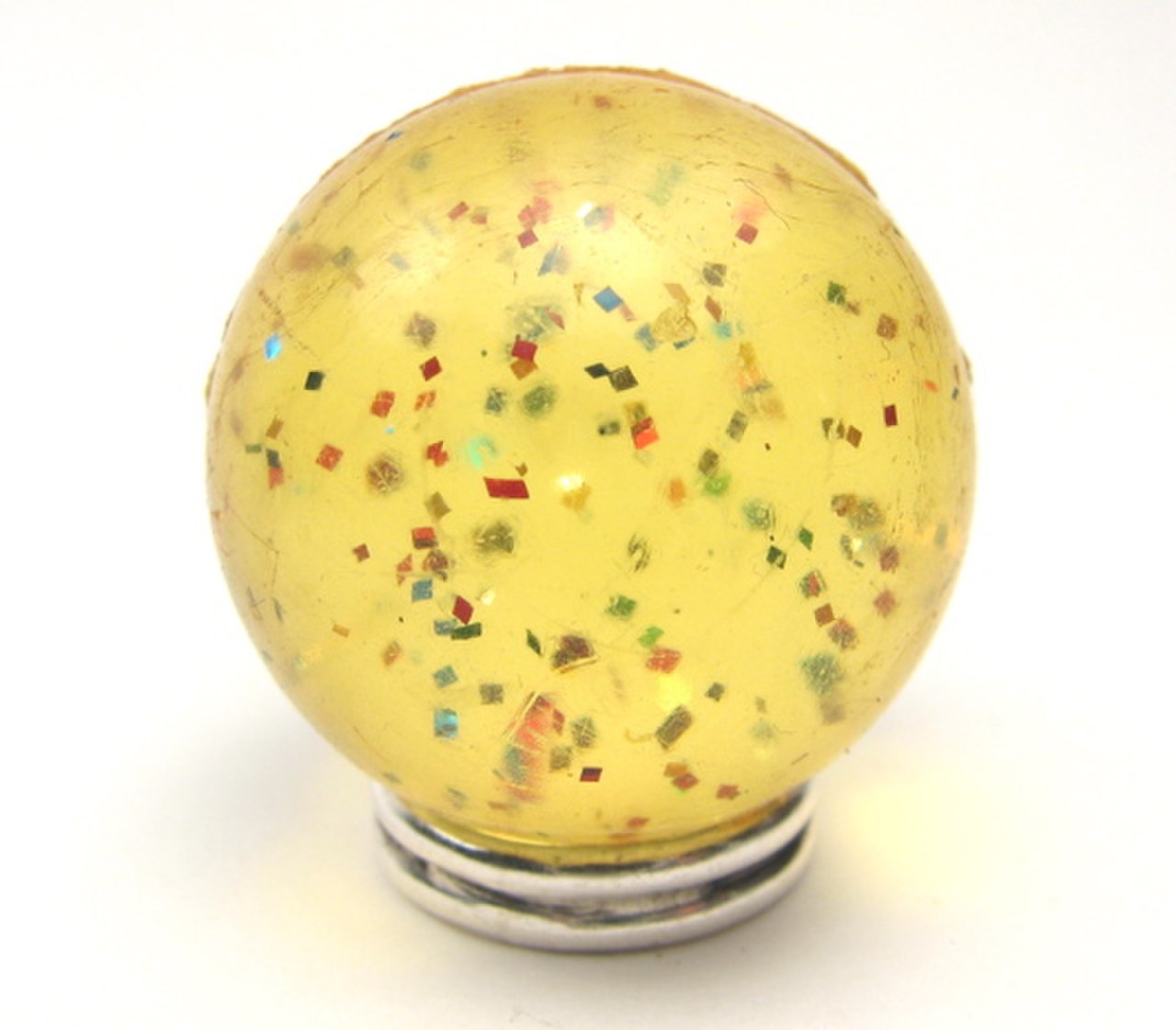
Super Ball
Genesis of a High-Rebound Toy
The Super Ball, introduced in 1964, represents a significant milestone in the application of polymer science to consumer products. Its creation is credited to chemist Norman Stingley, who developed a unique synthetic rubber formulation that exhibited an exceptionally high coefficient of restitution. This wasn't merely an incremental improvement on existing bouncy balls; it was a leap forward in material performance.
The development stemmed from research into synthetic polymers, aiming to replicate and surpass the properties of natural rubber. Stingley's innovation lay in precisely combining specific chemical compounds and subjecting them to controlled manufacturing processes, resulting in a toy that captivated the public with its seemingly physics-defying bounce. Its success underscored the potential of engineered materials to create novel and exciting recreational items.
The Zectron Formula
The remarkable performance of the Super Ball is directly attributable to its proprietary material, Zectron. This synthetic rubber is a complex composite, primarily based on the synthetic polymer polybutadiene. However, its extreme elasticity is enhanced by the inclusion of specific additives.
Hydrated silica and zinc oxide act as reinforcing fillers and activators, improving the material's strength and resilience. Stearic acid functions as a processing aid and activator. The critical step in achieving the Super Ball's properties is vulcanization, a process where the rubber compound is heated with sulfur to a high temperature of 165°C (329°F).
This cross-linking of polymer chains creates a robust, elastic network. Furthermore, the balls are formed under immense pressure of 3,500 psi (24 MPa), ensuring a dense, uniform structure that maximizes energy return upon impact.
Physics in Play
The Super Ball's extraordinary bouncing capability is a direct demonstration of physics principles, particularly energy conservation and restitution. The coefficient of restitution (COR) is a dimensionless number that describes how much kinetic energy is retained after a collision. A COR of 1 means a perfectly elastic collision with no energy loss, while a COR of 0 means all kinetic energy is lost.
Super Balls boast a COR close to 1. When dropped, the ball deforms, storing potential energy. Upon impact with a hard surface, this stored energy is rapidly released as the ball returns to its original shape, propelling it upwards.
The source material highlights that a Super Ball dropped from shoulder height can rebound almost to its original position, indicating minimal energy loss. When subjected to a forceful throw, the impact energy is even greater, and the high COR allows the ball to achieve impressive heights, reportedly exceeding that of a three-story building, showcasing the efficiency of energy transfer.
Legacy and Applications of High-Rebound Materials
While the Super Ball is primarily remembered as a nostalgic toy, the material science and engineering principles behind its creation have broader implications. The development of high-rebound synthetic rubbers has influenced the design of numerous products where energy absorption and return are critical. This includes advanced sports equipment, such as specialized athletic shoes designed for shock absorption and energy return to improve performance and reduce injury.
In the automotive industry, similar elastomeric materials are used in suspension systems and vibration dampeners. Furthermore, the research into polymer cross-linking and composite formulations continues to drive innovation in areas like aerospace, medical devices, and industrial applications requiring durable, resilient materials. The Super Ball, therefore, stands as an early, accessible example of how sophisticated material science can translate into everyday objects with remarkable functional properties.
Go deeper
Frequently Asked Questions
What is a Super Ball?+
Why does the Super Ball bounce so high?+
How is a Super Ball made?+
What does the number "COR close to 1" mean for a Super Ball?+
Can Super Balls be used in other things besides toys?+
Based on content from Wikipedia · Licensed under CC BY-SA 4.0