

Space probe
Images
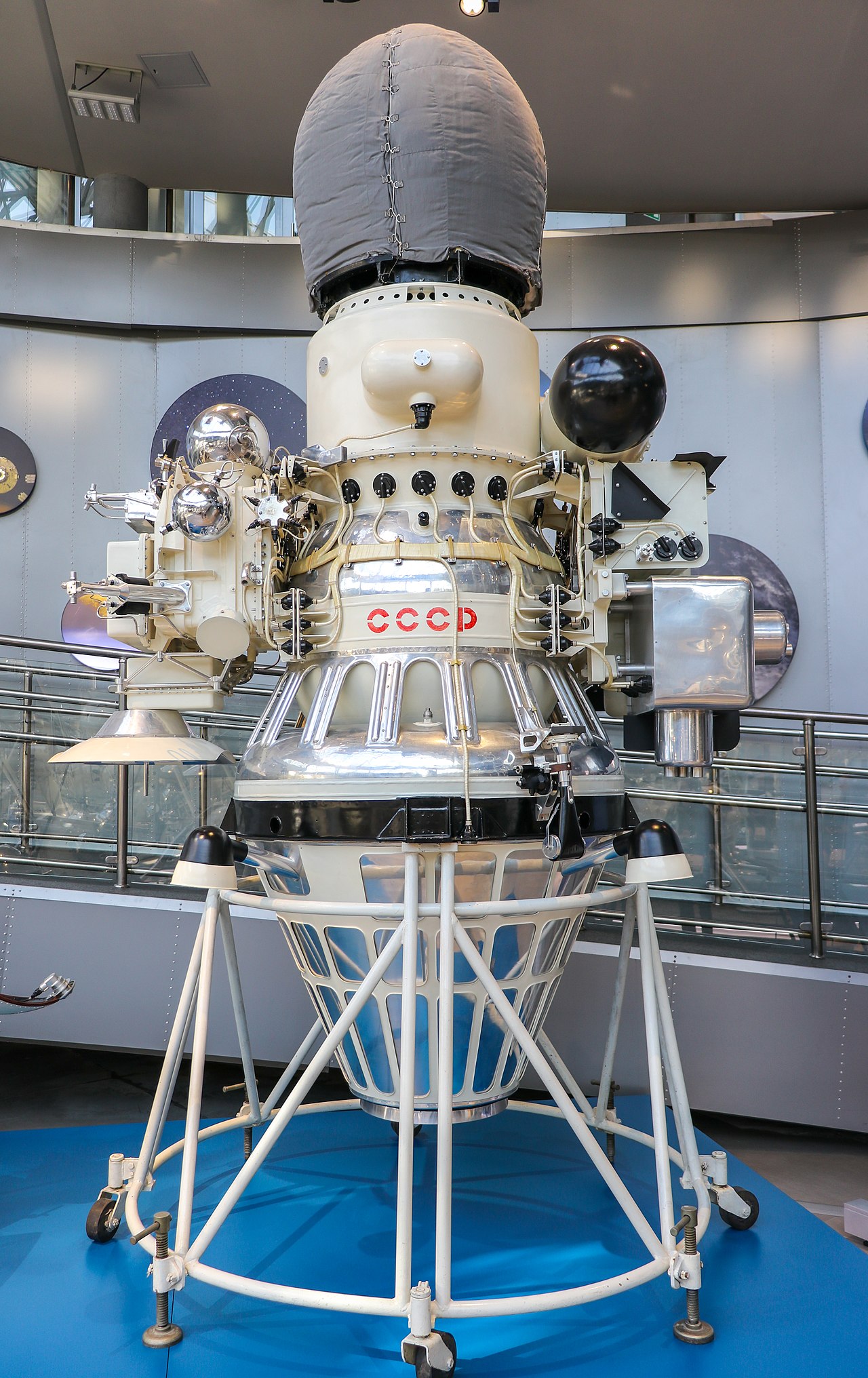
Luna 9 Space Probe


Defining the Uncrewed Explorer
A space probe is an autonomous or remotely operated spacecraft designed for scientific investigation of celestial bodies and phenomena beyond Earth's atmosphere. Unlike crewed missions, probes are unburdened by the life support requirements for humans, enabling them to undertake extended voyages to distant and often hazardous environments. Their primary objective is data acquisition, encompassing a wide range of scientific disciplines from planetary geology and atmospheric science to astrophysics and cosmology.
These sophisticated machines are engineered to operate independently for years, or even decades, transmitting invaluable scientific data back to Earth through complex communication networks. Their design flexibility allows for specialized configurations, from flyby missions and orbiters to landers and sample return vehicles, each tailored to specific scientific objectives and target destinations.
Propulsion, Navigation, and Power
The journey of a space probe is a testament to advanced engineering. Initial launch relies on powerful multi-stage rockets to escape Earth's gravitational well. Once in interplanetary space, probes utilize a variety of propulsion systems. Chemical rockets provide thrust for course corrections and orbital maneuvers.
More advanced systems, such as ion thrusters, offer high efficiency for long-duration missions, expelling charged particles at high speeds for sustained, low-thrust acceleration. Navigation is a complex interplay of onboard guidance systems, ground-based tracking, and the strategic use of gravity assists. By precisely timing flybys of planets, probes can harness their gravitational pull to gain significant velocity boosts or alter their trajectory without expending substantial propellant.
Power generation is critical; while solar panels are common for inner solar system missions, probes venturing to the outer solar system or into deep space often depend on Radioisotope Thermoelectric Generators (RTGs), which convert the heat generated by the decay of radioactive isotopes into electrical energy, providing a reliable and long-lasting power source.
The Indispensable Role of Probes in Scientific Advancement
Space probes are the bedrock of our understanding of the solar system and beyond. They provide empirical data that forms the basis for countless scientific theories and discoveries. Missions like the Voyager probes revolutionized our understanding of the gas giants and their moons, revealing complex geological activity and diverse environments. Mars rovers, such as Curiosity and Perseverance, have provided unprecedented insights into the planet's past habitability and geological history, searching for biosignatures.
Probes studying the Sun, like the Parker Solar Probe, are venturing closer than ever before to unravel the mysteries of solar wind and coronal heating. The data gathered not only expands fundamental scientific knowledge but also informs critical areas like climate science, planetary protection protocols, and the search for extraterrestrial life, directly impacting our perspective on Earth and our place in the universe.
A Chronicle of Robotic Exploration
The era of space probes began with the dawn of the Space Age. The Soviet Union's Luna 1 in 1959 was the first probe to escape Earth's gravity and fly past the Moon. The United States' Mariner program followed, achieving the first flybys of Venus (Mariner 2, 1962) and Mars (Mariner 4, 1965), delivering the first close-up images of alien worlds.
The 1970s saw the ambitious Voyager program, which conducted a 'Grand Tour' of the outer planets, providing breathtaking images and data that remain foundational. Subsequent missions have continued this legacy: Galileo orbited Jupiter, Cassini studied Saturn and its moons extensively, and the Rosetta mission famously orbited and landed on a comet. Today, probes are exploring dwarf planets like Pluto (New Horizons) and actively searching for signs of life on Mars, pushing the boundaries of exploration ever further.
Technological Spin-offs and Future Frontiers
The technological challenges inherent in designing and operating space probes have consistently driven innovation, leading to numerous terrestrial applications. Miniaturization of electronics, advanced materials science, sophisticated imaging technologies, and robust communication systems developed for probes have found their way into fields as diverse as medical diagnostics, consumer electronics, and environmental monitoring. Looking ahead, space probes are central to humanity's future in space.
Missions are being planned to explore icy moons like Europa and Enceladus for potential subsurface oceans, to sample asteroids for resources, and to continue the search for exoplanets and signs of life. The development of more advanced propulsion systems, artificial intelligence for autonomous operations, and enhanced data transmission capabilities will enable probes to venture even deeper into the cosmos, answering fundamental questions about the universe's origins and evolution.
See also
Frequently Asked Questions
What is a space probe?+
How do space probes travel to other planets?+
What powers space probes?+
What kinds of space probes are there?+
Why are space probes important?+
Based on content from Wikipedia · Licensed under CC BY-SA 4.0