

Navigation: Finding Your Way!
Images
Navigation
Ancient Navigational Paradigms
The earliest forms of navigation were deeply rooted in empirical observation and the understanding of natural phenomena. Indigenous cultures worldwide developed sophisticated methods for traversing vast distances. Polynesian navigators, for instance, utilized a complex system of wayfinding that involved memorizing star compasses (the rising and setting points of stars), observing wave patterns generated by distant landmasses, tracking ocean currents, and noting the behavior of marine life and migratory birds.
This knowledge was not static but a dynamic, orally transmitted tradition. In the Mediterranean, Phoenicians and Greeks used the stars, particularly Polaris (the North Star), and the sun's position to maintain course. The development of rudimentary charts and an understanding of prevailing winds and currents further enhanced their capabilities, enabling extensive trade and exploration across the ancient world.
These methods, while lacking precise instruments, demonstrated a profound connection with and understanding of the environment.
The Renaissance and the Tools of Maritime Dominance
The Age of Discovery, spurred by advancements in shipbuilding and a desire for new trade routes, necessitated more precise navigational tools. The magnetic compass, refined over centuries, became indispensable for determining direction. Crucially, the development of instruments to measure latitude accurately revolutionized seafaring.
The astrolabe, and later the more portable and accurate sextant, allowed navigators to determine the angle of celestial bodies above the horizon. Combined with astronomical tables (ephemerides) that predicted the positions of stars and the sun, navigators could calculate their latitude with increasing reliability. However, determining longitude (east-west position) remained a significant challenge until the invention of accurate marine chronometers in the 18th century, which allowed sailors to keep precise Greenwich Mean Time at sea, thus calculating their longitude relative to the prime meridian.
This era saw navigation transform from an art into a more rigorous science.
The Evolution of Cartography and Dead Reckoning
Parallel to the development of navigational instruments was the advancement of cartography. Early maps were often based on hearsay and limited exploration, but the Age of Discovery led to systematic surveys and the creation of more accurate charts. Projections like Mercator's (1569) were vital for maritime navigation because they represented lines of constant compass bearing (rhumb lines) as straight segments, simplifying course plotting.
Despite advancements, navigators still relied heavily on 'dead reckoning' – estimating position based on a known starting point, course steered, speed, and time elapsed. This method accumulated errors over time, making accurate position fixing essential. The integration of charts with instruments like the sextant and chronometer allowed for more frequent and reliable position fixes, reducing the drift inherent in dead reckoning and enabling safer, more ambitious voyages.
The Satellite Era
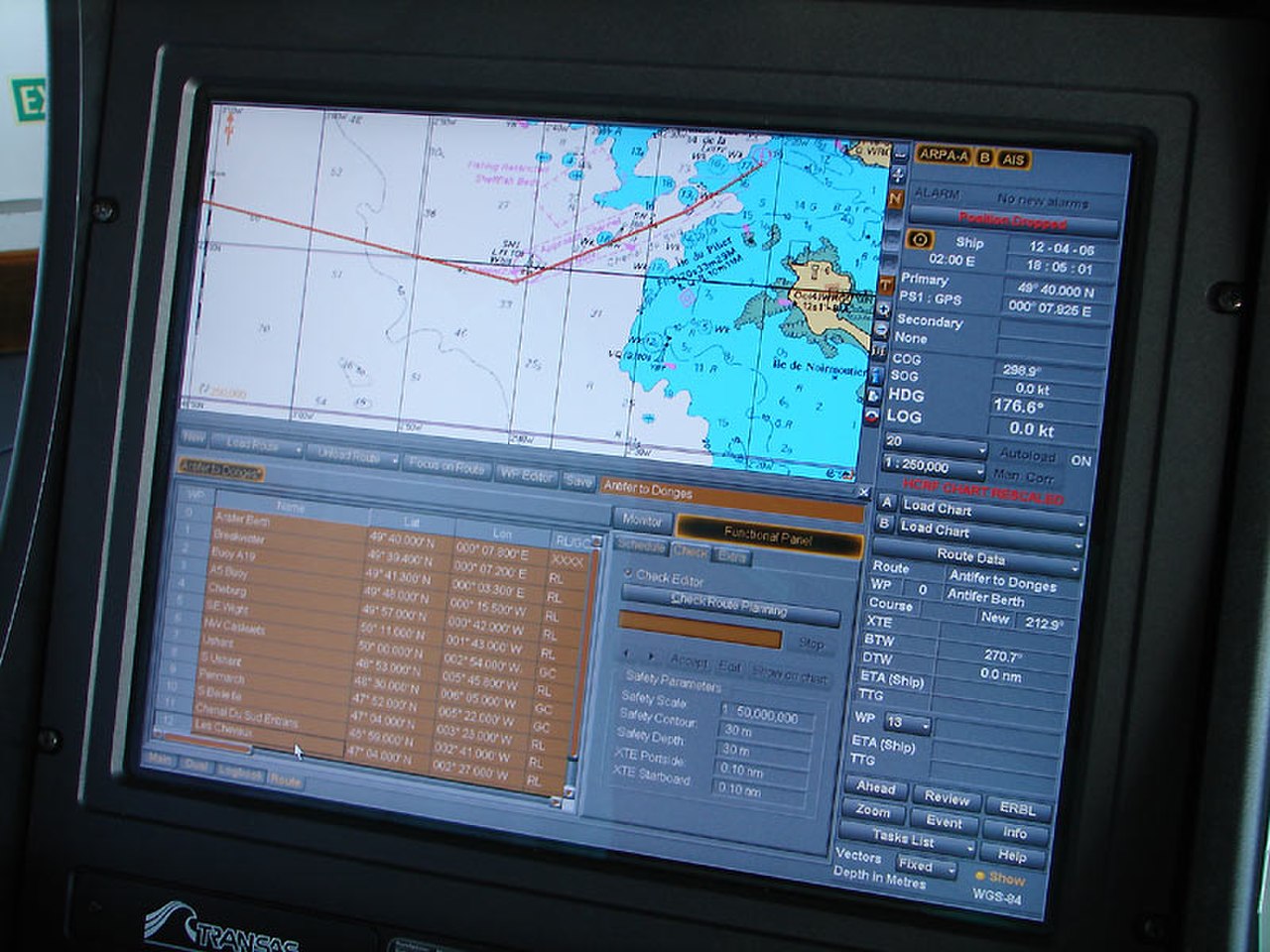
The late 20th century ushered in the era of satellite navigation, fundamentally altering the landscape of positioning. The U.S. Global Positioning System (GPS), initially developed for military purposes, became widely accessible and indispensable for civilian use. GPS utilizes a constellation of satellites transmitting precise timing signals, allowing receivers on Earth to calculate their position through trilateration.
This system offers global coverage and remarkable accuracy. Complementing GPS are other Global Navigation Satellite Systems (GNSS), including Russia's GLONASS, Europe's Galileo, and China's BeiDou, which provide alternative and often enhanced positioning capabilities. The integration of GNSS with inertial navigation systems (INS), digital maps, and advanced algorithms continues to push the boundaries of navigation, enabling applications ranging from autonomous vehicles and precision agriculture to disaster response and deep-space exploration, making precise positioning a ubiquitous utility.
Go deeper
Frequently Asked Questions
What is navigation?+
How did Polynesian navigators find their way across the ocean?+
Why was the magnetic compass a game‑changer for sailors?+
How did sailors discover their longitude before GPS?+
What is GPS and how does it help us today?+
Based on content from Wikipedia · Licensed under CC BY-SA 4.0