

Sortition: The Amazing Random Pick!
Images

<div class='fn'> <i>Et un autre ange sortit du temple qui est au ciel, ayant lui aussi une faucille tranchante (And another angel came out of the temple which is in heaven, and he also having a sharp sickle) </i></div>




The Philosophical Underpinnings of Athenian Sortition
In the annals of democratic theory, sortition stands as a distinctive method for selecting public officials, most famously employed in ancient Athens. Unlike elections, which can favor charismatic individuals or well-funded campaigns, sortition relies on random chance, akin to drawing lots or a lottery. This practice was not merely a procedural quirk but was considered a cornerstone of Athenian democracy, embodying a profound belief in the inherent equality and civic capacity of all citizens.
The Athenians viewed sortition as a safeguard against corruption and oligarchy, ensuring that political power was distributed broadly and that the government remained accountable to the populace. It was seen as a way to prevent the formation of entrenched political elites and to foster a sense of shared responsibility among citizens, believing that ordinary individuals, when randomly chosen, could deliberate and govern effectively. This method underscores a commitment to inclusivity and a distrust of power concentrated in the hands of a few.
Sortition's Evolution
The application of sortition has evolved significantly since its zenith in ancient city-states like Athens, Venice, and Florence. While its role in direct political appointment has largely waned in favor of electoral systems, sortition remains a vital mechanism in contemporary common-law jurisdictions for the selection of jurors. This practice is crucial for the functioning of the justice system, aiming to ensure that legal judgments are rendered by a body of peers representative of the community.
The rationale is that a randomly selected jury brings diverse perspectives and life experiences to bear on a case, providing a more equitable and just outcome than a panel composed solely of legal professionals or those chosen through less impartial means. The transition from political office to judicial service highlights sortition's enduring appeal as a method for achieving fairness and broad representation.
The Contemporary Revival and Deliberative Democracy
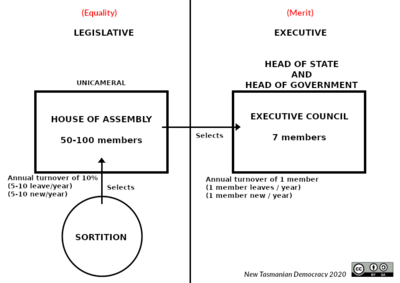
Recent decades have witnessed a resurgence of interest in sortition, driven by a desire to enhance democratic participation and address the perceived shortcomings of electoral politics. This renewed focus is particularly evident in the increasing number of citizen assemblies and advisory groups empowered with political influence. Proponents argue that sortition can offer a powerful alternative or complement to elections, potentially leading to more informed and less polarized decision-making.
By randomly selecting participants for deliberative bodies, societies can create forums where citizens engage in reasoned discussion and collective problem-solving, free from the pressures of campaigning and partisan politics. This approach aligns with the principles of deliberative democracy, emphasizing informed public discourse and consensus-building as essential components of a healthy political system.
Sortition as a Tool for Equitable Governance
The enduring appeal of sortition lies in its inherent fairness and its capacity to produce truly representative bodies. While elections can sometimes lead to outcomes skewed by wealth, media influence, or party affiliation, sortition offers a direct path to a cross-section of the population. This is particularly relevant in discussions about modern governance, where concerns about political alienation and the underrepresentation of certain groups are prevalent.
Advocates suggest that expanding the use of sortition, perhaps in conjunction with electoral processes, could foster greater civic engagement and trust in public institutions. By randomly empowering citizens, sortition challenges traditional notions of political power and offers a compelling vision for a more inclusive and equitable democratic future, echoing the ideals of its ancient proponents.
See also
Frequently Asked Questions
What is sortition?+
How did ancient Athens use sortition?+
Why do people think sortition is fair?+
Where is sortition used today?+
Can sortition help make better decisions?+
Based on content from Wikipedia · Licensed under CC BY-SA 4.0