

Shahu I
Images
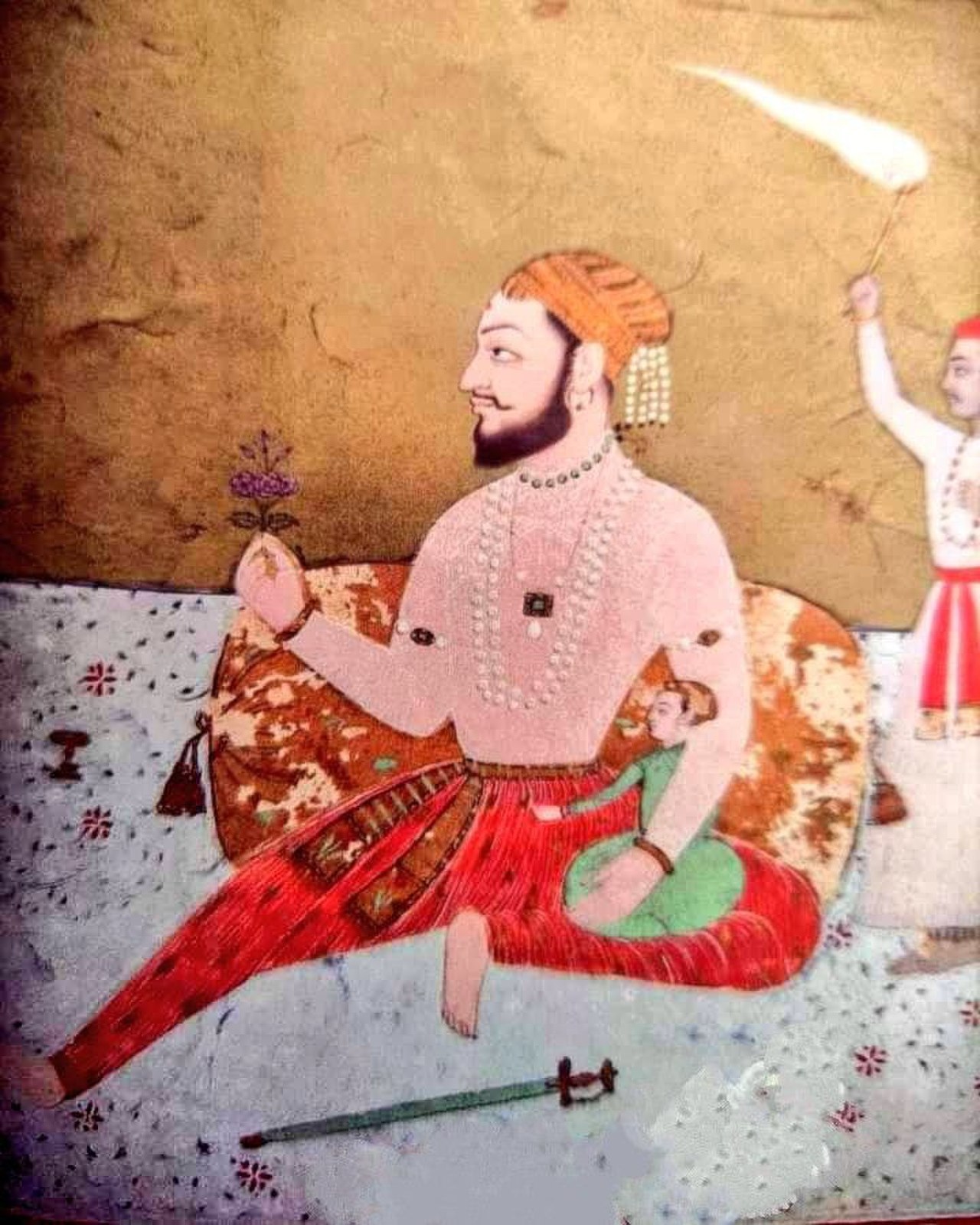
Chhatrapati Sambhaji and Prince Shahu I Coloured Painting


The Crucible of Captivity and the Dawn of Leadership
Shahu I's early life was irrevocably shaped by his prolonged captivity under the Mughal emperor Aurangzeb. Born Shivaji Sambhaji Raje Bhonsale in 1682, he was the legitimate heir to the Maratha throne, a legacy inherited from his grandfather, Shivaji I, the empire's formidable founder. His father, Sambhaji I, had been executed by Aurangzeb, a brutal act that likely fueled the emperor's desire to neutralize the young prince.
Held from a young age, Shahu I was essentially a political pawn, his freedom contingent on the whims of the Mughal court. This period, however, was not merely passive confinement. It offered a unique, albeit harsh, education in the intricacies of Mughal politics, military strategy, and the broader geopolitical landscape of the Indian subcontinent.
His release in 1707, following Aurangzeb's death, was a calculated move by the Mughals, intended to sow discord within the Maratha ranks by pitting Shahu against other claimants, most notably Tarabai. This strategy, however, proved to be a miscalculation, as Shahu's inherent leadership qualities and the historical legitimacy of his lineage allowed him to rally support and reassert Maratha sovereignty.
The Battle of Khed
The immediate aftermath of Shahu I's release was characterized by intense internal strife. Tarabai, who had been ruling as regent for her young son, refused to cede power, leading to a protracted and bloody civil war. The Battle of Khed, fought in 1707, stands as the pivotal confrontation that determined the future leadership of the Maratha Empire.
Shahu I's victory was not merely a military triumph; it was a profound validation of his claim to the throne and a decisive blow against the factionalism that threatened to dismantle the empire his grandfather had so painstakingly built. This victory allowed for his formal coronation as the fifth Chhatrapati, marking the beginning of a new era of Maratha ascendancy. The successful resolution of this succession crisis was crucial for consolidating Maratha power and projecting a unified front against external threats, setting the stage for significant territorial expansion and administrative reforms.
Imperial Zenith
Shahu I's reign is synonymous with the zenith of Maratha power and influence. Under his astute leadership, the Maratha Empire experienced unprecedented territorial expansion, extending its dominion across vast swathes of central and western India. This period witnessed the Marathas becoming a preeminent force, capable of dictating terms to other regional powers and challenging the waning influence of the Mughal Empire.
Shahu I was not merely a conqueror; he was also a pragmatic administrator who understood the importance of effective governance. He fostered an environment that encouraged the development of regional autonomy while maintaining central authority, a delicate balance that proved remarkably successful. The economic prosperity and military might achieved during his rule cemented the Maratha Empire's status as a major power, leaving an indelible mark on the subcontinent's political map.
The Legacy of Decentralized Governance and Enduring Influence
Perhaps one of Shahu I's most enduring legacies lies in the administrative framework he cultivated. While he reigned as the supreme Chhatrapati, he effectively empowered his ministers and generals, fostering a system of decentralized governance that proved remarkably resilient. Following his death in 1749, this structure allowed for the continued administration of the vast empire.
Key figures such as the Peshwa Bhats, along with influential houses like the Shindes, Holkars, Bhonsles of Nagpur, and Gaekwads of Baroda, assumed significant responsibilities, governing their respective regions under a loose coalition. This system, while eventually evolving into a confederacy, ensured the Maratha Empire's continued prominence for decades. Shahu I's foresight in building a robust, adaptable administrative structure, rather than relying solely on personal rule, was instrumental in the empire's long-term survival and influence, demonstrating a sophisticated understanding of statecraft that transcended his own lifetime.
See also
Frequently Asked Questions
Who was Shahu I?+
How did Shahu I become the king of the Maratha Empire?+
Why was Shahu I held captive by the Mughal emperor?+
What happened at the Battle of Khed?+
What did Shahu I do to help his empire grow?+
Based on content from Wikipedia · Licensed under CC BY-SA 4.0